

A programmer’s way to watch And God Created Woman is to ask: if this exact script shipped today, without Brigitte Bardot, would anyone notice?
The honest answer is: probably not. And God Created Woman is a flimsy little Saint‑Tropez melodrama that became a censorship crisis because the marketing architecture was doing far more work than the movie.
The interesting part isn’t the film. It’s how Roger Vadim set up a pipeline where Bardot’s body, their marriage, and their affair‑ridden breakup all got compiled into one global media event.
TL;DR
- And God Created Woman is a basic love triangle in Saint‑Tropez; the “innovation” is how it sells Bardot, not how it tells a story.
- The scandal wasn’t just nudity, it was a whole system that fused on‑screen desire, tabloid gossip, and moral panic into free advertising.
- Its legacy isn’t cinematic; it’s industrial. Vadim and Bardot accidentally prototyped the modern “full‑stack” celebrity brand.
What And God Created Woman (1956) actually is
Strip away the legend and And God Created Woman is simple.
Juliette (Brigitte Bardot) is a barefoot, sexually free orphan in Saint‑Tropez. Two brothers want her. She marries the shy one (Jean‑Louis Trintignant’s Michel), flirts with the other, and the town explodes in jealousy and judgment. The climax is a drunken mambo that turns into a brawl.
Roger Vadim wrote and directed it. It opened in France in November 1956, then in the U.S. around 1958, where it became a rare foreign‑language hit, reportedly grossing around $4 million in America alone, and breaking taboos on nudity for mainstream cinema (Britannica, Criterion).
It’s not formally radical. No wild editing. No deep psychology. If you watch it after a diet of New Wave films, it feels like a verbose soap opera shot on a beautiful beach.
So how did this become the movie that “created” Bardot?
Because Vadim didn’t build a great film. He built a celebrity engine around one.
Why And God Created Woman shocked 1950s audiences (it wasn’t just nudity)
If you imagine the scandal as “people saw a bit of skin and freaked out,” you miss the bug Vadim exploited.
1950s censors could handle a static target:
- One explicit scene → cut it.
- One offensive line → dub it.
And God Created Woman is architected differently. The movie’s main “special effect” is anticipation.
Juliette spends a lot of time almost naked, in a towel, in bed sheets, sunbathing, but the camera keeps stopping at the line of what it can show. As Bosley Crowther’s famous New York Times review (quoted in The Guardian) put it, it’s less what Bardot does than what she might do that drives everyone wild.
That’s a design choice:
- The obvious 1956 approach: one transgressive nude scene; censors cut it; scandal over.
- Vadim’s approach: dozens of almost‑nude setups and sensual gestures that are individually deniable but cumulatively overwhelming.
You can see the engineering tradeoff:
- Pro: Harder to censor surgically; you’d have to gut the whole film.
- Con: You rely on implication, not explicitness, feels tame to later viewers.
Result: local boards and church groups couldn’t just snip a reel. They went for blanket bans, arrests of cinema managers, and pulpit denunciations (documented across Criterion, Le Monde, TCM). That didn’t kill the movie. It functioned as marketing.
This is the same pattern we see with modern “slippery slope” panics: once people believe a piece of media is the start of moral collapse, any suggestive shot becomes evidence. (We’ve written about how slippery slope arguments spread in a different context, the dynamic is identical here.)
Vadim didn’t just cross a line of nudity. He built an interface that made moral guardians imagine a much more explicit film than the one he actually shot.
How the movie manufactured Brigitte Bardot into a global celebrity
If you were building And God Created Woman as a system, Bardot isn’t just a “lead actress.” She’s the global state everything else mutates.
Vadim’s moves, roughly:
- Tailor the code to the hardware.
The Criterion essay notes that Vadim designed the film around Bardot’s existing persona, barefoot, impulsive, sensual. He later wrote that she was his “wife, daughter, and mistress.” That’s not just creepy; it’s a roadmap. Juliette is Bardot as he wanted the world to see her. - Co‑locate production and myth.
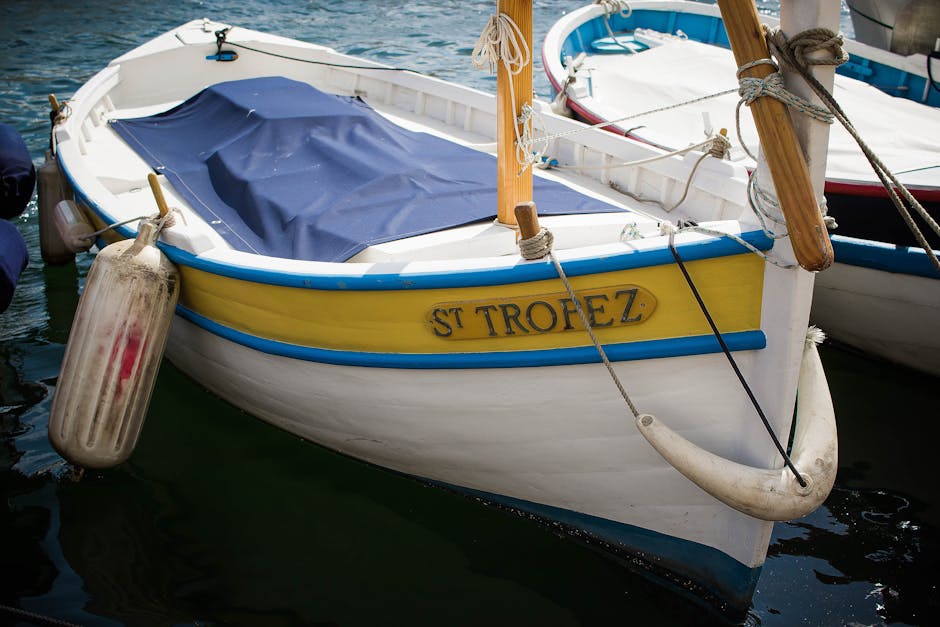
Shoot in Saint‑Tropez, make the town part of the legend. The Le Monde retrospective stresses how “And God created Bardot” and “the earthquake” around Saint‑Tropez became almost synonymous. The location becomes a reusable brand asset, you can photograph Bardot there for years and everyone mentally links it back to the movie. - Let the off‑screen script run in parallel.
During and after the shoot, Bardot and co‑star Jean‑Louis Trintignant reportedly became lovers; multiple sources recount Trintignant asking her to choose between him and Vadim (Le Monde, AP, Ebert). Bardot ultimately left Vadim. AP puts it bluntly: the affair “eradicated the boundaries between her public and private life.”From a systems perspective, this is where it gets interesting:
- On screen: Juliette torn between a steady husband and a more passionate man.
- Off screen: Bardot torn between her director‑husband and her co‑star.
Those two processes reinforce each other. Every tabloid rumor retroactively deepens the fictional character. Every scene in the film makes the gossip feel more “true.”
- Exploit cross‑platform amplification.
Simone de Beauvoir writes about Bardot as a “locomotive of women’s history” (quoted in The Guardian). American critics describe her as a phenomenon you “have to see to believe.” French critics debate whether this is liberation or exploitation. Each camp is sharing the same core asset: the image of Bardot, not the film’s ideas.
This is very close to the way we now talk about internet outrage cycles: one loud minority reframes a piece of content, and suddenly the argument about it is more viral than the content itself. (We’ve covered that dynamic in detail here.)
Vadim stumbled into that model decades early. And God Created Woman ships as a modest story but deploys as a culture‑wide ARG about “who Brigitte Bardot really is.”
Legacy: light film, outsized cultural effect
So is And God Created Woman worth watching now?
Yes, but not as a “great film.” Watch it as an ops dashboard for a new kind of celebrity.
You can see three lasting shifts it helped lock in:
- Celebrity as a full‑stack product.
Before, studios often tried to keep stars’ private lives tidy and off‑screen. After Bardot, the mess is part of the product. The film, the marriage, the affair, the arrests, the philosophical essays, they’re all different microservices feeding the same API: “Brigitte Bardot.” - Censorship as growth hacking.
The U.S. release gets trimmed, delayed, denounced. Local officials crack down. Church groups complain about “smut.” The result, per Criterion and TCM, is one of the first foreign films to hit big at the American box office. Every attempt to contain it just increases the value of the underlying image. - A new template for “sexual modernity.”
Critics like André Bazin and Jean Douchet take the film seriously. De Beauvoir gives Bardot intellectual framing. Even people who hate the movie are forced to argue on its terms: what kind of woman Juliette/Bardot represents, what her freedom means.
From a builder’s point of view, the key insight is: you don’t need a masterpiece if you control the pipeline around it.
Vadim didn’t pioneer brilliant storytelling. He pioneered a feedback loop where:
- Suggestive but censorable‑proof imagery →
- Moral panic + gossip →
- Box office →
- More coverage of Bardot’s personal life →
- Retroactive hype for the film.
That loop is now standard. Influencer culture, “are they or aren’t they” showmances, rage‑bait trailers, they all run the Bardot/Vadim playbook with new tools.
Key Takeaways
- And God Created Woman is historically big and artistically small; the engine was Bardot’s image, not the script.
- The real scandal was structural: a design that made censors and moralists do unpaid marketing.
- Vadim fused on‑screen character, location, and real relationships into one continuous Bardot “brand.”
- The film’s importance is industrial, it prototyped a full‑stack celebrity pipeline that Hollywood and social media later standardized.
Further Reading
- And God Created Woman, The Criterion Collection, Deep dive on the film’s production, Bardot’s stardom, and censorship battles.
- And God Created Woman, Britannica, Concise reference on release, taboo‑breaking nudity, and box‑office impact.
- Brigitte Bardot and modern French cinema, The Guardian, Frames Bardot and the film inside 1950s French debates; cites De Beauvoir and U.S. critics.
- Brigitte Bardot obituary and cultural retrospective, Le Monde (English), Details the Saint‑Tropez shoot, release, censorship, and Bardot‑Trintignant‑Vadim triangle.
- And God Created Woman (1956), TCM article, Plot overview and discussion of how the film shifted on‑screen female sexuality.
The lesson for modern builders, whether you’re shipping films, apps, or AI models, is uncomfortable but clear: the artifact can be mediocre if the event around it is brilliantly engineered. The hard part is deciding how much of yourself you’re willing to feed into that machine.