
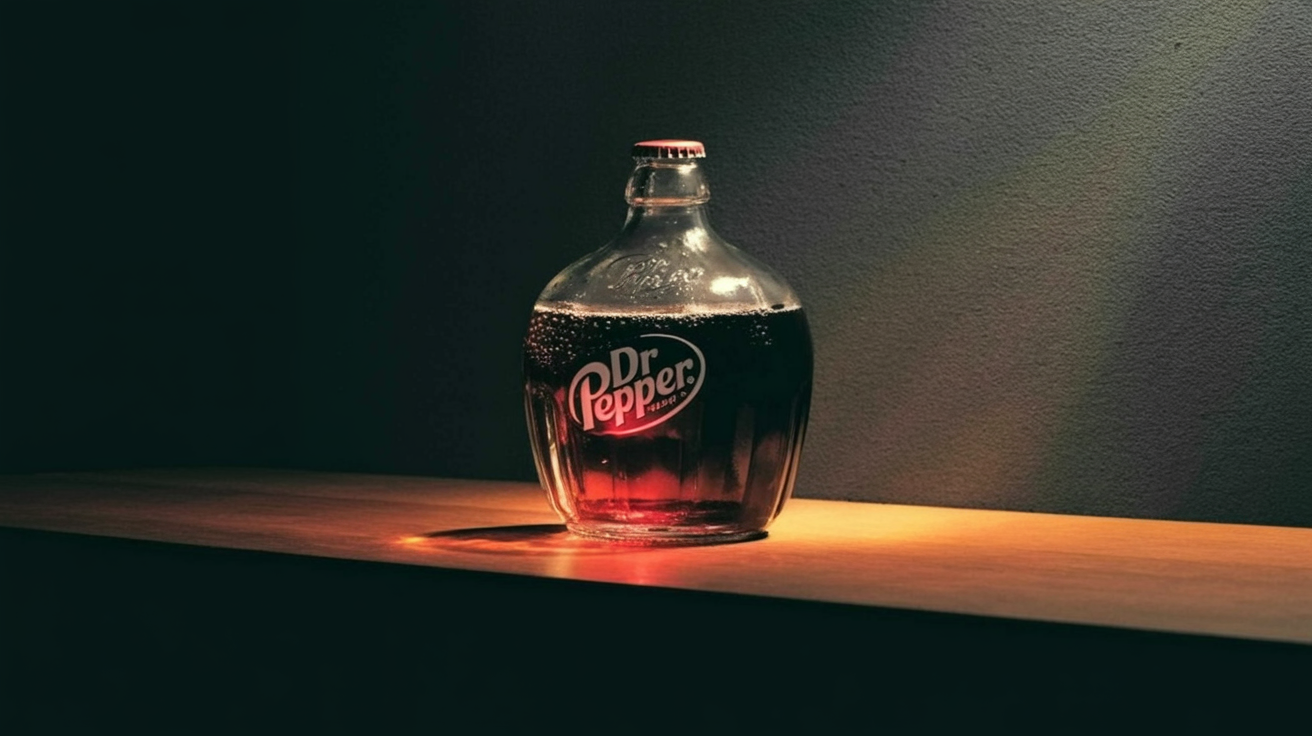
Dr Pepper is not a cola; it is a distinct carbonated soft drink with its own flavor identity and history. The cleanest reason is definitional: cola usually means a carbonated soft drink usually flavored with kola nuts, and Dr Pepper does not present itself that way in its official history.
Britannica defines a soft drink as a nonalcoholic beverage, which is the broader category Dr Pepper clearly belongs to. That sounds obvious, but it matters because people often use “cola” to mean “any dark soda,” and that is looser than the actual beverage definition.
What Dr Pepper Is
Dr Pepper is best described as a carbonated soft drink first sold in 1885 in Waco, Texas. The brand’s own account places its origin at Morrison’s Old Corner Drug Store and treats it as its own product line, not as a member of the cola family.
The company also leans into Dr Pepper’s long-running identity as a flavor outlier. Its branding centers on a distinctive taste profile and the famous idea of “23 flavors”, which is a pretty strong hint that this is not meant to be read as “another cola, but slightly different.”
The Washington Post notes that Dr Pepper has remained partly mysterious even as it became one of the biggest soda brands in the US. That mystery is mostly about the exact flavor blend, not about the product category: it is a soft drink, and its whole commercial identity is that it tastes like Dr Pepper rather than cola.
Why It Is Not a Cola
The simplest answer is that the standard definition of cola points somewhere else. Merriam-Webster defines cola as “a carbonated soft drink usually flavored with kola nuts”. That “usually” matters: cola is not just “brown and fizzy.” It is a flavor tradition tied to kola-nut-style cola flavoring.
Dr Pepper is not marketed as a kola-nut drink, and the sources here do not identify it as containing kola nuts or cola flavoring. Its own history and public-facing identity instead emphasize its origin in 1885 and its proprietary flavor profile. In other words, the brand has had every chance to call itself a cola for more than a century and simply does not.
That is why “Dr Pepper vs. cola” is not really a fight between rivals in the same exact flavor category. It is more like comparing root beer and cola: both are soft drinks, but the flavor families are different. The market sometimes lumps dark sodas together because shelves are lazy; beverage definitions are less lazy.
A useful way to frame it:
- Soft drink: the broad nonalcoholic category.
- Cola: a specific soft-drink subtype usually associated with kola-nut flavoring.
- Dr Pepper: its own branded flavor profile, historically presented as distinct from cola.
The Legal and Flavor Definition
There is no single grand beverage court that assigns every soda a perfect scientific box, but ordinary dictionary and industry usage still point in the same direction. In beverage terms, “cola” refers to a drink style usually flavored with kola nuts, while “soft drink” is the umbrella term.
That means Dr Pepper fits comfortably in the umbrella category and awkwardly in the cola one. The flavor definition does most of the work here. If a drink is not identified by kola-nut-style cola flavoring, and if the brand instead promotes a proprietary multi-flavor profile, calling it a cola is mostly shorthand, not precision.
The Washington Post’s 2024 reporting underscores the same basic point from a cultural angle: Dr Pepper’s formula remains somewhat opaque, but its distinctiveness is the point. It occupies its own recognizable soda niche, adjacent to cola but not inside it.
So if the question is “Is Dr Pepper a cola?” the best sourced answer is no. It is a soft drink, specifically a distinct branded soda with its own flavor category, history, and identity outside the usual cola definition.
Key Takeaways
- Dr Pepper is a distinct carbonated soft drink, not a cola.
- Merriam-Webster defines cola as a carbonated soft drink usually flavored with kola nuts.
- Dr Pepper’s official history traces the drink to 1885 in Waco, Texas and presents it as its own product identity.
- Britannica’s definition of soft drink is the broader category Dr Pepper fits.
- Dr Pepper’s famous “23 flavors” branding reinforces that it is treated as its own flavor profile rather than a standard cola.
Further Reading
- Dr Pepper Corporate Information, Brand history, first sale in 1885, Waco origins, and official positioning of the drink.
- Merriam-Webster: Cola, Dictionary definition of cola as a carbonated soft drink usually flavored with kola nuts.
- Britannica: Soft drink, General definition of soft drink as a nonalcoholic beverage category.
- The Washington Post: Dr Pepper Is Now as Popular as Pepsi, and Remains Shrouded in Mystery, Background on Dr Pepper’s origin story and ongoing flavor mystery.
Frequently Asked Questions
What Is Dr Pepper?
Dr Pepper is a carbonated soft drink that the brand says was first sold in 1885 in Waco, Texas. Its public identity is built around a distinctive proprietary flavor blend rather than membership in the cola category.
Why Is Dr Pepper Not a Cola?
Dr Pepper is not a cola because cola is usually defined as a soft drink flavored with kola nuts, and Dr Pepper is not publicly defined or marketed that way. Its own branding emphasizes “23 flavors” and a separate flavor identity.
Does Dr Pepper Contain Kola Nut?
The sources provided here do not identify Dr Pepper as containing kola nut, and the brand’s official product history does not present it as a kola-based drink. On the evidence available here, it is better described as a distinct soft drink than as a kola-nut cola.
Is Dr Pepper in Its Own Soda Category?
In practical terms, yes. While the formal umbrella category is soft drink, Dr Pepper is widely treated as its own flavor style, separate from standard cola. That is why people usually compare it with colas in the market but do not define it as one.
References
- Dr Pepper, Corporate Information
- Merriam-Webster, cola
- Encyclopaedia Britannica, soft drink
- Washington Post, 2024, Dr Pepper Is Now as Popular as Pepsi, and Remains Shrouded in Mystery
Last reviewed: 2026-06