
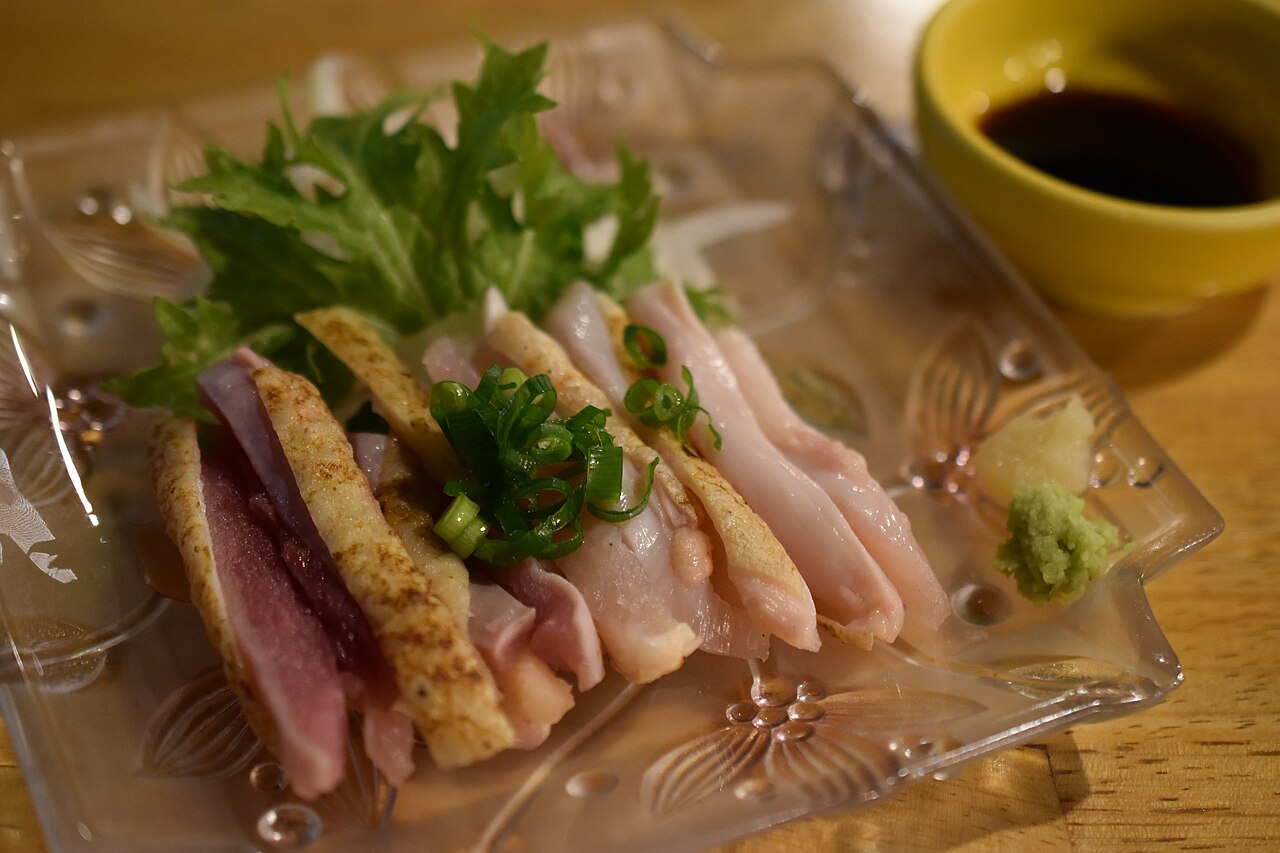
Chicken sashimi, often called torisashi in Japan, is a dish of very lightly seared or raw chicken served like fish sashimi, but it is considered high risk and is not recommended by Japan’s own Ministry of Health because of the danger of foodborne infection. In practice, only certain specialized restaurants serve chicken sashimi, and even in Japan it is uncommon, controversial, and subject to strict handling rules aimed at reducing, but not eliminating, the risk of bacteria such as Salmonella and Campylobacter.
What surprises many visitors is that you can see raw or nearly raw chicken on some izakaya menus in Japan while the same idea is treated as clearly unsafe in countries like the United States. That contrast raises a natural question: how can chicken sashimi exist at all, and is it ever really safe?
What is chicken sashimi?
Chicken sashimi is a style of serving chicken breast, thigh, or organ meat very rare or essentially raw, sliced thin and presented with garnishes like ginger, grated garlic, scallions, soy sauce, and citrus, much like fish sashimi. The Japanese term most often used is torisashi (from tori, bird, and sashimi, sliced raw meat or fish). In many cases the surface of the meat is quickly seared while the interior remains raw, a technique sometimes called tataki.
The dish is not a staple of everyday Japanese home cooking. It is typically found, if at all, in certain regional areas such as parts of Kagoshima, Miyazaki, or Nagoya, or in specialty yakitori and izakaya restaurants that advertise using particular breeds of chicken and tight control over slaughter and storage. Users in the original discussion you provided mention black skinned regional breeds and Nagoya-origin birds, which illustrates how strongly the dish is tied to specific sourcing claims rather than generic supermarket chicken.
It is also important to distinguish between truly raw chicken and chicken that has been made to look raw. Some restaurants that want to offer a “raw style” texture but reduce bacterial risk will treat chicken in a low temperature sous vide bath long enough to pasteurize it, then serve the meat pink and tender. To the diner, this can resemble chicken sashimi even though it has technically been brought to a bacteria-killing temperature.
How is chicken sashimi prepared in Japan?
Chefs who serve chicken sashimi rely on a combination of sourcing, butchery, and timing to try to lower the risk of contamination. Instead of using industrially packed chicken that has been transported and stored for days, they typically use freshly slaughtered domestic birds designated for raw consumption, and they handle the meat in conditions closer to a sushi bar than to a typical chicken processing line.
In a common approach, the outer surface of the chicken is seared briefly over high heat or a blowtorch, which can kill bacteria on the very outside. The interior is left raw and then chilled, sliced thin, and plated immediately. The goal is to minimize the time during which bacteria, if present, can multiply. Some chefs also trim away the outermost layers of meat that were exposed during evisceration, discarding sections that might have had contact with gut contents.
Other establishments use low temperature cooking methods, like long sous vide baths at carefully controlled temperatures that meet Japanese food safety guidelines for pasteurization. From the diner’s perspective the meat may appear pink and rare, especially compared with Western norms, but if handled correctly it has technically reached a time and temperature combination capable of killing most pathogens. Commenters in your source material correctly note that this approach is more common than truly raw chicken because maintaining the level of control needed for genuine sashimi style chicken is expensive.
Even with these precautions, Japanese authorities stress that there is no way to guarantee that chicken sashimi is safe in the same way fully cooked chicken is safe. The basic fact remains that chicken carries bacteria in its intestinal tract and on its skin, so any mistake in slaughter, storage, or preparation can lead to contamination of the meat.
Why is raw chicken considered dangerous?
Raw chicken is widely considered dangerous because chickens are frequent carriers of bacteria that cause serious gastrointestinal illness in humans. Two of the most important are Campylobacter jejuni and various Salmonella species. These organisms can live harmlessly in the bird’s intestines, but if they end up on the meat and are not destroyed by heat, they can infect people who eat the chicken.
Campylobacter is one of the most common causes of bacterial gastroenteritis worldwide, and in many countries, raw or undercooked poultry is the single biggest source of infection.
According to public health agencies such as the US Centers for Disease Control and Prevention (CDC) and Japan’s Ministry of Health, the symptoms of infection typically include diarrhea, vomiting, abdominal cramps, fever, and dehydration, sometimes severe enough to require hospitalization. In a subset of cases, especially in vulnerable people, complications like bloodstream infection, reactive arthritis, or conditions such as Guillain Barré syndrome can follow a bout of Campylobacter or Salmonella gastroenteritis.
These bacteria are not unique to industrially raised chickens. Even birds kept in good conditions can harbor them in their guts, which is why food safety authorities in many countries advise against eating raw or undercooked chicken regardless of how the animals are raised. That is also why temperature guidelines for chicken are higher than for some other meats. For example, in the United States, official advice is to cook whole poultry and chicken parts to an internal temperature of at least 165 degrees Fahrenheit, which is high enough to quickly kill Salmonella and Campylobacter throughout the meat.
Stories from the Reddit thread you provided, where travelers describe days of intense vomiting, diarrhea, and subsequent joint problems after a single meal of chicken sashimi, are consistent with documented clinical cases of foodborne infections. The fact that some diners report eating it repeatedly without issue does not negate the underlying risk, it only shows that food poisoning is probabilistic, not guaranteed every time.
What does Japan’s health ministry say about chicken sashimi?
Japan’s Ministry of Health, Labour and Welfare has taken the unusual step of issuing explicit advisories against eating raw or undercooked chicken, including chicken sashimi, even as some restaurants continue to serve it. In official guidance aimed at both consumers and food businesses, the ministry explains that chicken and chicken livers frequently test positive for Campylobacter, and that quick external searing does not reliably kill bacteria present inside the meat or in crevices that knives cannot reach.
Japanese government advisories tell consumers not to eat chicken sashimi or raw chicken liver, and urge restaurants to serve chicken thoroughly cooked to the center.
Despite these warnings, the ministry does not impose a blanket legal ban on serving chicken sashimi nationwide. Instead, regulations and recommendations are implemented at the prefectural and municipal levels, and some local authorities set standards for handling chicken intended for raw consumption that are stricter than those for ordinary poultry. This patchwork approach, combined with cultural attitudes toward high quality specialty foods, helps explain why the dish persists.
From a risk communication perspective, Japanese officials face a challenge similar to that seen with other traditional raw dishes, such as certain kinds of beef liver sashimi that were eventually banned after outbreaks. They publicly discourage the practice and track outbreaks, but eliminating it entirely would mean overriding long-standing culinary customs in some regions and potentially hurting small producers and specialty restaurants.
Japanese residents in the discussion you shared note that while chicken sashimi is available, it is relatively uncommon, and many locals avoid it. That matches survey data reported in Japanese media that suggests awareness of the risks is high and that most people either never eat chicken sashimi or do so rarely, reserving it for particular restaurants they trust.
Is chicken sashimi ever safe to eat?
The most accurate answer is that chicken sashimi is never risk-free, but the risk level is not the same in every context. In countries such as the United States, Canada, or the United Kingdom, health agencies regard any consumption of raw or undercooked chicken as unsafe, regardless of source. Supermarket chicken in these countries is processed and transported in ways that make surface contamination with intestinal bacteria very likely, so using it for sashimi would be extremely dangerous.
In Japan, specialized producers and restaurants lower, but do not eliminate, risk by using flocks that are monitored for particular pathogens, slaughtering birds for same day use, refrigerating and trimming meat aggressively, and sometimes using low temperature cooking to achieve a raw-like texture. Even so, outbreaks linked to chicken sashimi and other raw chicken dishes do occur, and Japanese public health reports document clusters of Campylobacter food poisoning traced to such meals.
From an individual perspective, the acceptability of the risk depends on your health status and your risk tolerance. People with weakened immune systems, chronic illnesses, pregnant people, young children, and older adults are all at higher risk for severe outcomes from bacterial gastroenteritis and are specifically advised not to eat raw animal products. Healthy adults might choose to accept a low but real probability of serious illness in exchange for a culinary experience, but that is a personal decision that should be made with clear understanding of the stakes.
Practically speaking, if you are a tourist or resident outside Japan and you encounter “chicken sashimi” on a menu, the safest assumption is that the dish is either dangerously unsafe or that the restaurant is actually serving low temperature cooked chicken made to look raw. There is no reliable way, as a diner, to verify supply chain and handling, so standard food safety guidance is to avoid raw chicken entirely.
How does chicken sashimi compare to other raw meat dishes?
Chicken sashimi often gets mentioned alongside other raw meat traditions, such as German mett (also called Hackepeter), French steak tartare, Korean raw beef dishes, or Japanese horse sashimi, known as basashi. In all of these cases, diners eat uncooked animal flesh, but the underlying risks and controls are not identical.
In Germany, for example, raw pork mett is tightly regulated, with rules on fat content, same day sale, and refrigeration that are written directly into food hygiene law.
A key difference is where pathogens tend to live. With beef and pork, the greatest danger is usually bacteria on the surface of the meat, which can sometimes be managed through trimming and strict handling if the meat is ground, minced, or chopped for raw dishes like tartare or mett. With poultry, the risk of deep contamination is higher because of how small birds are processed and how easily their intestines can leak onto surrounding tissues. That is one reason why many countries permit traditional raw beef or pork dishes under regulation but still treat raw chicken as out of bounds.
Japanese horse sashimi is an instructive contrast. Horse meat intended for raw consumption is typically frozen at temperatures designed to kill parasites and is handled under conditions similar to sushi grade fish. Public health authorities still track outbreaks, but compared with raw chicken, the profile of typical pathogens and the ways they are controlled are different. By grouping chicken sashimi with other raw meats, it is easy to underestimate the relative danger posed by poultry specific bacteria.
Overall, food safety professionals tend to view raw chicken as one of the highest risk raw meats, even in countries where some people do eat it. That perspective aligns with the cautious tone of many commenters in the discussion you shared, including those who tried chicken sashimi once out of curiosity but concluded that the flavor did not justify the potential consequences.