
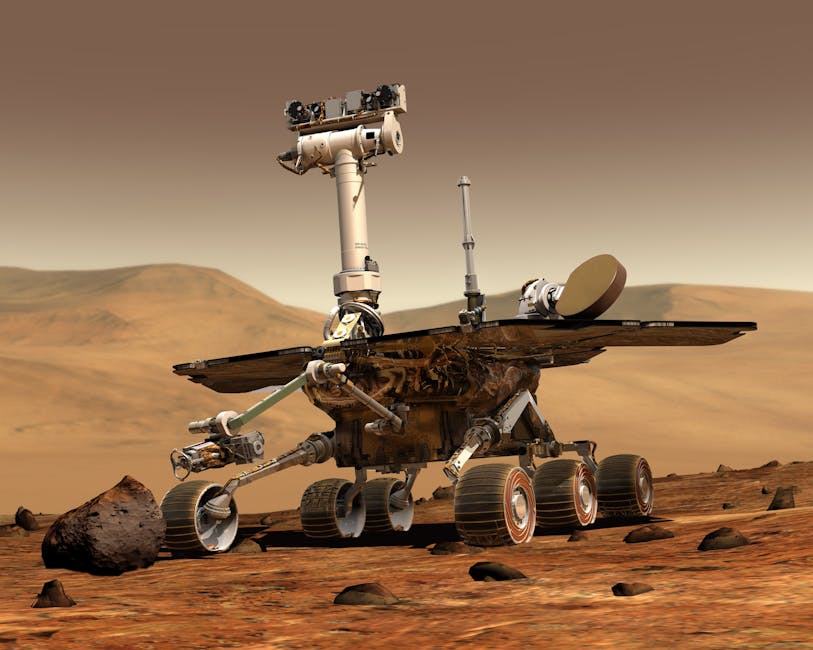
New NASA-led modeling of Gale Crater mudstones suggests ancient long-chain alkanes were far more abundant than today’s measurements imply, challenging purely abiotic explanations and outlining what would be needed to prove a biological origin.
Organics on Mars do not prove life, but a new NASA-led study argues they may not be fully explained by known non-biological processes either. Using Curiosity rover data, laboratory radiolysis experiments, and exposure-age modeling, the team infers that ancient Gale Crater mudstone originally contained far higher levels of long-chain alkanes or fatty acids than the trace amounts measured today. This raises the possibility of a biological source while emphasizing that definitive evidence for life requires multiple independent lines of proof.
What are organics on Mars?
On Mars, organic molecules are carbon-containing compounds such as alkanes, aromatics, and fatty acids. They can be produced abiotically, for example by meteorite delivery or water–rock reactions, or biotically by living organisms. Curiosity’s Sample Analysis at Mars (SAM) instrument, which heats and analyzes drilled samples via gas chromatography–mass spectrometry, has detected diverse organics in Gale Crater mudstones, including a 2025 report of long-chain alkanes at 30 to 50 parts per billion during analysis-driven thermal breakdown of precursors (Sci.News summary).
Organic does not mean biological: organics can form without life. Evidence for life requires patterns and contexts that are best explained by biology, confirmed by multiple tests.
How did the study estimate original organics before radiation damage?
The researchers “rewound the clock” on radiation damage by combining three inputs: laboratory measurements of how cosmic radiation breaks down organics in rock, a model of Mars’ surface radiation environment and shielding, and Curiosity-derived exposure ages for the Cumberland mudstone surface. Over roughly 80 million years of exposure, much of the original organic inventory would have been destroyed.
The team infers that the mudstone originally held about 120 to 7,700 parts per million of long-chain alkanes or fatty-acid precursors, far above the tens-of-parts-per-billion detected today (Sci.News, citing Astrobiology).
This back-calculation relies on the known effects of cosmic radiation at the surface, where chemical bonds are progressively broken, and on the mudstone’s exposure history in Gale Crater, which Curiosity has characterized extensively (NASA Curiosity).
Which non-biological sources did the team evaluate?
The authors tested whether known abiotic inputs could plausibly create such high original concentrations in a fine-grained lake sediment:
- Meteorites and interplanetary dust particles: Calculated delivery rates and the limited ability of dust to infiltrate lithified rock fall short by orders of magnitude.
- Atmospheric photochemical haze: Early Mars likely lacked the sustained methane-rich atmosphere needed to blanket the surface with heavy organic fallout.
- Hydrothermal synthesis (serpentinization, Fischer–Tropsch-type reactions): While labs can make long chains hydrothermally, the Cumberland mudstone mineralogy does not show the high-temperature signatures expected for in-place production.
An additional abiotic possibility remains on the table: allochthonous delivery of hydrothermally synthesized organics from elsewhere into the lake, followed by concentration in the mudstone. The study contrasts this with a biological scenario in which an ancient biosphere produced and accumulated organics in the lake sediments.
Do organics on Mars mean life?
No. The findings increase the plausibility of a biological contribution to the ancient organic inventory, but they are not proof. The study explicitly notes that extraordinary claims require extraordinary evidence, and that life detection beyond Earth must be supported by multiple, converging lines of data.
“Extraordinary claims require extraordinary evidence,” the authors emphasize, framing a biological origin as a hypothesis to be tested, not a conclusion.
What evidence would confirm or refute a biological origin?
Several measurements could strengthen, or weaken, a life-based explanation for the inferred enrichment:
- Isotopic patterns: Carbon and hydrogen isotope ratios that consistently reflect biological fractionation rather than abiotic synthesis.
- Molecular distributions: Homologous series and chain-length patterns matching biological fatty acids, as opposed to the broad or random distributions typical of abiotic processes.
- Chirality: Enantiomeric excesses found in certain biomolecules, if present and preserved.
- Geologic context: Co-location with lake sediments and minerals that promote preservation, and absence of thermal overprinting inconsistent with biology.
- Independent replication: Confirmation from other sites, instruments, and sample types, ideally with returned samples analyzed in Earth laboratories.
Curiosity and Perseverance can address parts of this list in situ, but definitive discrimination between abiotic and biotic organics is a prime motivation for Mars Sample Return (NASA MSR).
What does this mean for Mars exploration?
The study highlights Gale Crater mudstones as highly favorable repositories for ancient carbon chemistry and biosignatures. It also underscores the limits of surface measurements after tens of millions of years of radiation exposure, pointing to the value of subsurface sampling, rapid caching, and eventual laboratory analysis of carefully selected cores.
In short, the new work tightens the quantitative case that purely known abiotic inputs struggle to explain the inferred ancient abundance, while mapping a clear path for how the community could test a biological hypothesis without overinterpreting current data.