
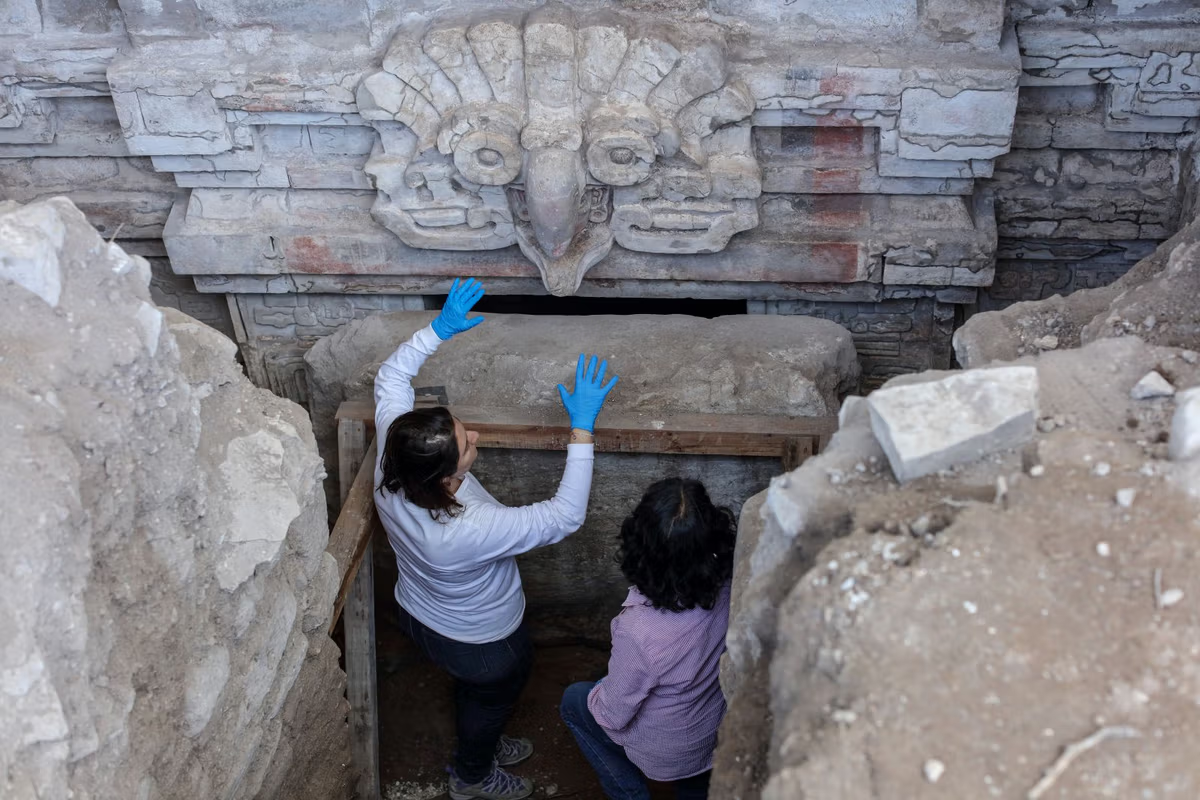
What is a Zapotec burial chamber?
A Zapotec burial chamber is a masonry tomb, usually built beneath patios, platforms, or residences in the valleys of Oaxaca, Mexico. Many feature carefully carved thresholds and stone lintels, bench-like platforms for the deceased, and walls painted with symbols, deities, calendrical signs, and geometric motifs. These chambers are best known from Classic sites such as Monte Albán and Mitla, and they typically held elite individuals along with offerings like ceramics, ornaments, and ritual items. For cultural background, see overviews by the Instituto Nacional de Antropología e Historia (INAH) and the Met’s essay on ancient Oaxaca art and archaeology.
Zapotec burial chambers are subterranean, stone-built tombs associated with high-status burials in Classic-period Oaxaca, often decorated with painted iconography and accessed through carved doorways.
Where and how was this chamber found?
The chamber was identified in southern Mexico after years of subsurface investigation, a common approach in Oaxaca archaeology. Teams typically map buried architecture with noninvasive tools such as ground‑penetrating radar, electrical resistivity, and magnetometry before opening small test units to confirm targets. Once a sealed entrance is located, archaeologists stabilize the passage, document the threshold and lintel, and proceed with slow, stratigraphic excavation under conservation oversight.
What can a sealed Zapotec tomb reveal?
Because the chamber was sealed, relationships among the body, offerings, and murals are original, not rearranged by later disturbance. That makes interpretations much stronger.
- Chronology and ritual sequence: Offerings and wall imagery can be dated and tied to specific funerary acts, from interment to later commemoration.
- Iconography and religion: Painted symbols and Zapotec murals can identify deities, calendar names, lineage emblems, and cosmological themes known from Monte Albán inscriptions.
- Crafts and exchange: Raw materials, for example shell, obsidian, cinnabar, or turquoise, point to trade networks across Mesoamerica.
- Who was buried: Osteology and, when feasible, ancient DNA and isotope studies can indicate age, sex, health, diet, mobility, and kinship.
- Architecture and technique: Masonry style, plaster recipes, and paint layers help reconstruct construction methods and workshop practices.
Sealed contexts minimize later disturbance, so the associations among artifacts, architecture, and human remains are original to the ancient event. In archaeology, context is the basis for reliable interpretation (SAA).
How will specialists study and preserve the murals and artifacts?
Conservators and scientists document first, then sample sparingly. Teams create high-resolution 3D models with photogrammetry, map paint layers with multispectral imaging, and identify pigments using portable X‑ray fluorescence and Raman spectroscopy. See an introduction to pXRF in heritage science from the U.S. National Park Service here. In Zapotec tombs, common pigments include iron-oxide reds, carbon blacks, and lime whites, with occasional mercury-based cinnabar for vivid reds.
Inside the chamber, humidity and temperature are stabilized, salts are monitored, and flaking paint is consolidated. Any portable objects are bagged and labeled in situ, then transported for lab study. Results are compared with well-documented tombs at Monte Albán and neighboring valleys to place the chamber within broader regional history.
Why is this discovery important?
Sealed Zapotec chambers with intact painting are uncommon, so each new find refines how scholars understand Classic Oaxaca. A chamber dated about 1,400 years ago, roughly the later phases of Monte Albán’s florescence, can clarify how elite households legitimated authority, how ritual art evolved, and how external influences reached the valley. It also provides a reference point for interpreting looted or disturbed tombs, which often lack reliable context.
In Mexico, all archaeological remains are the property of the nation, and research, conservation, and display are coordinated by INAH under federal law (Ley Federal sobre Monumentos).
What are the limits of what we can conclude now?
Until the official technical report is released by INAH, key details will remain provisional, including the precise site, the identity and number of individuals, and the complete inventory of offerings. Radiocarbon dates, pigment identifications, and bioarchaeological analyses take time, and conservation needs often dictate a slow publication schedule. As peer-reviewed results appear, they will test early interpretations and situate this chamber among other Zapotec tomb discoveries across Oaxaca.