
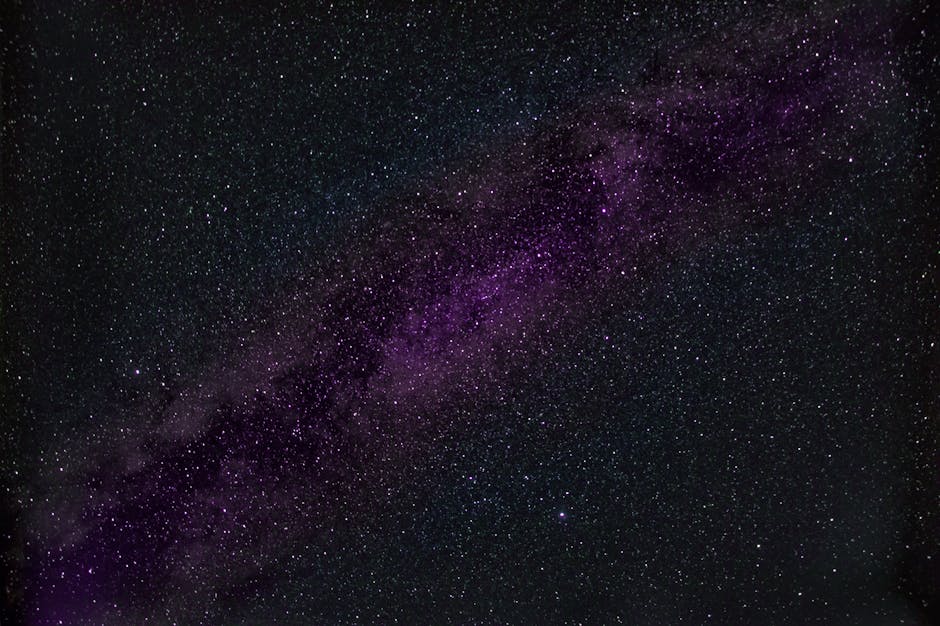
Space does not literally taste or smell like raspberries and rum to human noses, but astronomers have found a molecule called ethyl formate in a giant molecular cloud near the center of the Milky Way, and this same molecule contributes to the flavor of raspberries and the scent of some kinds of rum. By studying the chemical fingerprints of light from that cloud, known as Sagittarius B2, researchers identified ethyl formate among many other compounds, which is why you often hear that “the center of our galaxy smells like raspberries and rum.” In reality, the cloud is incredibly diffuse and mixed with many harsher chemicals, so no astronaut could actually stand there and sniff it.
What makes this finding scientifically interesting is not the dessert-like description, but the fact that Sagittarius B2 contains relatively complex organic molecules in the raw material that forms new stars and planets. According to astronomers working with the Max Planck Institute for Radio Astronomy, the same surveys that found ethyl formate have also revealed compounds about as complex as the simplest amino acids, hinting that some building blocks of life can form long before planets like Earth exist.[1]
What does it mean that the Milky Way smells like raspberries and rum?
The claim that the Milky Way smells like raspberries and rum is a shorthand way of saying that astronomers have detected ethyl formate in a particular region of our galaxy. Ethyl formate is an organic molecule, C3H6O2, that is partly responsible for the characteristic flavor of raspberries and is found in some rums, where it contributes a sweet, fruity aroma.[1] In 2009, a team using the IRAM 30 meter radio telescope in Spain reported ethyl formate in Sagittarius B2, a massive cloud of gas and dust a few hundred light years from the Milky Way’s center.[2]
Scientists translated this dry chemical result into a more vivid description for the public by pointing out that ethyl formate is one of the compounds we already associate with food and drink. As one of the lead researchers, Arnaud Belloche, explained, ethyl formate “does happen to give raspberries their flavour” and also has a scent reminiscent of rum, although on its own it is not enough to recreate the full taste of either.[2] So when you hear that a part of the galaxy tastes like raspberries, it really means a familiar flavor molecule is present in a very unfamiliar environment.
In simple terms, a key flavor molecule from raspberries and a rum like scent molecule has been identified in a star forming cloud near the galactic center, which is why people say the galaxy smells of raspberries and rum.
How did astronomers discover ethyl formate in Sagittarius B2?
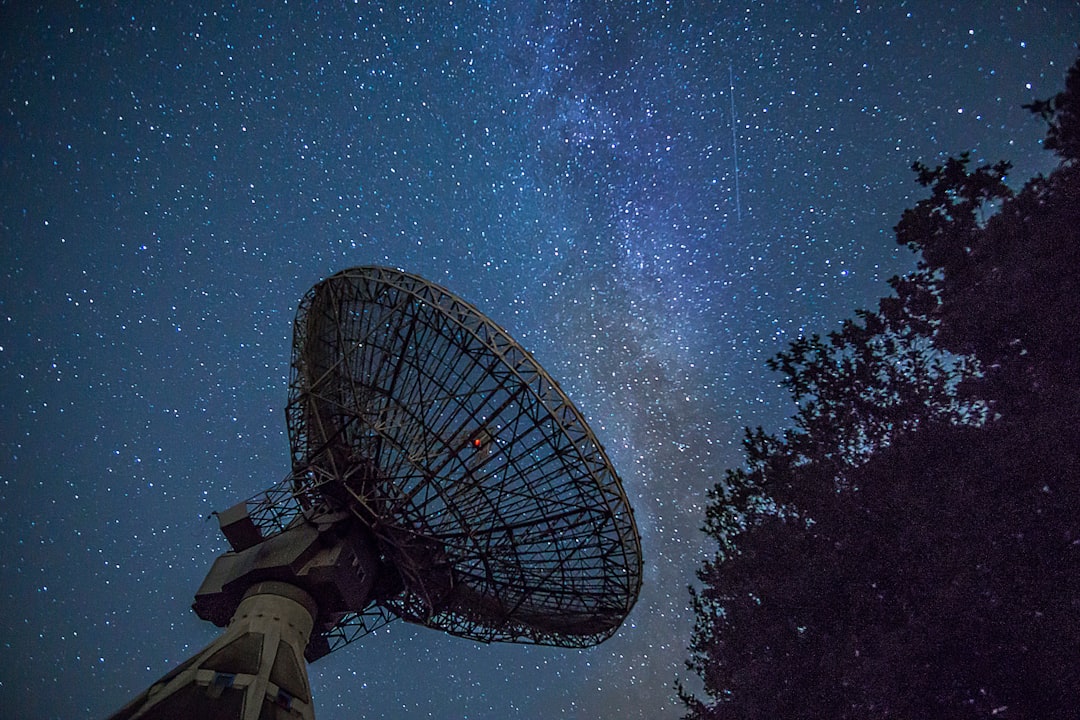
Astronomers cannot fly to Sagittarius B2 to scoop up samples, so they use radio spectroscopy, which analyzes how molecules interact with light. Molecules rotate and vibrate in specific ways, and when they do, they absorb and emit radio waves at very precise frequencies. Each molecule has a kind of “bar code” in the radio part of the spectrum. By pointing a sensitive radio telescope at a region like Sagittarius B2 and recording its spectrum, scientists can look for these bar codes in the data.
In the survey that made headlines, a team used the IRAM 30 meter telescope to scan a hot, dense part of Sagittarius B2 that surrounds a newborn star. Radiation from the young star excites nearby molecules, which then emit radio waves as they relax. The telescope picked up nearly 4,000 distinct spectral lines from that region.[2] Researchers compared these lines with laboratory spectra of known molecules and were able to match some of them to ethyl formate and another relatively large molecule, n propyl cyanide.
Identifying ethyl formate was not a quick or trivial task. The team spent years building up a catalog of laboratory measurements and then fitting combinations of those patterns to the crowded spectra from the Sagittarius B2 cloud. According to summaries of the work reported in astronomy news outlets, by 2009 the group had confidently identified around 50 molecules in their survey, including ethyl formate, and had many lines still left to analyze.[3] Later studies found similar complex molecules in other star forming regions, such as in parts of the Orion molecular cloud, which helped confirm that these detections were not one off anomalies.[4]
By carefully matching thousands of spectral lines from a distant cloud with lab measurements on Earth, astronomers can identify specific molecules, even when they are spread over light years of nearly empty space.
What is Sagittarius B2 and why is it important?
Sagittarius B2 is a giant molecular cloud located roughly 26,000 light years from Earth and a few hundred light years from the exact center of the Milky Way.[5] Giant molecular clouds are cold, dense regions of interstellar gas and dust, typically containing enough material to form many thousands of stars. Inside these clouds, clumps of gas can collapse under their own gravity to form new stars and planetary systems.
Sagittarius B2 is especially interesting because it is rich in complex organic molecules compared with many other regions. Surveys of its spectrum have detected alcohols like ethanol and methanol, ethylene glycol (used in antifreeze on Earth), acetone (common in nail polish remover), hydrogen sulfide (which smells like rotten eggs), and toxic compounds like propyl cyanide, alongside more benign species like ethyl formate and glycoaldehyde.[5]
Glycoaldehyde can react to form ribose, a sugar that is part of RNA and DNA, and acetonitrile is closely related to glycine, the simplest amino acid.[5] That means Sagittarius B2 is not just a curiosity for its imaginary fruity aroma. It is a natural laboratory where scientists can study how increasingly complex carbon based molecules, some with connections to biology, arise in space. The presence of ethyl formate is one data point in a much bigger picture of chemical evolution in star forming environments.
Does space really taste or smell like anything?
In a strict sense, space does not have a taste or smell in the way we experience on Earth, because there is not enough material in most regions for our noses and tongues to interact with. Smell and taste depend on molecules physically binding to receptors in our nasal passages and taste buds. The gas in a cloud like Sagittarius B2 is so diffuse that, even if you could safely stand inside it without a spacesuit, you would not perceive a strong odor. As one recent explainer put it, the molecular cloud is so thin that any scent would be far too faint for human detection.[6]
When astronauts talk about the “smell of space,” they are usually describing odors on their equipment after a spacewalk. Many have said that their suits or the airlock smell like hot metal, welding fumes, or seared steak, likely due to reactions between atomic oxygen in low Earth orbit and materials on the spacecraft, not because the vacuum itself carries an aroma.[7]
So, the raspberry and rum description is best understood as a metaphor grounded in real chemistry. It connects a molecule we can encounter in food and drink to the same molecule detected in space. At the same time, the full chemical mix in Sagittarius B2 would likely be far less pleasant than that metaphor suggests, with a cocktail of alcohols, sulfides, and nitriles that, at higher concentration, would be toxic or foul smelling to humans.[6]
Space is effectively odorless to us, but by identifying specific molecules, scientists can imagine what a region might smell like if its chemistry were concentrated to human friendly densities.
Why do scientists care about a raspberry and rum scented galaxy?
Although headlines focus on the playful idea of a galaxy flavored like raspberries and rum, the underlying research is aimed at a serious question: how and where do complex organic molecules form in space, and what does that mean for the origins of life? The detection of ethyl formate and similarly complex molecules in Sagittarius B2 suggests that some prebiotic chemistry can happen in cold interstellar clouds long before planets form. As Belloche and his colleague Robin Garrod have noted, finding molecules as large as the simplest amino acids gives “great hopes” for eventually detecting amino acids themselves in star forming regions.[2]
If amino acids and related compounds do form efficiently in clouds like Sagittarius B2, then new planets that condense from this material could start out already seeded with some of the ingredients for life. This would shorten the chemical path from a barren young world to one where biological processes can begin. Researchers in astrobiology, the study of life in the universe, see such findings as evidence that at least some pieces of life chemistry are widespread, not confined to Earth.
There is also a methodological reason to care. Surveys like the one that found ethyl formate push the limits of what we can detect with radio telescopes. The crowded spectra from Sagittarius B2 challenge astronomers to refine their models and laboratory measurements. Each new molecule identified improves our understanding of how carbon, hydrogen, oxygen, and nitrogen organize themselves under interstellar conditions, and that knowledge feeds back into models of star and planet formation across the Milky Way.
So, while it is fun to imagine sipping a “galactic” raspberry daiquiri, the real significance lies in the evidence that complex chemistry is thriving in the cold, dark spaces between stars.