
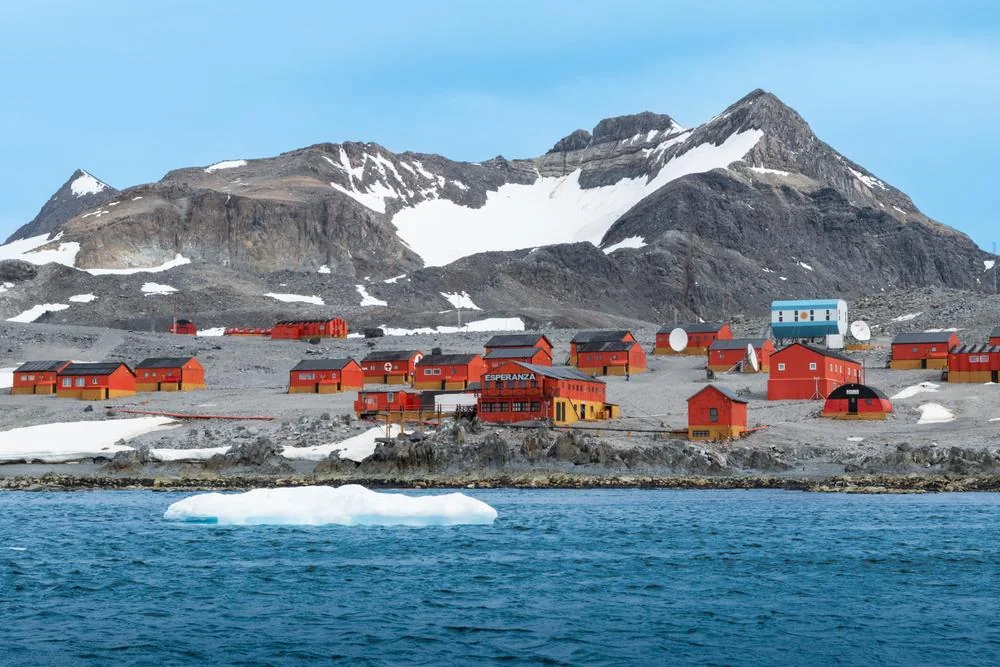
Argentina and Chile encouraged family settlements at their Antarctic bases in the late 1970s and 1980s, hoping to reinforce territorial claims under international law. This article explains how many births occurred, where they happened, and what the Antarctic Treaty means for sovereignty and citizenship.
Eleven people have been born in Antarctica, almost all during the late 1970s and 1980s at Argentine and Chilean stations. These births were organized to signal a permanent civilian presence in support of national claims, but under the Antarctic Treaty they do not create or expand sovereignty, and the children hold their parents’ nationality rather than any Antartican citizenship.
How many people were born in Antarctica?
Most historical accounts record 11 live births on the continent, eight at Argentina’s Esperanza Base and three at Chile’s facilities on King George Island, during 1978 to the mid 1980s. A concise summary appears in the Demographics of Antarctica entry, which compiles official station records and news reports.
Eleven recorded live births in Antarctica, eight at Argentina’s Esperanza Base and three at Chilean stations, occurred between 1978 and the mid 1980s.
The first person born on the Antarctic mainland was Emilio Marcos Palma, delivered at Argentina’s Esperanza Base on 7 January 1978. Guinness World Records recognizes him as the first human born in Antarctica and on the Antarctic mainland.
Why were babies born there?
Argentina and Chile each claim sectors of Antarctica that overlap with one another and with the United Kingdom’s claim. In the 1970s and 1980s, both countries sought to demonstrate a civilian as well as military or scientific presence by moving service members’ families south for seasonal rotations. That included establishing small schools and clinics, and in a few cases, planning for childbirth at the stations.
At Esperanza Base, Argentina created a tiny settlement with families, a school, and a chapel. Chile developed Villa Las Estrellas beside its Eduardo Frei Montalva Station on King George Island, including a school, post office, and a small hospital. A handful of births followed from these programs.
What does the Antarctic Treaty say about territorial claims?
The Antarctic Treaty, signed in 1959 and in force since 1961, set aside Antarctica for peaceful purposes and science. Article IV freezes existing claims, forbids new claims or enlargements while the treaty is in force, and states that activities conducted under the treaty cannot be used to support or deny sovereignty.
As Article IV states, “no acts or activities taking place while the present Treaty is in force shall constitute a basis for asserting, supporting or denying a claim to territorial sovereignty in Antarctica.”
Read the full text via the British Antarctic Survey or the U.S. Department of State. The practical effect is clear: births, buildings, or any other activities since 1961 neither strengthen nor weaken national claims.
Where did the Antarctic births happen?
- Esperanza Base, Antarctica Peninsula, Argentina: Home to most of the births, including Emilio Marcos Palma. Esperanza hosted rotating family groups as part of Argentina’s bid to demonstrate a civilian community.
- Villa Las Estrellas and Eduardo Frei Montalva Station, King George Island, Chile: Chile recorded several births here in the mid 1980s alongside its small settlement with a school, post office, and clinic.
These sites are among the most accessible parts of Antarctica, relatively close to South America with airstrips or nearby maritime access, which made planned medical support and evacuation more plausible than at inland stations.
Do births affect citizenship or create “Antarctican” nationality?
No. Antarctica has no sovereign state or citizenship. Children born at these stations were registered by their parents’ countries and are citizens of Argentina or Chile through jus sanguinis, the right of blood. Although local civil registries noted the place of birth, there is no separate legal nationality or residency status that confers rights over territory.
More broadly, “who owns Antarctica” is governed by the treaty system, not by population, settlement, or vital records. For a clear overview, see the British Antarctic Survey explainer on ownership of Antarctica.
Is childbirth in Antarctica safe or common today?
It is extremely rare and not an active policy goal. Modern national programs generally staff research stations with rotating personnel rather than with family settlements. Stations maintain small clinics, but advanced care and medevac depend heavily on season and weather, which can delay flights for days. See an overview of medical support via the United States Antarctic Program.
In short, the births of the 1970s and 1980s reflected a specific geopolitical moment. They are a historical curiosity, not a pathway to sovereignty.