
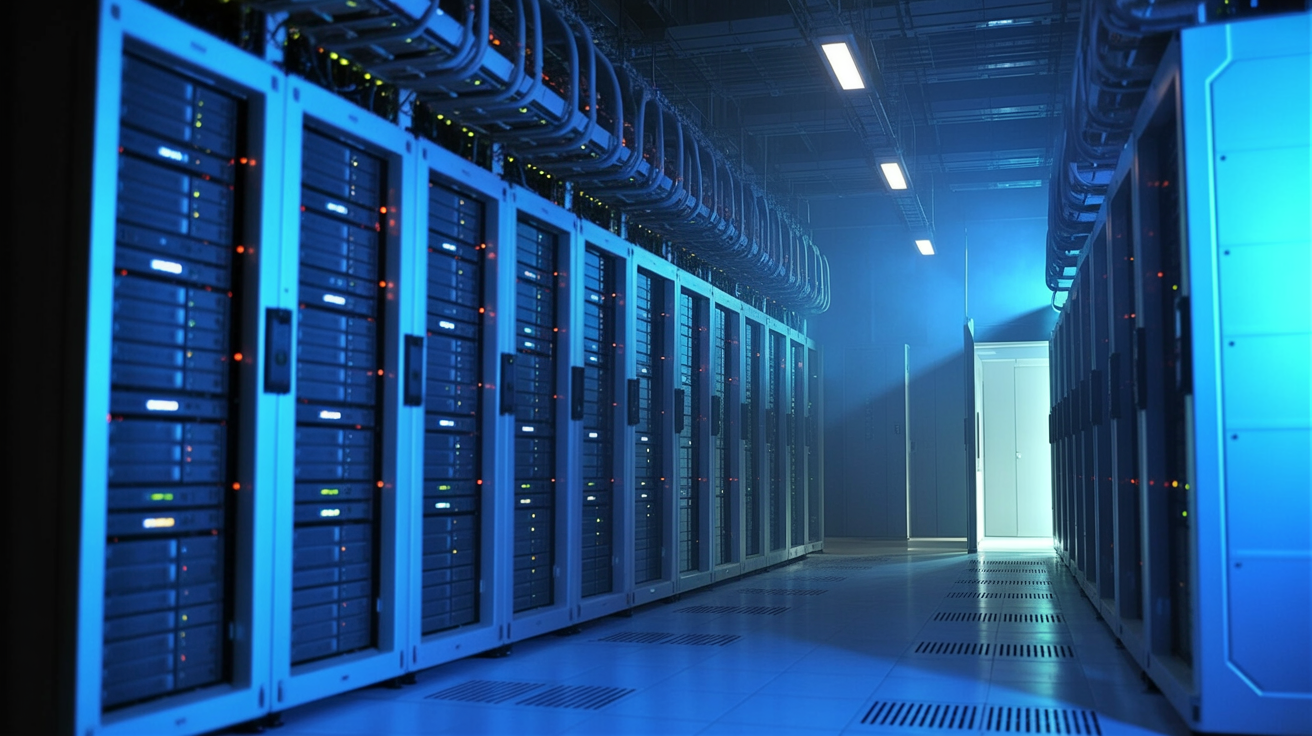
A supercomputer breach is not just a bigger data breach. If CNN’s reporting on the alleged compromise of China’s National Supercomputing Center in Tianjin is even directionally right, sample files tied to aerospace, military research, bioinformatics, and fusion work; claims of a 10-petabyte-scale leak; and possible exfiltration over months, then the incident details matter less than the system design. CNN cited expert review of sample materials, but broader independent verification is still limited. Fine. The architectural lesson still lands: shared supercomputers now erase the line between “compute utility” and “national-security vault,” which means HPC security cannot keep borrowing default assumptions from enterprise IT.
The news value is not whether one seller on Telegram is bluffing. It is that modern supercomputers now hold the working memory of states.
If you were building national compute infrastructure, this is the nightmare version. You centralize expensive machines behind one scheduler, one storage fabric, and one admin plane because that is how you get utilization. Then one supercomputing center stops being a research service and starts behaving like a vault full of sensitive defense data, industrial secrets, and scientific work that cannot be recreated on demand.
Why a supercomputer breach matters more than a normal hack
A normal enterprise breach is usually bounded. One company. One tenant. One ugly bucket of records and documents.
A supercomputer breach is worse because it exposes research context, not just files.
Suppose an attacker steals one contractor’s missile design document. Bad.
Now compare that with stealing the design document plus simulation history, failed variants, input parameters, scheduler logs, rerun patterns, and neighboring aerospace projects on the same machine. That second pile is not a file dump. It is a research roadmap. It tells you what nearly worked, what constraints mattered, and what they are likely to try next.
That is the jump most people miss. Once defense work, industrial R&D, and frontier science share infrastructure, the machine room is no longer “just compute.” It is the place where the state’s working memory accumulates.
| Breach type | Typical target | What gets stolen | Blast radius | What the attacker really learns |
|---|---|---|---|---|
| Ordinary enterprise breach | One company app or server | Records, credentials, internal docs | Usually one org | What the organization has |
| Shared supercomputing-center breach | Compute, storage, scheduler, or admin plane | Simulations, datasets, workflows, cross-tenant metadata | Many labs, firms, and state projects at once | What the organization is trying, testing, and failing at |
That is why the vault framing matters. A bank vault stores valuables. A supercomputing center stores process. In practice, process is often worth more.
That same pattern shows up elsewhere in AI. In Claude Code leak and AI model collapse provenance, convenience and concentration create failures that look local until you notice the hidden shared layer.
What the alleged leak suggests about China’s compute stack
We should stay disciplined. Outside observers do not know the exact architecture of the Tianjin center from the incident alone, and the specific allegations remain conditional.
But the sample materials CNN described fit a very familiar HPC pattern: one shared facility serving universities, labs, companies, and strategically important programs. That is not some weird national quirk. It is what you build when the hardware is expensive, the operators are specialized, and everyone wants access to the same giant machine.
The problem is not “centralization is risky.” The problem is more specific: a few shared layers silently turn ordinary infrastructure into a strategic concentration point.
| Shared layer | Why operators centralize it | Why it turns a utility into a vault | Concrete failure scenario |
|---|---|---|---|
| Shared storage | Data locality is everything; moving petabytes around is slow and miserable | The same file fabric can hold university science, commercial IP, and defense simulations side by side | Compromise storage metadata or export paths, and an attacker can map high-value datasets before stealing them |
| Job scheduler | One scheduler keeps scarce compute busy and allocates access efficiently | It sees who is running what, when, and how often; that is operational intelligence, not just IT plumbing | Even without reading every file, scheduler history can reveal which missile, chip, or biotech projects are active and accelerating |
| Admin plane | A small elite ops team can run a huge cluster only with broad control | Broad visibility plus broad access is basically god mode with a help-desk badge | One privileged foothold can inspect jobs, move data, and traverse tenants without tripping the kinds of alarms enterprise IT expects |
If you were building this yourself, these choices would feel completely rational. Of course you want one storage system close to compute. Of course you want one scheduler. Of course your operators need broad access or the cluster falls over at 2 a.m.
And then comes the bad part: the same design that makes the system useful also makes it legible to an intruder. One place to watch. One place to copy. One place to learn what matters.
Here is the condensed version of the blast radius:
| Control point compromised | Immediate access gained | Strategic consequence |
|---|---|---|
| Shared storage | Datasets, intermediate outputs, export paths | Theft of irreplaceable research and sensitive defense data |
| Scheduler/control plane | Job history, project timing, resource patterns | Visibility into what programs are active and urgent |
| Admin plane | Cross-tenant observation and privileged actions | Fast movement from “interesting access” to “whole facility problem” |
That is what the alleged supercomputer breach suggests, even if some incident details eventually change. The dangerous part is the concentration of working context in a few shared systems.
Why the real story is security debt, not one hacker
The sharpest lesson here is not that big clusters have big blast radiuses. We already knew that.
It is that HPC environments normalize the exact behaviors defenders usually rely on to spot exfiltration.
Start with bulk data movement. In normal enterprise security, a massive outbound transfer is a screaming alarm. In a national lab or industrial research cluster, huge transfers are the job. Researchers move giant datasets, checkpoint files, simulation outputs, and backups all the time. “Someone copied 40 TB” is only useful if you already know which project, which path, and which time window should have been quiet. Generic anomaly detection falls flat.
Then look at long-running jobs. In office IT, a process running for days while touching lots of files looks bad. In HPC, that is just Tuesday. A physics simulation, model training run, or fusion analysis pipeline can chew through storage and compute for ages without anyone blinking.
Shared file access has the same problem. Enterprise defenders often assume access patterns are relatively bounded by team or business unit. A supercomputing center does not work like that. Shared datasets, common libraries, scratch space, and service accounts create broad legitimate access by design. An attacker does not need to invent weird behavior. They just need to blend into the noise floor the platform already calls normal.
That is the ugly asymmetry. If you were stealing from a bank, you would need to avoid looking like a bank. If you were stealing from HPC, you can often hide inside behaviors the system exists to support.
This is why the phrase “security debt” fits. Not because somebody forgot to patch a box, though that happens too, but because performance exceptions pile up until the platform behaves like a vault without being defended like one. The monitoring stack is tuned for uptime. The transfer tools are tuned for speed. The permissions model is tuned for collaboration. Then everyone acts surprised when cyber espionage rides those same rails.
You can see a related pattern in agentic sandbox escape and AI agent hack. The recurring mistake is simple: we keep building systems where legitimate actions are broad enough to disguise harmful ones.
What this changes for governments and companies
The most useful operating principle is not “monitor better.” It is separate strategically irreplaceable workloads even when utilization gets worse.
That sounds obvious until you price the hardware. Then every institution starts talking itself into one shared platform with “logical separation,” because physical or administrative separation feels inefficient. This is how you end up with a vault pretending to be a utility bill.
A simple decision framework helps. Ask one question first: If this workload leaked, could we realistically recreate it from scratch? If the answer is no, because it includes defense simulations, proprietary model weights, export-controlled datasets, unique scientific runs, or the collaboration graph around them, it does not belong on the default shared fabric.
That means three practical choices.
First, separate the irreplaceable stuff. Not with a policy PDF. With actual enclaves: separate storage domains, separate admin paths, and preferably separate export tooling. A half-empty secure partition is cheaper than a full shared cluster that turns into a national incident.
Second, split visibility from control. The words “single pane of glass” sound great right up until you realize the pane works for attackers too. If one credential can observe jobs, inspect data paths, and move files, you did not build operations tooling. You built a jackpot.
Third, add friction exactly where the machine is most convenient. Outbound movement from high-value projects should be slower, uglier, and more explicit than ordinary research traffic. Yes, people will complain. They are supposed to complain. Security controls that nobody notices are usually protecting nothing important.
This is not just about China. The same logic applies to AI training clusters, biotech compute, chip design farms, and large internal research platforms. Any environment that concentrates scarce compute and irreplaceable context will drift toward the same failure mode.
The practical lesson is not “never centralize.” It is narrower, and harsher: once your compute utility starts holding the working memory of a state or company, you have to stop defending it like corporate IT. The real design decision is not where to put the GPUs. It is where you are willing to lose efficiency to keep the vault from becoming one big room.
Key Takeaways
- A supercomputer breach is more dangerous than a normal hack because it can expose research process, project timing, and failed experiments, not just files.
- Shared supercomputers now blur the line between utility infrastructure and national-security vaults, so HPC security cannot rely on default enterprise assumptions.
- The most important shared layers are storage, schedulers, and admin planes because each concentrates both access and strategic context.
- Detection often fails by design in HPC environments because bulk transfers, long-running jobs, and broad file access are normal behavior.
- The best operating principle is simple: separate strategically irreplaceable workloads even when that lowers utilization.
Further Reading
- CNN: A hacker has allegedly breached one of China’s supercomputers and is attempting to sell a trove of stolen data, Primary reporting on the alleged breach, the sample files, and expert assessment of what they appear to show.
- U.S. Department of Justice: Justice Department announces arrest of prolific Chinese state-sponsored contract hacker, Context on contract-hacker structures, monetization, and how state-linked intrusion work can blur with private incentives.
- Bloomberg: U.S. accuses Chinese hackers of stealing virus trade secrets, Earlier example of espionage aimed at sensitive research and commercial know-how, not just ordinary business records.
- Xinhua English: Chinese supercomputing infrastructure reference, Useful background on how China publicly frames the role of major supercomputing centers in national research and industry.
The real lesson is not that centralization increases risk. It is that shared compute now stores enough workflow, metadata, and strategic intent that a supercomputer breach is closer to opening a state archive than stealing a database dump. Once that is true, enterprise-security defaults stop being conservative. They become naive.