
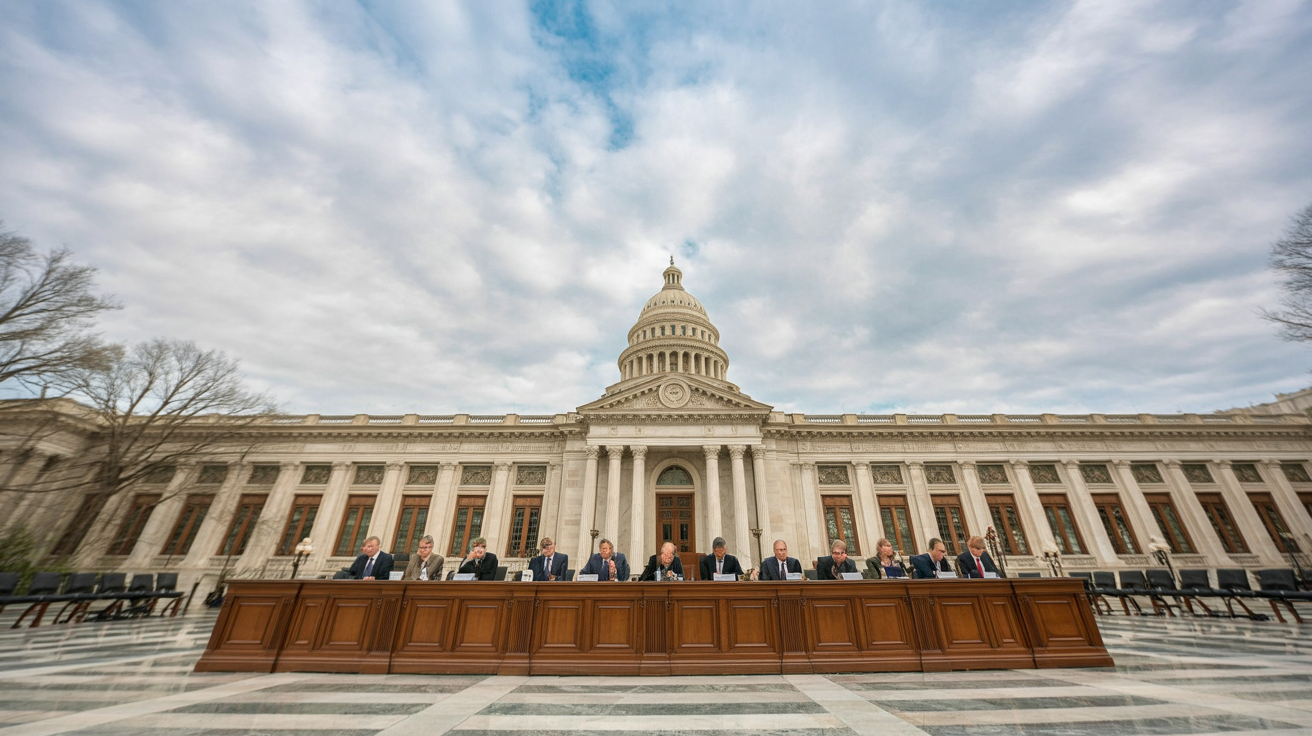
A strange detail in Illinois SB 3444 does most of the work. If a frontier model helps cause the death or serious injury of 100 or more people, or at least $1 billion in property damage, the developer may still avoid liability if it did not act intentionally or recklessly and if it published safety, security, and transparency reports. That is why AI liability is the real story here, not just another fight over “AI safety.”
The news itself is short. WIRED reported that OpenAI backed Illinois SB 3444, a bill that would shield frontier AI developers from liability for defined “critical harms” if they publish required reports and did not intentionally or recklessly cause the incident. The bill text says those harms include 100+ deaths or serious injuries or $1 billion in property damage, applies to models trained with more than $100 million in compute, allows alternate compliance through certain EU or federal arrangements, and would stop applying if federal law later overlaps. OpenAI said it supports the approach because it targets serious harms while avoiding a state-by-state patchwork.
What matters is the bargain the bill normalizes.
Not prevent harm, then earn trust.
More like publish the right paperwork, avoid the wrong mental state, and move the biggest failures toward immunity.
OpenAI backs a liability shield, and that changes the real fight
Most people hear “AI safety bill” and imagine more constraints on labs.
SB 3444 does contain reporting requirements. But the live wire in it is legal, not technical. It redraws who pays when something goes very wrong.
That is a bigger shift than it sounds.
In ordinary product debates, the question is whether a company made a dangerous thing. Here the proposed frame is subtler: if the harm is catastrophic enough, and the developer can say it wasn’t intentional or reckless, then the existence of reports may help place the developer outside the normal zone of AI liability.
That is not just lighter regulation. It is a new map.
The map says the most advanced labs should be governed less by after-the-fact lawsuits and more by ex ante compliance rituals. Publish the safety report. Publish the transparency report. Show some process. Then, when the nightmare scenario arrives, the legal fight is no longer “who caused this?” but “did you satisfy the conditions for the shield?”
That is a very different industry.
It also fits a broader pattern. We’ve already seen in AI lobbying trips that frontier labs are not merely resisting regulation. They are trying to shape the kind of regulation that scales best for them. The winner is not the company with the safest model. It is the company best positioned to convert compliance into a barrier.
The hidden trade-off: safety reporting in exchange for immunity
The smartest thing in the bill, politically, is that it asks for something that sounds responsible.
Who could object to safety reports?
That is exactly why this is effective.
A reporting regime does two things at once. First, it gives lawmakers something visible to point to. Second, it can quietly turn safety from an operational standard into a procedural one. Once that happens, the question becomes whether the form was filed, not whether the model was meaningfully safe.
That is the difference between aviation and theater.
In aviation, documentation matters because it sits on top of deep technical practices, inspection regimes, and hard accountability when things break. In software, documentation often becomes the substitute for those things. A postmortem template is not reliability. A model card is not control. A transparency report is not the same as a system you can trust under stress.
And yet the bill’s logic moves in exactly that direction.
Here is the trade:
| Bill element | What it sounds like | What it may do in practice |
|---|---|---|
| Safety, security, and transparency reports | Evidence of responsibility | Creates a checklist for immunity |
| Intentional or reckless standard | Punish truly bad actors | Makes ordinary negligence fights harder |
| “Critical harm” threshold | Focus on worst-case scenarios | Defines a class of disasters that may be harder to litigate |
| Federal/EU compliance alternatives | Harmonization | Gives large labs more ways to qualify for protection |
The unusual part is not that OpenAI wants less exposure. Every company wants that.
The unusual part is where the exposure gets reduced: right at the catastrophic edge, where public accountability is supposed to be strongest.
That is why the phrase AI liability matters more than the safety branding around it.
There is also a practical problem. The intent or recklessness standard is a high bar. In many dangerous industries, plaintiffs do not need to prove a company wanted the outcome. They can argue the company was negligent, cut corners, ignored warnings, or shipped anyway. If a frontier lab gets protection unless plaintiffs can show intent or recklessness, the bill narrows the path dramatically.
For ordinary people, that means the bigger the failure, the more abstract the remedy may become.
Why the bill matters: it redraws who pays when AI goes catastrophic
The default instinct is to compare AI to search engines or social platforms. Some defenders of the bill do exactly that: if someone uses a tool for harm, why should the toolmaker be liable?
That analogy is comforting because it is familiar.
It is also getting weaker.
A search engine returns links. A frontier model can generate detailed instructions, autonomously chain actions, write malware, imitate experts, and in some systems operate with tool access. The bill itself recognizes this by covering cases where a model engages in conduct on its own that, if committed by a human, would be criminal and lead to extreme outcomes. Once the law starts speaking that way, the “it’s just like Google” defense becomes much less persuasive.
The real question is not whether developers should be liable for everything.
They should not.
The real question is which layer in the stack should absorb the risk: the frontier model developer, the business deploying the model, the end user, or the victims.
SB 3444 pushes that burden downward.
If the model developer gets a shield, then the remaining pressure lands on everyone else. The company integrating the model into a medical workflow. The enterprise automating internal approvals. The startup building an agent product on top of an API. The local government buying a system it barely understands. They become the easier defendants.
That would be a quiet transfer of risk from the largest firms to the firms with the least leverage.
We have seen a cousin of this dynamic already. In Block layoffs AI, the public story was automation. The deeper story was bargaining power. AI often gets introduced as efficiency, then reorganizes who can be blamed, replaced, or squeezed. Liability law can do the same thing.
And this is where the bill’s threshold matters. A “frontier model” is defined by more than $100 million in training compute, which according to WIRED likely catches OpenAI, Google, xAI, Anthropic, and Meta. Those are exactly the companies most able to produce reports, hire policy teams, and negotiate federal arrangements. Small firms do not get a moat from paperwork. Big firms do.
Why state-by-state AI rules may be the wrong battlefield
OpenAI’s public argument is not crazy. Jamie Radice said the company supports approaches like this because they focus on serious harm and avoid a patchwork of state rules. Caitlin Niedermeyer argued for a federal framework and warned against inconsistent state requirements.
On one level, that is true.
Fifty incompatible AI laws would be a mess.
But “we need national rules” can mean two very different things. It can mean we need one strong standard that keeps labs on the hook. Or it can mean we need one standard that preempts tougher state rules and stabilizes the business model of the largest vendors.
Those are opposite projects.
The danger is that people hear “federal standard” and imagine coherence, when the actual prize is preemption. Get one law in place, preferably a process-heavy one, and suddenly states cannot experiment with tougher forms of AI liability or broader theories of harm.
That matters because states are often where new accountability regimes start.
The same pattern shows up in AI accountability. Once decisions are distributed across models, contractors, platforms, and agencies, everyone claims to be one step removed from the outcome. Liability is what forces those abstractions to collapse back onto actual institutions. If you weaken it too early, you get a world full of harms and no one close enough to touch.
There is another irony here. The labs keep saying the biggest risks are rare but catastrophic. Fine. But if that is true, then liability for catastrophic failure is one of the few levers that still bites. You cannot spend years warning about existential or civilizational risk and then act surprised when people want the legal system to matter at the edge.
What ordinary businesses should learn from AI liability
Most companies using foundation models will read this story the wrong way.
They will think: good, maybe the upstream labs are getting clearer rules.
They should think: guess whose name is left on the complaint when the upstream lab is harder to sue?
If you build on frontier APIs, a liability shield at the model layer does not make your risk disappear. It may concentrate it at your layer. Your customers will still ask who approved the workflow, who relied on the output, who failed to add human review, who connected the model to sensitive tools, who deployed it into healthcare, finance, hiring, logistics, or security operations.
So the practical move is not to wait for regulators.
It is to design as if the biggest vendor in your stack is already trying to push risk onto you.
That means a few concrete things:
- Keep logs that show what the model saw, returned, and triggered.
- Separate suggestion from execution. Don’t let one model both decide and act in high-risk flows.
- Put human review at the point of irreversible action, not three steps earlier.
- Write contracts that name who owns what failure mode.
- Treat vendor “safety reports” as marketing until proven otherwise.
This is also a good time to revisit your own mental model of what AI systems are. A lot of public misconceptions about AI come from treating models as either magic brains or dumb tools. They are neither. They are components in socio-technical systems, and liability fights are really fights over which component gets treated as the responsible actor.
That choice shapes the market.
If frontier labs can turn reporting into immunity, then safety stops being mainly about engineering and starts becoming a question of legal architecture. The companies that win will not just have better models. They will have better exits from blame.
Key Takeaways
- AI liability is the core issue in Illinois SB 3444, not the bill’s safety branding.
- The bill would shield frontier labs from certain catastrophic-harm claims if they did not act intentionally or recklessly and published required reports.
- That creates a trade: procedural safety reporting in exchange for a potential reduction in catastrophic lawsuit exposure.
- The likely effect is a transfer of risk downward, from major model developers to deployers, integrators, and users.
- The fight over state vs. federal AI rules is really a fight over whether liability remains a live tool.
Further Reading
- OpenAI Backs Bill That Would Limit Liability for AI-Enabled Mass Deaths or Financial Disasters, WIRED’s original reporting on OpenAI’s support for Illinois SB 3444.
- Illinois SB 3444 text, The bill’s actual language, including the liability shield and “critical harm” definition.
- Illinois Senate bills page, Official legislative record for SB 3444 in Illinois.
- Reuters U.S. world page, A useful place to check for broader reporting and follow-up coverage.
- Anthropic news, Compare how another frontier lab frames AI safety, regulation, and public responsibility.
The big change here is not that AI companies want less blame. It is that they are getting better at asking for it in the language of safety.