
Industrial control systems usually disappear into the background. Then a Telegram post claims it can flood Venice for $600, and the real lesson appears: attackers do not need Stuxnet-style malware if they can reach exposed OT interfaces.
The reported target was the hydraulic pump system protecting Piazza San Marco, one of Venice’s lowest and most flood-prone areas. Security Affairs reported that a group calling itself “Infrastructure Destruction Squad” or “Dark Engine” claimed administrative access, posted screenshots of panels and valve states, and said it could disable protections. Venice’s flood risk and local defenses are real. The more dramatic claims are still not independently confirmed, and in the source set here there is no public Italian operator or government statement verifying command execution or physical disruption.
How the Venice flood-defense claim works
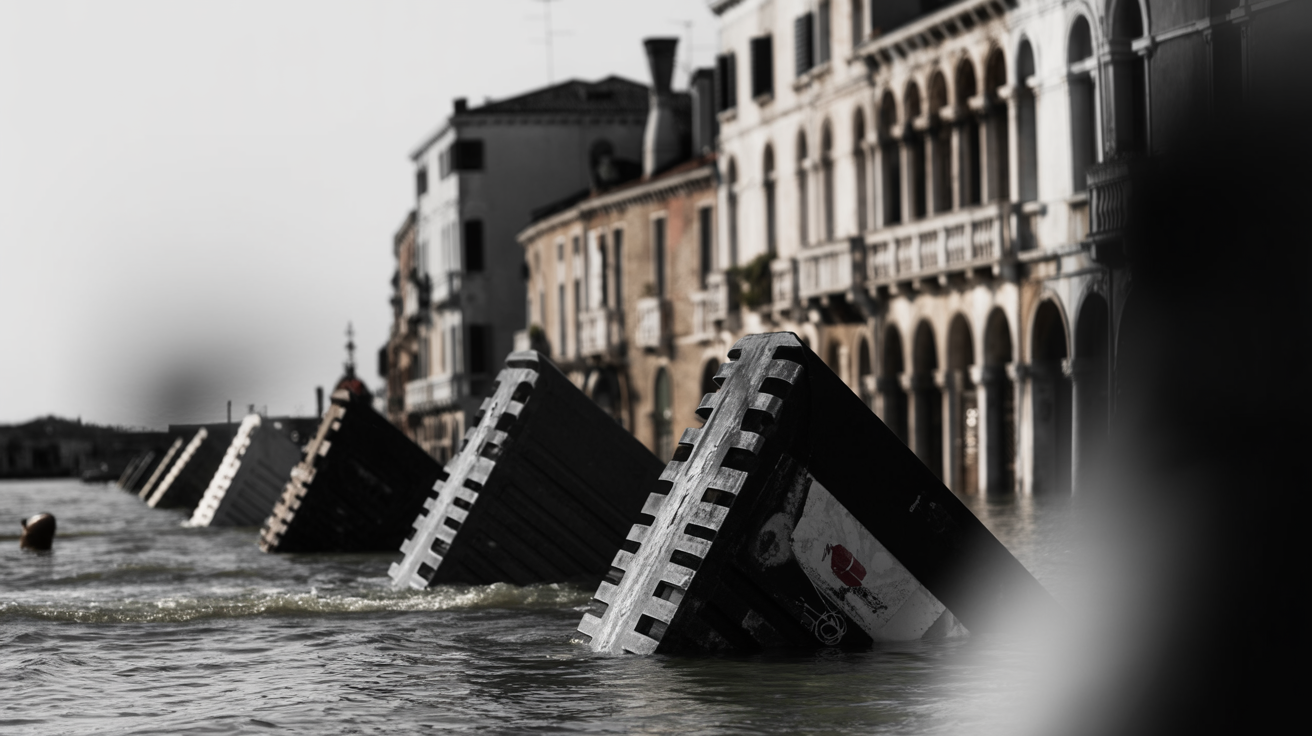
San Marco matters because it floods easily, and because it is symbolic. The Guardian’s 2022 reporting on St Mark’s Basilica described the area’s flood exposure and the protective systems built around it. So the setting is real, and the infrastructure is real. What is murkier is the jump from “attackers posted screenshots” to “attackers could flood Venice.”
Here’s the cleanest way to read the evidence.
| Stage | What it would mean | Status in this case | Where verification stops |
|---|---|---|---|
| Public claim | A threat actor says it accessed the system | Verified that the claim was made | Security Affairs reported the Telegram claim |
| Screenshots of control panels / layouts / valve states | The actor may have seen real OT screens or project data | Reported, not independently validated in the provided sources | No direct validation of the images in the source set |
| Possible HMI or admin visibility | The actor may have had access to a Human-Machine Interface, the operator screen used to monitor or control equipment, or related admin functions | Reasonable inference if screenshots are authentic, not confirmed fact | Screens alone cannot prove what permissions existed |
| Command execution | The actor actually sent commands accepted by pumps, valves, or related equipment | Unverified | No independent evidence of successful control actions |
| Proven physical impact | Flood defenses changed real-world behavior because of attacker action | No evidence in the provided sources | No confirmed disruption, changed water state, or disabled protection |
That middle zone is where most of the confusion lives. A screenshot can be a lot of things:
- a real operator view
- a copied project layout
- a stale screen from an earlier session
- a remote-desktop session with view-only access
- a live system with limited privileges
- a fully privileged admin panel
Those are very different situations. A lot of reporting on industrial control systems collapses them into one dramatic blob called “full control.” That is not how OT security works.
The $600 sale offer makes the whole thing even stranger. If someone truly had durable control over symbolic infrastructure, selling it cheaply on Telegram would be an odd way to monetize it. That makes attacker theater more likely. It does not make the access path harmless.
What screenshots can and cannot prove in an OT environment
This is the part people tend to miss.
If the screenshots are authentic, they may show visibility into industrial control systems. That alone matters. Seeing HMI panels, device names, layouts, alarm pages, or valve states can tell an attacker how a process is organized and which screens operators depend on.
What they cannot prove is the crucial part:
- They do not prove the attacker could send commands
- They do not prove the commands would reach field devices
- They do not prove the process would respond as intended
- They do not prove any flood-defense mechanism actually changed state
Wait, if screenshots do not prove control, why worry? Because in OT, the operator layer is part of the attack surface. An HMI is not just a dashboard. It is often where humans decide whether a pump is running, whether an alarm is urgent, whether a setpoint has drifted, whether they should intervene.
That means an attacker can create risk before touching a motor or valve directly.
A concrete scenario looks like this:
- An exposed remote interface gives access to an HMI or engineering environment.
- The attacker edits an alarm threshold or changes what the screen displays.
- The operator sees a false “normal” state or a misleading warning.
- The operator delays a response or takes the wrong action.
- Process impact follows from the human decision, not from dramatic malware.
That is why HMI compromise is a serious phrase in OT security. The attacker does not need to “hack the pumps” in the cinematic sense. They may only need to shape what the operator believes.
Why this matters for industrial control systems
The Venice claim is useful because it points at a newer and much more common threat model for industrial control systems. Not wormable sabotage. Not secret nation-state malware. Just exposed interfaces, ordinary access paths, and operator-facing software that was never meant to be public-facing.
Security Affairs framed the incident around that risk. The broader U.S. advisory cited in the reporting stack is relevant only in a narrower way here: if confirmed by the cited advisory, it would fit the same pattern of attackers targeting internet-exposed OT and using legitimate tools rather than exotic malware. Since this piece relies on the provided source set, the stronger claim is simply this: the Venice story is consistent with a widely discussed OT exposure model, but independent confirmation of this specific incident remains absent.
That contrast with Stuxnet matters. Stuxnet taught everyone to picture industrial attacks as highly specialized code aimed at PLCs. The boring version is scarier because it is more available: a reachable interface, weak access controls, an exposed engineering tool, a screen the operator trusts.
SCADA stands for Supervisory Control and Data Acquisition, the software layer used to monitor and control industrial processes across sites. In real SCADA systems and other industrial control systems, the line between “can see” and “can influence” is often thinner than outsiders expect.
A city, utility, or transit operator does not need a Hollywood-grade adversary to have a bad day. It may only need an HMI that should never have been reachable from the internet.
What generalists should notice about OT exposure
Three questions will get you farther than the headline.
- Did the attacker see screens, change settings, or cause a field-device action?
Those are three different levels of access. Reporting often blurs them together. - What was the exposed path?
An internet-facing HMI, remote admin panel, VPN, or engineering workstation usually tells you more than the attacker’s bragging does. - Who confirmed the physical effect?
Attacker claims are easy. Operator statements, regulator notices, or field evidence are the hard part.
That last one is the reusable test: when you read the next OT incident, ask where the evidence stops. If it stops at screenshots, you are looking at possible visibility. If it reaches confirmed commands or field-device action, that is a different category entirely.
Key Takeaways
- The Venice incident does not independently prove full attacker control over flood defenses.
- What is evidenced is narrower: a public claim, reportedly posted screenshots, and a plausible path toward HMI or admin visibility.
- In industrial control systems, screenshots can suggest exposure without proving command execution or physical impact.
- The real risk model is simpler than people expect: exposed OT interfaces can create danger without Stuxnet-style malware.
- When reading future critical infrastructure cybersecurity stories, ask one question first: did the evidence show screens, settings changes, or real field-device action?
Further Reading
- Hackers claim control over Venice San Marco anti-flood pumps, The core incident report, including the attackers’ quoted claims and the current verification gaps.
- Iran-Linked Actors Targeting Internet-Exposed Operational Technology, The cited U.S. advisory on internet-exposed OT, useful as broader context if independently consulted alongside this case.
- Glass barriers keep St Mark’s Basilica dry as Venice floods, Background on why Piazza San Marco’s flood defenses are both technically important and symbolically potent.
The weird part of the Venice story is not the Telegram bravado. It is how much trouble exposed industrial control systems can invite before anyone has proved a single pump moved.