
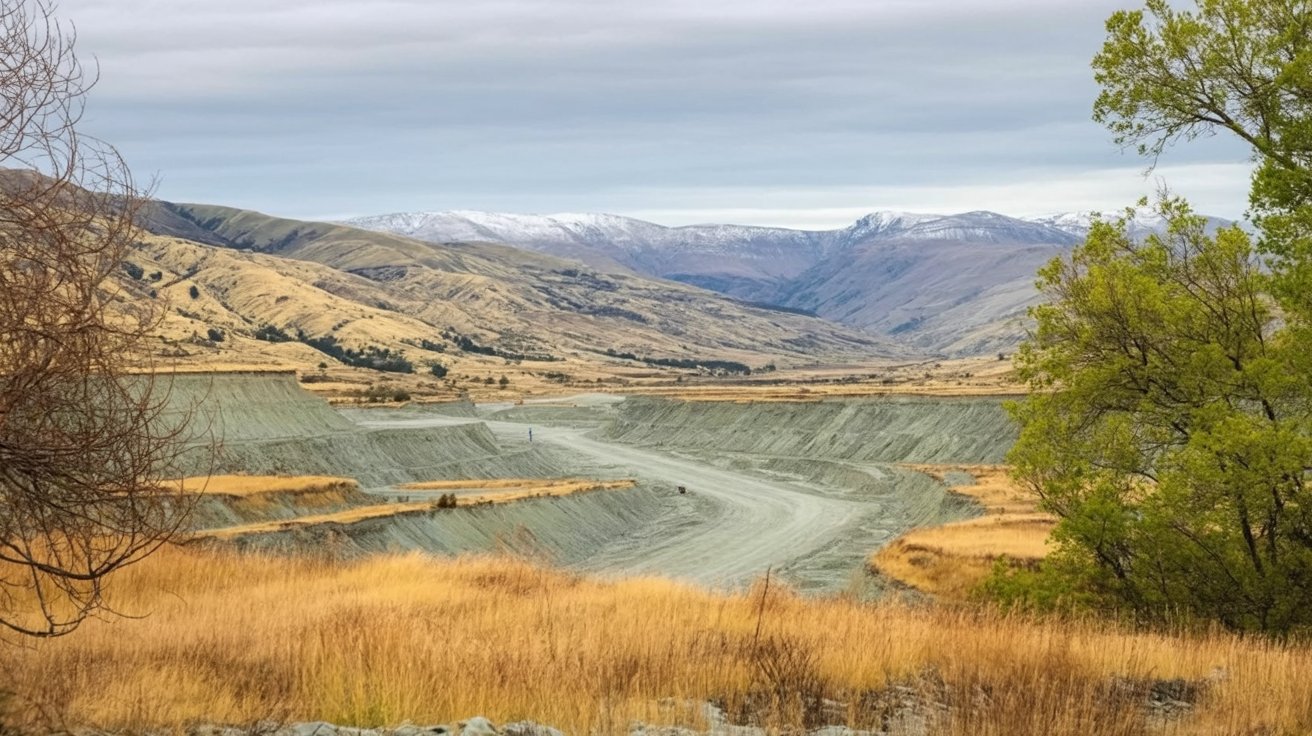
Santana chairman comments have widened a trust dispute around the company’s proposed Central Otago mine after local reporting in January attributed climate-sceptic and culture-war posts on LinkedIn to board chair Peter Cook.
Santana Minerals lists Cook as its non-executive chairman on its governance page, a role he has held since October 2023, while Otago Daily Times and Crux reported public posts in which he dismissed mainstream climate science and mocked opponents.
Cook is not a peripheral figure here. Santana’s governance page says its board is meant to bring experience in exploration, operations and “generating shareholder value”, which is the polished corporate version. The local reporting showed a much less polished public voice.
According to the Otago Daily Times, Cook had repeatedly expressed scepticism about human-caused climate change on LinkedIn. The paper quoted him describing carbon dioxide as “the gas of life” and writing that human-induced climate change, “if it actually has had any material impact is unproved”. It also reported a post saying: “Keep the social warriors and ‘Tik Tok’ actors of modernity out of it.”
Crux reported sharper language from the same public posting trail. Its January 30 report said Cook compared a climate graph to “a rainbow flag” and wrote: “The left ideology entrenched everywhere.” Crux also said he wrote that a political party would “romp it in if they show some spine and political mongrel”, and that voters were “stupid” for backing solar energy.
Those quotes mattered because the company was already trying to win trust for a contentious project. A mine asking a community for consent is, among other things, a social licence exercise. Public contempt for opponents tends to be a strange way to improve that.
James Renwick at Te Herenga Waka Victoria University of Wellington, who was quoted by Otago Daily Times and was not involved with Santana, said Cook’s climate claims were “completely false”. Green MP Scott Willis told the paper the remarks were “astonishing” and “so offensive”, and said companies should remove “conspiracy theorists” who cannot speak “sensibly and respectfully with the community”.
Cook gave Otago Daily Times a brief response rather than addressing the quoted posts in detail. “Turning a regulatory process into a personal argument doesn’t help people understand the project,” he said. Otago Daily Times reported that Cook and Santana chief executive Damian Spring did not answer its specific questions. NovaKnown did not find an official statement on Santana’s site addressing the comments.
The issue did not end with climate posts. In April, Otago Daily Times reported a separate dispute between Santana and Kā Rūnaka over the company’s description of negotiations tied to the project. The paper said Santana documents filed with a fast-track panel framed the rūnaka as seeking a $180 million payment, while Cook warned iwi against “oppressive negotiating tactics”.
Kā Rūnaka rejected that framing in unusually direct terms. Otago Daily Times reported representatives said they were “shocked and deeply disappointed” and that the company had suggested “financial intent where that has not been our focus”. “To suggest those responsibilities can be bought misunderstands who we are and why we are at the table,” they said.
That April clash matters because it turned a bad-comments story into a broader credibility problem. First came the public posts; then came a dispute with Ngāi Tahu representatives over how engagement itself had been characterised. If you were looking for a way to make local trust harder, this is a fairly efficient sequence.
Some parts remain unverified. The available reporting supports claims that Cook made climate-sceptic, conspiratorial and derisive public comments, and that he was accused of being disrespectful to opponents and iwi representatives. It does not independently establish that he made explicitly racist comments, and NovaKnown did not verify the underlying LinkedIn posts directly from the platform.
For background on how the mine has split local opinion, see our earlier coverage of Santana mine supporters. The project also sits in a region dealing with competing development pressures, including large infrastructure bets such as The NZ town subsidising Silicon Valley’s AI boom.
Key Takeaways
- Peter Cook is Santana Minerals’ non-executive chairman, according to the company’s governance page.
- Otago Daily Times and Crux reported LinkedIn posts attributed to Cook that dismissed mainstream climate science and mocked opponents.
- Climate scientist James Renwick called the reported climate claims “completely false”, while Green MP Scott Willis said the remarks were offensive.
- Otago Daily Times reported that Cook gave only a brief response and that specific questions to him and CEO Damian Spring were not answered.
- A later dispute with Kā Rūnaka over Santana’s $180 million framing deepened the project’s trust problem.
Further Reading
- Santana Minerals governance page, Official board page identifying Peter Cook as non-executive chairman.
- Otago Daily Times: Santana chairman clearly a cooker, January 30, 2026 report on Peter Cook’s LinkedIn comments and public reaction.
- Crux: Santana chair compares climate change graph to a rainbow flag, January 30, 2026 report with additional attributed social media language.
- Otago Daily Times: Payout allegation disputed, April 22, 2026 report on Santana, Kā Rūnaka and the disputed $180 million framing.