
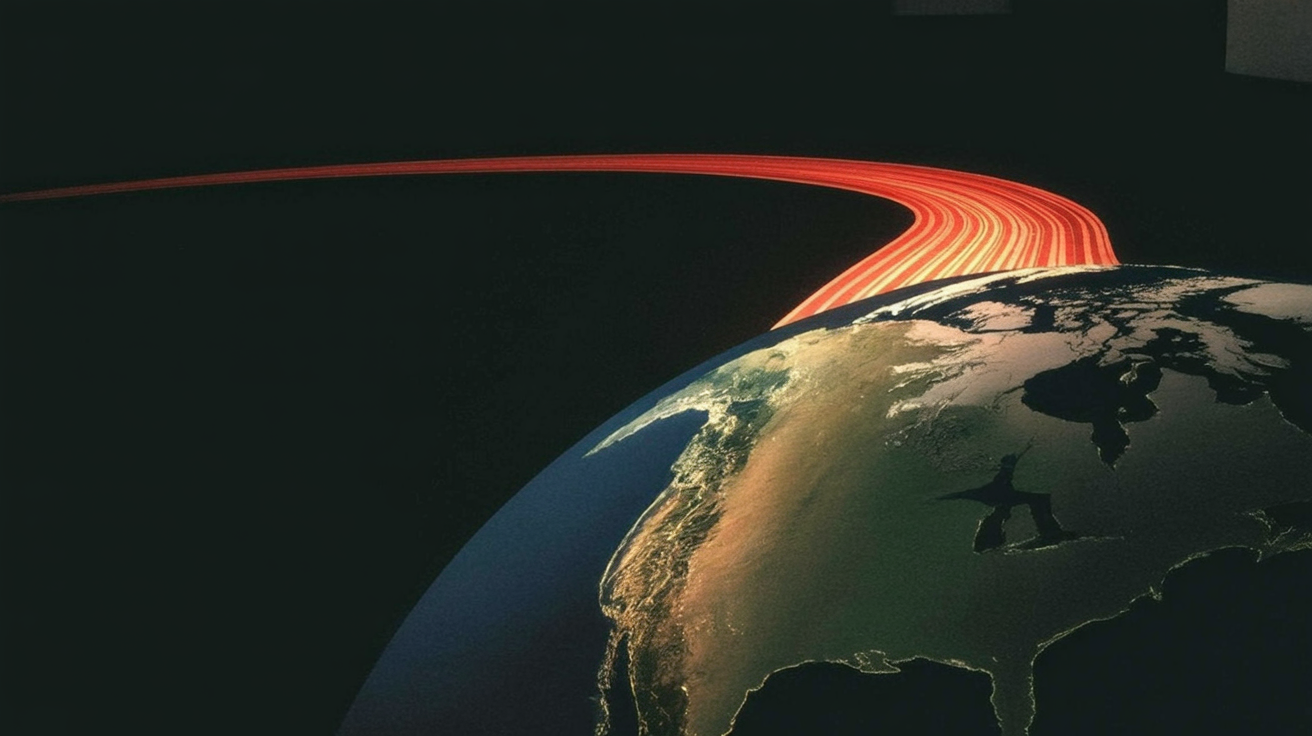
The Gulf Stream helps keep western and northern Europe milder than they would otherwise be, but a true “Europe gets much colder” scenario is really about the broader Atlantic Meridional Overturning Circulation, or AMOC, not the Gulf Stream alone. The distinction matters because the Gulf Stream is a wind-driven surface current that has shown long-term resilience, while AMOC is the larger system that transports heat and salt through the Atlantic and is the one scientists discuss in slowdown or collapse scenarios.
The short version is simple: warm water flows north from the tropics in the Gulf Stream, then continues toward Europe through the North Atlantic Current and related currents, helping the atmosphere carry warmth and moisture over nearby land. That is one reason the UK and much of western Europe are milder than other places at similar latitudes.
How the Gulf Stream affects Europe
The Gulf Stream starts in the Gulf of Mexico, exits through the Florida Straits, and then flows northward along the eastern coast of the United States before turning east into the North Atlantic. It does not simply “hit Europe” as a single river in the sea; instead, its warmth is carried onward by the North Atlantic Current and, farther north, currents including the Norwegian Current, which help moderate the climate of northwestern Europe.
The UK Met Office is blunt about the effect: the Gulf Stream and its extension into the North Atlantic are part of why the British Isles are warmer than equivalent latitudes elsewhere. A standard comparison is that the UK sits at roughly the same latitude as parts of Newfoundland, yet has a much milder climate. That is not magic, and it is not the current alone; it is the current plus prevailing winds and the atmosphere’s transport of heat. Warm water offshore is like a large radiator beside the continent.
NOAA also stresses that the Gulf Stream is only one part of a larger Atlantic circulation system. That broader system helps redistribute tropical heat northward, which affects sea surface temperatures, rainfall patterns, storm tracks, and coastal conditions around the North Atlantic basin.
A useful way to think about it is this:
- The Gulf Stream is the fast, warm surface current off the US East Coast.
- The North Atlantic Current is the branch that carries part of that warmth toward Europe.
- The AMOC is the full Atlantic conveyor-like system of northward surface flow and southward deep return flow.
That last piece is the one people often flatten into “the Gulf Stream.” It is a bit like using one motorway on-ramp to name the whole highway network.
What would happen if it stopped
If the AMOC were to collapse or weaken sharply, Europe would not instantly become an ice-age movie set, but parts of western and northern Europe would likely become cooler than they are today, while rainfall patterns, sea level along the Atlantic, and storm behavior would also shift. The big effect is not just “less warm water”; it is a reorganization of how the Atlantic moves heat.
NASA says models generally project an AMOC weakening under climate change, but a full collapse before 2100 is considered unlikely. That matters because the Gulf Stream itself is not expected to simply switch off like a pump. The National Centers for Environmental Information says the Gulf Stream has remained stable for more than a century even as the climate has warmed.
So when people ask what would happen “if the Gulf Stream stopped,” the best answer is that scientists are usually worried about AMOC slowdown, not the disappearance of the Gulf Stream current itself. And the likely consequences extend beyond Europe: changes in tropical rainfall belts, marine ecosystems, and US East Coast sea level are also part of the risk picture.
One concrete implication from the source material: if a circulation system that now carries tropical heat northward weakens, that is less heat reaching the North Atlantic. Since AMOC is described by NOAA Climate.gov as a major mechanism for moving heat and salt through the Atlantic, a weaker version means weaker northward heat transport by definition. That is the key derived fact behind the colder-Europe headline.
What the evidence says about collapse risk
The evidence points to AMOC weakening as a serious research concern, but not to a settled forecast that Europe is about to lose the Gulf Stream. NOAA describes observations showing change in the Atlantic circulation, while NASA says a complete AMOC collapse this century is unlikely based on current assessments.
At the same time, some research has argued for stronger instability warnings. The European Commission’s CORDIS summary highlights work suggesting the AMOC may be moving toward a tipping point, with potentially large impacts on Europe and the wider climate system. That does not erase the more cautious institutional view; it means the uncertainty is about how close the system may be to a threshold, not about whether the AMOC matters.
This is also where terminology matters more than it first appears. Saying “the Gulf Stream is collapsing” can mislead readers into picturing a single current vanishing. The more accurate statement is that scientists are evaluating changes in the AMOC, a larger circulation system of which the Gulf Stream is one surface component. In climate coverage, getting that distinction wrong is the oceanography version of the kind of trust-eroding shortcut seen in other public debates, including NovaKnown’s piece on the climate denial and trust row: the simplified slogan travels faster than the mechanism.
That does not make the risk trivial. It makes it specific. The best current answer is:
| Question | Best supported answer |
|---|---|
| Does the Gulf Stream help keep Europe mild? | Yes, especially western and northern Europe. |
| Is the Gulf Stream the same as AMOC? | No; the Gulf Stream is part of the larger AMOC system. |
| Would a major AMOC weakening affect Europe? | Yes; cooler regional conditions and broader climate shifts are expected. |
| Is a full collapse before 2100 the mainstream expectation? | No; NASA says it is unlikely based on current assessments. |
The practical takeaway is that Europe’s mildness is partly an ocean story, but the scary scenario is not “one current stops tomorrow.” It is a broader Atlantic heat-transport system weakening over time. That is less cinematic, but more accurate, a bit like the difference between “jobs disappeared” and NovaKnown’s lost tasks, not jobs: the system-level change is the real story.
Frequently Asked Questions
How does the Gulf Stream affect the UK and northern Europe?
The Gulf Stream and its northeast extension help keep the seas around the UK and northwestern Europe warmer than they would otherwise be. That ocean warmth then helps the atmosphere deliver milder conditions to nearby land, especially when combined with prevailing winds.
Where does the Gulf Stream start, and how does it reach Europe?
The Gulf Stream originates in the Gulf of Mexico, passes through the Florida Straits, and flows north along the US East Coast before turning into the North Atlantic. Its warmth then continues toward Europe through the North Atlantic Current and related northern currents.
Is the Gulf Stream going to collapse?
The Gulf Stream itself has shown long-term resilience, according to NOAA’s National Centers for Environmental Information. The bigger scientific concern is AMOC weakening, not the Gulf Stream abruptly vanishing.
What would happen to Europe if AMOC weakened a lot?
Western and northern Europe would likely cool relative to today, but that would come with other changes too, including shifts in rainfall and storm patterns. It would be a continent-scale climate rebalancing, not just “colder winters.”
References
- NOAA NESDIS, What Is the Gulf Stream?
- Met Office, What is the Gulf Stream?
- NOAA Ocean Service, What is the Atlantic Meridional Overturning Circulation (AMOC)?
- NOAA Climate.gov, Advancing our understanding of AMOC
- NASA Science, Slowdown of the Motion of the Ocean
- NOAA NCEI, Gulf Stream Demonstrates Long-Term Resilience
- NOAA NCEI, Decades of Data on a Changing Atlantic Circulation
- Britannica, Ocean Current Two Types of Ocean Circulation
- CORDIS, An Urgent Warning as a Vital Ocean Current System Appears to Show Signs of Collapsing
Key Takeaways
- The Gulf Stream helps keep western and northern Europe milder, but AMOC is the bigger system behind collapse discussions.
- The Gulf Stream is a surface current, while AMOC is a larger Atlantic heat-and-salt circulation.
- The UK and nearby parts of Europe are milder than similar latitudes partly because warm Atlantic water and the atmosphere transport heat northeastward.
- NASA says a full AMOC collapse before 2100 is unlikely, even though weakening remains an active concern.
- NOAA says the Gulf Stream itself has shown long-term resilience.
Further Reading
- What Is the Gulf Stream? | NESDIS, NOAA overview of where it starts and how it moves.
- What is the Gulf Stream? | Met Office, UK-focused explainer on why it matters for Europe.
- What is the Atlantic Meridional Overturning Circulation (AMOC)?, NOAA’s clear explanation of the Gulf Stream-versus-AMOC distinction.
- Slowdown of the Motion of the Ocean | NASA Science, overview of slowdown evidence and collapse likelihood.
- Decades of Data on a Changing Atlantic Circulation | NCEI, NOAA summary of long-term Atlantic circulation research.
Last reviewed: 2026-06