
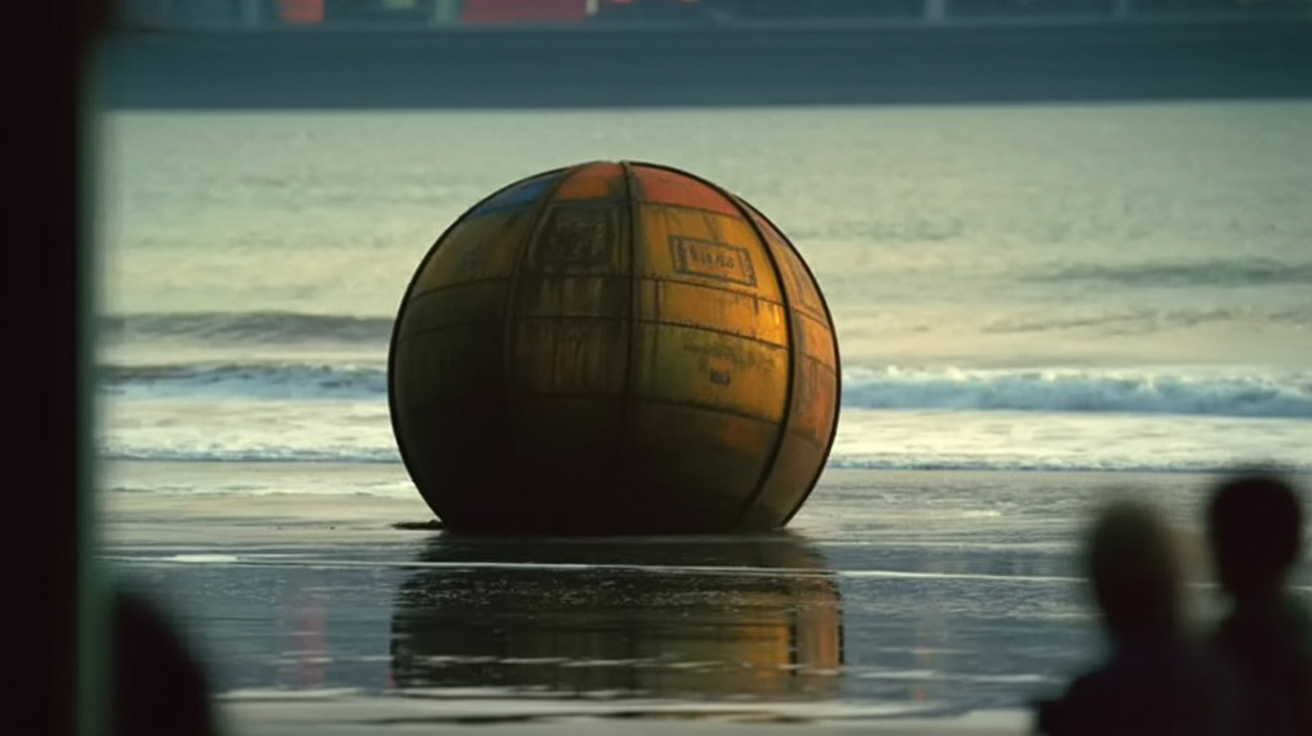
Metal balls washing up on beaches do not have a single explanation. Six objects found at Forrest Beach in Queensland in early July 2026 were identified by the Australian Space Agency as likely rocket pressure vessels from a foreign rocket body, while the viral 2023 sphere found on a beach in Hamamatsu, Japan, was examined as a hollow object consistent with a loose mooring buoy. The most important supporting fact is that officials in the two cases described different physical evidence: the Queensland objects were treated as suspected space debris, while the Japan object was X-rayed and found to be hollow.
That difference matters because these stories often arrive online as if every “mystery beach sphere” must share one dramatic origin. They do not. Early reporting in both incidents moved faster than full engineering analysis, and the evidence that officials actually released was narrower than many viral theories suggested.
Australian Space Agency identified the Forrest Beach spheres as rocket pressure vessels
The Australian Space Agency said the six metal spheres found at Forrest Beach were consistent with debris from a foreign rocket body, likely fuel pressure vessels. ABC News reported that six objects were found, after initial reports described suspected space debris washing up on the north Queensland beach.
The first response was cautious. Emergency services were called after the initial discovery, and additional objects later washed ashore. That is the sensible sequence when a beach object could be industrial debris, ordnance, or something from a launch vehicle: isolate first, identify second.
One caveat is straightforward: the space agency described the source as a likely identification, not a final public forensic report. But “likely rocket pressure vessels” is still far more specific than the generic “mystery balls” framing that spread first.
Space.com, summarizing the agency statement, likewise reported that the objects were consistent with debris from a foreign rocket body. In plain terms, that points to hardware from a launch system rather than an undersea mine, art project, or science-fiction prop.
Japanese beach sphere was examined as a hollow object consistent with a mooring buoy
The 2023 metal sphere found on Enshu beach in Hamamatsu, Japan, was reported by officials as hollow after X-ray examination. The Guardian reported that authorities dismissed fears it was a mine after that examination.
Reporters also had a more mundane clue in front of them: the object had two protruding handles, which fit the explanation that it was a mooring buoy. The National reported that such buoys can rust and lose identifying markings after long periods at sea. Once you know that, the object stops looking like a cinematic threat and starts looking like marine hardware that had a long, rough drift.
This is also why the “why did one case get called space debris and another a buoy?” question has a simple answer: the physical evidence was different. The Japan sphere was a single hollow ball with visible fittings; the Queensland case involved multiple spheres that the Australian Space Agency matched to rocket pressure vessels.
Unsupported theories went beyond what officials and reporters confirmed
The most dramatic explanations in these stories traveled fastest: mines, UFOs, “spy balloons,” and other speculative labels appeared in coverage and online chatter around the Japan object. But the confirmed facts were narrower.
For the Japan case, the confirmed facts were: the object was found on a beach, officials examined it, X-rays showed it was hollow, and authorities ruled out an immediate mine threat. For the Queensland case, the confirmed facts were: multiple spheres washed ashore, emergency services responded, and the Australian Space Agency said they were likely rocket pressure vessels from a foreign rocket body.
That leaves a practical rule for future beach-sphere stories. The evidence that matters is usually specific and boring in the useful way: count of objects, whether the object is hollow, whether it has handles or mounting points, and whether a national space or emergency authority tied it to known hardware. That is how officials separate a plausible launch artifact from marine equipment or unexploded ordnance.
The latest concrete milestone is that Australian officials had already moved from initial “suspected space junk” reporting to a likely identification of the Forrest Beach objects by 6 July 2026. In the Japan case, officials removed the object after examination in February 2023.
Key Takeaways
- The six spheres found at Forrest Beach, Queensland, in July 2026 were identified by the Australian Space Agency as likely rocket pressure vessels from a foreign rocket body.
- The Forrest Beach identification was described as likely, not as a final public forensic report.
- The 2023 Hamamatsu, Japan, sphere was X-rayed and found to be hollow.
- Officials in Japan dismissed mine fears, and reporters highlighted the object’s handles as evidence consistent with a mooring buoy.
- Not every beach-sphere incident has the same origin; the Queensland and Japan cases involved different evidence and different likely explanations.
Further Reading
- Australia’s Space agency says beach objects likely fuel pressure vessels from launch vehicle, ABC News on the likely identification of the six Forrest Beach objects.
- Suspected space junk washes up on north Queensland beach, ABC News on the initial discovery and emergency response.
- Unidentified metal spheres found on Australian beach are ‘debris from a foreign rocket body’, space agency says, Space.com summary of the Australian Space Agency statement.
- Mysterious metal ball washes up on beach in Japan, Sky News on the X-ray finding that the Hamamatsu sphere was hollow.
- Spy balloon, UFO or Dragon Ball? Japan baffled by iron ball washed up on beach, The Guardian on the mine fears, the handles, and the mooring-buoy explanation.
Frequently Asked Questions
What are the large metal balls washing up on beaches?
They have not all been the same thing. The Queensland spheres found in 2026 were identified as likely rocket pressure vessels, while the Japan sphere found in 2023 was examined as a hollow object consistent with a mooring buoy.
What did officials say about the Forrest Beach spheres in Queensland?
The Australian Space Agency said the six objects were consistent with debris from a foreign rocket body and were likely fuel pressure vessels. Initial reporting the day before had described them as suspected space junk after emergency services responded.
Was the metal sphere in Japan a mine?
Officials examined the Hamamatsu sphere with X-rays and found it was hollow, then dismissed fears that it was a mine. Reporters also noted visible handles that matched the explanation that it was a mooring buoy.
Why do some reports say rocket pressure vessel and others say mooring buoy?
Because the cases involved different evidence. The Queensland case involved six spheres that a national space agency linked to known rocket hardware, while the Japan case involved one hollow sphere with fittings consistent with a buoy.
References
- ABC News, 2026, Australia’s Space agency says beach objects likely fuel pressure vessels from launch vehicle
- ABC News, 2026, Suspected space junk washes up on north Queensland beach
- Space.com, 2026, Unidentified metal spheres found on Australian beach are ‘debris from a foreign rocket body’, space agency says
- Sky News, 2023, Mysterious metal ball washes up on beach in Japan
- The Guardian, 2023, Spy balloon, UFO or Dragon Ball? Japan baffled by iron ball washed up on beach
- The National, 2023, Japan removes mystery metal ball washed up on beach in Hamamatsu
Last reviewed: 2026-07