
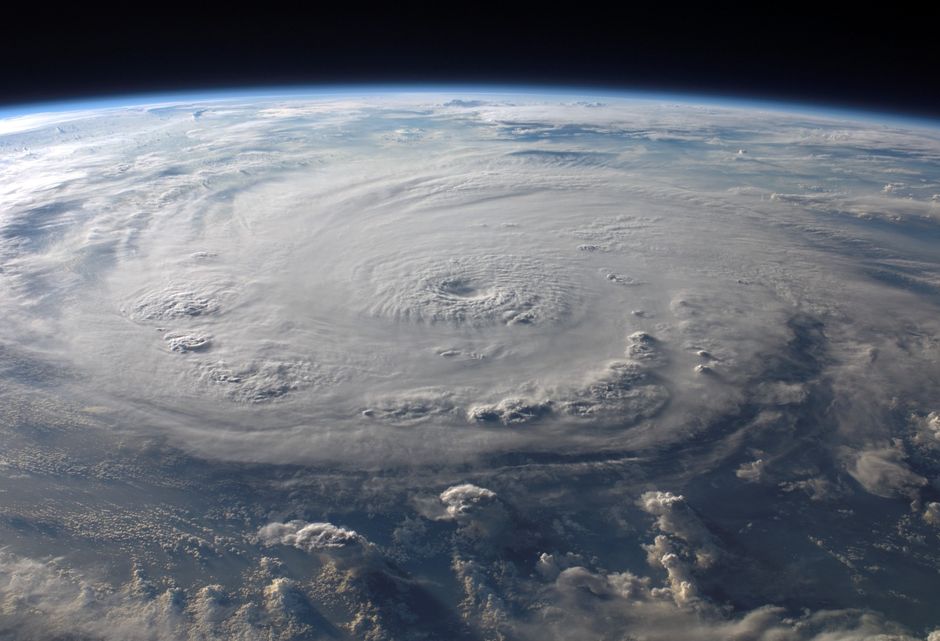
Google DeepMind’s WeatherNext did not give Jamaica a documented extra day of official warning before Hurricane Melissa. The National Hurricane Center’s post-storm report records unusually early watches and warnings, but attributes their long lead times to Melissa’s slow motion, forecast uncertainty and proximity to Jamaica, not to any single model. NHC Tropical Cyclone Report
Google DeepMind said in May 2026 that WeatherNext enabled unprecedented lead time during Melissa, and on August 6, 2026 published a peer-reviewed paper in Nature reporting that its cyclone model gives forecasters roughly an extra day of predictive accuracy. That evidence is a forecast-skill benchmark — three-day forecasts matching the accuracy that operational baseline models delivered at two days. It is a substantial forecasting result, but it is not a record of an earlier public warning, evacuation, or emergency action.
What the “Extra Day” Claim Actually Measures
The reported extra day comes from Google DeepMind’s August 2026 paper in Nature on WeatherNext Cyclones, published alongside an announcement that open-sourced the model’s code and weights. The paper reports that the model’s three-day cyclone forecasts match the accuracy that prior operational baselines delivered at two days — ECMWF’s ENS ensemble for track and NOAA’s HWRF for intensity.
That is a meaningful comparison: ECMWF-ENS and HWRF are systems hurricane forecasters actually use, not a Google-internal baseline. But it is still a measure of forecast skill, evaluated retrospectively — not a measurement of when official watches and warnings went out, which the NHC decides from many inputs.
| Evaluation result | Reported comparison |
|---|---|
| Cyclone-track skill (Nature, Aug 2026) | WeatherNext Cyclones at roughly 3 days matched ECMWF-ENS at roughly 2 days |
| Intensity skill (Nature, Aug 2026) | Evaluated against NOAA’s HWRF, with a comparable lead-time gain |
| Earlier FGN result (2025 paper) | FGN beat GenCast on 99.9% of marginal-score cases, 6.5% average improvement |
| 2023 operational-setting result | GenCast beat ECMWF ENS on 96.5% of evaluated targets |
The Nature result builds on Google DeepMind’s 2025 research paper on Functional Generative Networks (FGN), the probabilistic approach underlying WeatherNext 2. That earlier paper reported FGN beating the GenCast model on 99.9% of marginal-score cases with a 6.5% average improvement, and, in a 2023 operational-setting comparison, GenCast beating ECMWF’s ensemble on 96.5% of evaluated targets. All of these are model-evaluation results, not a retrospective test of whether Jamaican officials could have acted earlier.
Google’s own WeatherNext documentation evaluates forecasts with measures including root mean square error, Continuous Ranked Probability Score, anomaly correlation, and Relative Economic Value. These metrics test forecast error, probabilistic calibration, and modeled decision value. They do not establish that a government issued a warning earlier or that residents evacuated sooner.
WeatherNext 2 is a substantial forecasting system: Google’s Earth Engine catalog describes a 64-member global ensemble at 0.25-degree resolution, producing six-hourly forecasts up to 15 days ahead. The same catalog labels it experimental and says it is not intended, validated, or approved for real-world use.
The Nature paper is peer-reviewed, but it evaluates forecast skill rather than independently measuring operational effects during a hurricane. Forecast skill can be real without yielding a one-for-one gain in public-warning lead time; warning decisions also depend on uncertainty, local hazards, communications, confidence in the forecast, and the cost of sounding an alarm too early.
NHC’s Hurricane Melissa Forecast and Warning Timeline
The NHC’s record shows that Jamaica received ample lead time during Melissa, but its explanation is more mundane than an AI breakthrough. The Tropical Cyclone Report says Melissa’s slow movement, uncertain evolution, and location near Jamaica shaped an unusually extended sequence of advisories.
The timeline in the report records:
- A tropical-storm watch about seven days before landfall.
- A tropical-storm warning and hurricane watch about five days before direct wind impacts.
- A hurricane warning about three days before landfall.
Those watches and warnings were not issued after WeatherNext alone identified a previously hidden threat. NHC forecasters were tracking a developing system whose path and strength remained uncertain while its slow approach gave them time to escalate alerts. In Discussion Number 10, issued during the early threat assessment, NHC documented uncertainty in the track guidance and the possibility of an increasing danger to Jamaica and nearby islands.
Google’s later account says WeatherNext predicted a Category 5 landfall in Jamaica five days ahead. The NHC report does credit Google DeepMind ensemble guidance as useful, particularly in assessing Melissa’s potential rapid intensification. But it also notes that one early DeepMind ensemble forecast contained a meaningful alternate track toward Hispaniola, a useful expression of uncertainty, not a single unambiguous answer.
As Melissa approached, NHC’s Discussion Number 22 shows forecasters updating an official prediction from incoming observations and multiple guidance systems. The official forecast is a synthesis, not an automated WeatherNext output.
The Multi-Model Evidence Behind Jamaica’s Warnings
NHC’s post-storm account identifies a human-led process that used several kinds of evidence. The Tropical Cyclone Report lists:
- Aircraft reconnaissance, satellite data, and radar observations.
- Environmental analysis and statistical rapid-intensification guidance.
- The regional HAFS-A and HAFS-B hurricane models.
- Conventional global models and consensus forecast aids.
- Google DeepMind ensemble guidance.
The ensemble was therefore one input among systems that perform different jobs. Aircraft reconnaissance can directly sample a hurricane’s structure; radar can help locate its center and rainbands near land; regional models are built to represent tropical-cyclone dynamics at high resolution; consensus aids combine forecasts rather than asking a forecaster to trust a single run. WeatherNext added another probability distribution to that stack.
“The forecast track is based on a blend of the various consensus aids, which lie very near the previous forecast track.”, NHC Hurricane Melissa Discussion Number 22
NHC’s 2025 verification preview also places the AI results in a practical operational context. The agency found promising performance from emerging AI guidance, including Google DeepMind systems, but said that some AI models were still under development and were not consistently available in time for routine forecaster use. A highly skilled forecast arriving late is less useful than a slightly weaker one available at the right decision point.
NOAA and Google had already formalized a July 2025 cooperative research and development agreement to provide near-real-time AI model output for evaluation, improvement, and possible integration into hurricane forecasting. That arrangement supports operational testing; it does not turn the model into the NHC warning system.
Neither NHC’s Melissa report nor Google’s account quantifies an earlier evacuation, avoided loss, reduced mortality, or insurance benefit caused specifically by WeatherNext. The NHC report supplies the warning timestamps and forecast process, while Google’s post supplies the company’s account of its model’s contribution. Neither provides the missing counterfactual: when Jamaica’s warnings would have been issued without Google guidance.
The relevant test is straightforward but absent from the record: compare the official forecast and warning timeline with the same human forecaster process excluding WeatherNext, while holding the reconnaissance, satellite, radar, conventional models, regional models, and consensus aids constant. The 2025 documentation records what NHC did use; it does not reconstruct that alternate forecast desk.
Key Takeaways
- WeatherNext’s reported extra day is a peer-reviewed forecast-skill advantage over operational baselines (ECMWF-ENS for track, HWRF for intensity), not a documented extra day of official warning.
- Jamaica received a tropical-storm watch about seven days before Melissa’s landfall and a hurricane warning about three days before landfall.
- NHC attributed the long warning lead times to Melissa’s slow motion, uncertainty, and proximity to Jamaica.
- NHC used aircraft, satellite and radar observations, regional and global models, consensus aids, and Google DeepMind guidance.
- No reviewed record measures an earlier evacuation or avoided harm caused specifically by WeatherNext.
Further Reading
- NHC Tropical Cyclone Report: Hurricane Melissa (2025), NHC’s post-storm record of Melissa’s forecasts, warnings, rapid intensification, and guidance sources.
- NHC Tropical Storm Melissa Discussion Number 10, An early operational discussion documenting forecast uncertainty and the developing regional threat.
- NHC Hurricane Melissa Discussion Number 22, An operational forecast discussion from Melissa’s approach to Jamaica.
- NHC 2025 Verification Report Preview, NHC’s assessment of 2025 forecast guidance, including emerging AI systems.
- NOAA and Google team up to advance AI hurricane and tropical weather forecast models, NOAA’s announcement of its 2025 research agreement with Google.
- How WeatherNext helped the National Hurricane Center better predict Hurricane Melissa’s historic landfall in Jamaica, Google DeepMind’s account of WeatherNext during Hurricane Melissa.
- WeatherNext AI model achieves breakthrough in forecasting cyclones, Google DeepMind’s August 2026 announcement of the Nature results and the open-sourcing of the models.
- The WeatherNext Cyclones paper in Nature, The peer-reviewed evaluation behind the extra-day claim, measured against ECMWF-ENS and HWRF.
- Skillful joint probabilistic weather forecasting from marginals, The earlier 2025 FGN research paper reporting benchmark results against GenCast.
- WeatherNext evaluations, Google documentation for WeatherNext forecast metrics and comparisons.
- WeatherNext 2 Earth Engine Data Catalog, Documentation for the experimental WeatherNext 2 forecast dataset.