
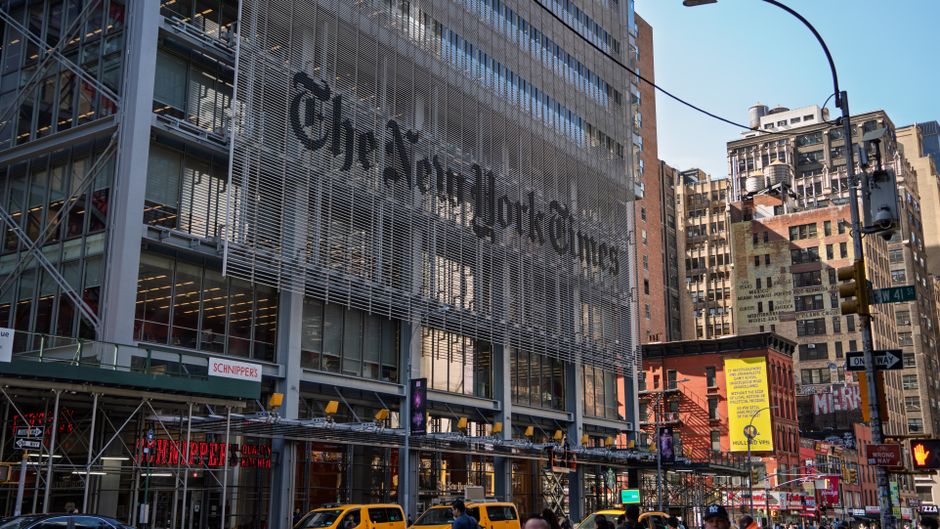
The New York Times and three other newspapers are suing Brave, the company behind the Brave privacy browser and the Brave search engine. Brave is a venture-backed business; the newspapers’ complaint puts its revenue last year at more than $100 million. The newspapers say Brave copies their articles and sells them to AI companies without paying for them. Brave says it is doing what every search engine does. A court will decide who is right.
The Times filed its suit in federal court in Manhattan on November 2. The publishers of the New York Daily News, Chicago Tribune and Orlando Sentinel filed theirs the same day (cases 26-cv-9549 and 26-cv-9554).
What Brave sells
Like Google, Brave runs a search engine. To build it, Brave’s crawler visits web pages and copies them into an index, which held more than 30 billion pages at the time of the complaint and 40 billion by February 2026.
Brave also rents that index out. Its Search API lets other companies send it a search and get page text back, for $5 per 1,000 searches. Brave markets it as “Trusted by the world’s top AI labs”, and some plans include “storage rights”, meaning the buyer can keep what comes back. When Brave launched its AI Grounding API in August 2025, it listed “train foundation models” among the uses. The suits name the buyers as Anthropic, Perplexity, Mistral, xAI and Cohere. None of them is being sued.
The newspapers’ case
Brave hands over whole articles. The Times tested the API with one of its own stories. It returned 1,291 of the article’s 1,295 words, 99.7% of it. Brave’s own AI answer feature reproduced more than 1,200 words of a Chicago Tribune article.
Others pay for the same thing. Amazon licenses the Times’s journalism for a reported $20 million to $25 million a year. OpenAI agreed to pay News Corp more than $250 million over five years. Brave pays the newspapers nothing. Their lawyer, Steven Lieberman, put it this way:
“Buying stolen goods secondhand doesn’t make them legitimate.”
They cannot opt out of Brave alone. A website blocks a search engine’s crawler by naming it in a file called robots.txt. Brave has never published its crawler’s name, and says it only crawls pages Google’s crawler is allowed to reach. So a newspaper cannot let Google in and keep Brave out. It is both or neither.
Brave’s case
Every search engine copies pages. A search engine cannot work without copying the web into an index. In July 2023 Brave said it “has the right to monetize and put terms of service on the output of its search engine” and called its use of page content “a standard and expected feature of all search engines.”
The newspapers asked to be indexed. Newspapers want search traffic. Many let search crawlers read articles that readers would hit a paywall on, following Google’s rules for paywalled content, so the articles rank in results. Brave reaches those pages the same way Google does.
Courts have allowed this kind of copying before. In 2015 a federal appeals court ruled that Google’s scanning of millions of books to build a searchable database was fair use, the legal exception that allows copying for some purposes without permission. Brave has also sued News Corp, the Wall Street Journal’s owner, asking a court to declare its indexing fair use.
What the court has to decide
Both sides agree on the facts: Brave copies newspaper pages and sells access to them. The question is whether that is still search.
The old bargain with search engines was simple. A newspaper let the engine copy its pages, and the engine sent readers back to the newspaper’s site. Brave’s AI product sends no one back. It hands the article’s text to a chatbot, which answers the user directly. The Google Books ruling covered a database that showed searchers short snippets. In the Times’s test, Brave returned nearly the whole article.
If the court sides with Brave, any search engine can sell what it indexes to AI companies, and newspapers lose the licence fees Amazon and OpenAI now pay. If it sides with the newspapers, the AI companies buying from Brave will have to pay publishers directly. The damages could be large: the Times cites up to $150,000 per article, and the three other papers alone count more than two million registered articles.
Neither suit names the AI companies that bought the text. Until a judge rules, they keep paying Brave $5 per 1,000 searches, and the newspapers get nothing.
Further Reading
- New York Times, Chicago Tribune sue Brave over AI copyright — TheWrap on the two lawsuits.
- New York Times and three papers sue Brave over AI answers and ad blocking — PPC Land on the Times’s API test.
- Brave Search API — Brave’s product and price page.
- Brave AI Grounding API launch — Brave’s August 2025 announcement.
- Brave’s Search API and AI training — Plagiarism Today with Brave’s 2023 statement.