
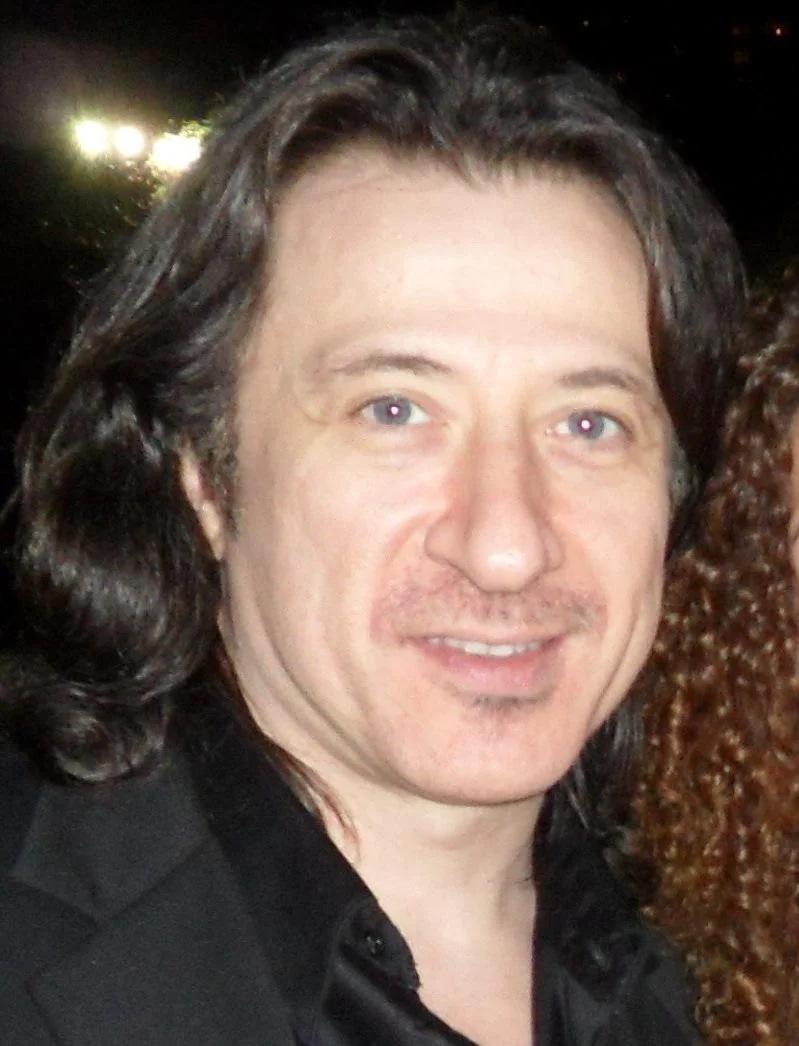
How the Sopranos actor bought a misattributed Guercino for about $68,000, had it authenticated, and why estimates reached $10 million
Yes. The Federico Castelluccio painting story is real. The actor who played The Sopranos Furio bought a misattributed 17th century work at a German auction for roughly $68,000, then had it cleaned and attributed to the Italian Baroque master Guercino, with some market watchers estimating its value around $10 million. The work was publicly exhibited at the Princeton University Art Museum after attribution. There is no public record that it sold for $10 million, which was an estimate rather than a sale price.
What is the Federico Castelluccio painting in question?
The work is a 17th century painting Castelluccio recognized as being by Giovanni Francesco Barbieri, known as Guercino, a leading painter of the Italian Baroque. In an interview, Castelluccio explained that the piece had been mislabeled by the auction house as an 18th century work and possibly cut down, conditions that depressed interest and price. After study and conservation, he and experts concluded the composition was intact and by Guercino. He discussed the find and the valuation in detail in an archived interview (archived West 46th Magazine Q&A).
“I think we paid what came out to about forty nine thousand euros, maybe sixty-eight thousand dollars… Artnet did some research of their own and they actually valued it at ten million.” (Castelluccio, 2015)
How did he find and authenticate the painting?
Castelluccio, who is a trained painter and longtime collector, spotted the work in a German auction house where paintings were stacked along a staircase. He recognized hallmarks of Guercino’s hand beneath discolored varnish and overpaint, then quietly researched before bidding.
- Recognition of style: Years of studying 17th century Italian art helped him identify characteristics of Guercino’s brushwork and composition.
- Purchase and conservation: He acquired the painting, then had it cleaned to remove yellowed varnish and overpaint, revealing original surface details that support attribution.
- Expert review and documentation: Building an attribution typically involves comparative analysis, provenance research, and opinions from recognized scholars and institutions.
- Public exhibition: The painting was displayed at the Princeton University Art Museum in a special installation, a common step once scholarly confidence is established.
“The painting was covered with years of yellow varnish, overpaint from restoration. The master’s hand was hidden in a way but I could see through that.” (Castelluccio, 2015)
Why was it mislabeled or misattributed?
Misattributed painting is common when a work has been heavily restored, obscured by grime or varnish, lacks clear provenance, or differs from a master’s best known subjects. In this case, the lot was described as 18th century and possibly cut down, which would reduce confidence and value. Cleaning and technical study often resolve such uncertainties by making brushwork, materials, and signatures legible again, and by allowing scholars to compare the work to documented compositions.
In art history, “attribution” refers to assigning a work to a particular artist based on evidence such as style, materials, documentation, and expert consensus. See Attribution in art history.
Did he sell it for $10 million?
No public sale at $10 million has been reported. The $10 million figure came from market research cited by Castelluccio, not a hammer price. Value estimates can vary widely and depend on condition, subject matter, scholarly acceptance, and market timing. A museum exhibition and expert backing strengthen an attribution, but the only definitive market value is established at a completed sale.
Who is Guercino, and why would a Guercino painting be worth millions?
Guercino (1591–1666) was a major Italian Baroque painter celebrated for dramatic compositions, fluid brushwork, and luminous color. His paintings are held by leading museums worldwide, and high quality works with secure attribution can command multi million dollar prices due to rarity, scholarly importance, and collector demand. For background, see Guercino on Wikipedia.
What does this story show about finding sleepers at auction?
It illustrates how connoisseurship, patience, and resources can unlock overlooked value. But it also shows the costs and risks. Cleaning, conservation, shipping, and insurance add up, and building an attribution can be lengthy and uncertain. Most finds are not this dramatic, and many proposed reattributions are never widely accepted.
- Expertise matters, both in spotting quality and in navigating scholarship.
- Authentication takes time, documentation, and often multiple expert opinions.
- Exhibition at a respected venue, such as the Princeton University Art Museum, can support scholarly acceptance.
- Valuations are not guarantees, the market only confirms value at sale.
Castelluccio’s background as a professional visual artist likely helped. He continues to paint and exhibit, with examples on his site (federicocastelluccio-art.com).