
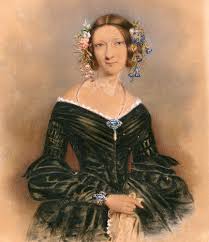
Sarah Biffin was a 19th century English artist best known for exquisitely detailed miniature portraits, created despite being born without arms or legs. She learned to write, sew, and paint using her mouth, earned a Society of Arts medal in 1821, and exhibited at the Royal Academy of Arts. With aristocratic patronage, she painted members of the British royal family and worked professionally across Britain and Europe.
Who was Sarah Biffin?
Sarah Biffin (1784–1850) was born in East Quantoxhead, Somerset, with phocomelia, a rare congenital condition involving limb absence or malformation. As a child she taught herself to control tools with her mouth and soon mastered sewing, drawing, and painting. At about 13 she joined the traveling fairs run by showman Emmanuel Dukes, where she demonstrated her skills and accepted portrait commissions, a story documented by the South West Heritage Trust’s profile of her life (South West Heritage Trust).
Customers at fairs paid several guineas for her miniatures, yet Biffin reportedly received only about £5 a year from her manager, highlighting the exploitation common in 19th century sideshows.
How did Sarah Biffin work?
Biffin held brushes, quills, and needles in her mouth, developed remarkable control over line and wash, and built a professional practice around commissioned portraits. Like many miniaturists of her day, she produced small likenesses prized for their precision and lifelike detail. Contemporary accounts and surviving works show she painted sitters from life at fairs, in studios, and in patrons’ homes, and she also produced landscapes and still lifes.
What did Sarah Biffin paint and who were her patrons?
Her career changed in 1808 when George Douglas, the Earl of Morton, sat for his portrait at London’s Bartholomew Fair and recognized her talent. He arranged lessons with the royal watercolourist William Craig and helped her establish a Bond Street studio, opening doors to elite clients. According to the South West Heritage Trust, she painted members of the British royal family, including George IV, William IV, and Queen Victoria, and later worked in Brussels for the Prince of Orange and Princess Augusta (source).
Biffin’s technical skill earned formal recognition. In 1821 she received a silver medal from the Society of Arts, and her paintings were exhibited at high-profile venues, including the Royal Academy.
What challenges did Sarah Biffin face?
Despite professional success, Biffin navigated significant obstacles. Satirical poems and passing mentions by famous writers reduced her to a curiosity rather than acknowledging her artistry, a common prejudice toward disabled performers and artists in the period. After the Earl of Morton died in 1827, commissions waned, her eyesight deteriorated, and she struggled financially. A small Civil List pension of £12 a year provided limited support, and she eventually retired to Liverpool, where supporters helped fund an annuity (South West Heritage Trust).
Why is Sarah Biffin important today?
Biffin’s work is now being reappraised for both its historical significance and its artistic quality. Her portraits display refined technique, careful handling of light and fabric, and acute psychological presence, placing her among the most accomplished miniaturists of her era. Her career also expands the story of British art by centering a disabled, working-class woman who built a transnational client network and achieved institutional recognition in a male-dominated field.
In December 2019, a self-portrait miniature by Biffin sold at auction for £137,500, a near-record sum for the period and a marker of her renewed standing among collectors (reported by the South West Heritage Trust).
Public collections and scholars are recovering her legacy, and exhibitions and new research are giving her the place in art history her achievements warrant. You may also find her name spelled “Sarah Biffen” in historical records and museum catalogues.
Key milestones in Sarah Biffin’s life
- 1784: Born in East Quantoxhead, Somerset, recorded as “born without arms or legs.”
- c. 1797–1813: Performs and accepts commissions at traveling fairs under Emmanuel Dukes.
- 1808: Discovered by the Earl of Morton at Bartholomew Fair, who sponsors formal lessons.
- 1821: Awarded a silver medal by the Society of Arts, exhibits at the Royal Academy of Arts.
- 1820s: Paints members of the British royal family, opens a Bond Street studio, works in Brussels.
- 1827: Death of the Earl of Morton leads to financial insecurity and fewer commissions.
- Late life: Receives a small Civil List pension, retires to Liverpool with support from patrons.
- 1850: Dies at age 66, later rediscovered as a leading British miniaturist.