
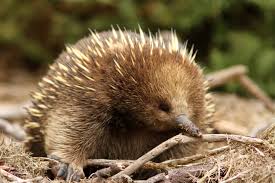
The echidna penis has four heads, and only two are used at a time during mating while the other two remain inactive. It is kept inside the body when not in use and is used only for reproduction, not for urination. The female reproductive tract has two branches, so the alternating two-headed erections likely help deliver sperm efficiently during competitive, long-duration matings.
What is the echidna penis?
An echidna is a monotreme, one of the few egg-laying mammals, and its reproductive anatomy is unusual even by mammal standards. The echidna penis is a single organ that ends in four rosette-like glans, often described as a four-headed penis. When retracted, it sits within the cloaca, the shared opening for the digestive and urogenital systems that monotremes possess.
Only two of the four heads become functional during any given erection, and echidnas can alternate which pair is active between successive matings (Australian Geographic).
Compared with the animal’s body size, the organ is relatively long and highly vascular, which supports prolonged matings that can last from minutes to over an hour in some observations.
How does the echidna penis work?
During arousal, blood fills erectile tissues asymmetrically so that only one side’s two glans become rigid and open, while the other two remain folded and nonfunctional. The urethra then directs semen through the active pair. After ejaculation, the next erection can switch sides so the previously resting pair becomes functional. This alternating mechanism likely allows multiple, rapid mating attempts during a breeding period.
The echidna penis is used only for mating, not for urination. Urine passes through the urogenital tract and exits the cloaca without involving the penis (Australian Museum).
Structures such as small keratinized spines on the glans, common in many mammals, are also present and may help the organ lock in place during the extended copulations typical of echidnas. These long matings occur in the context of intense sexual competition, often after males form “mating trains,” single-file lines that follow a receptive female for days before she mates (Australian Museum).
Why do echidnas have a four-headed penis?
Scientists propose several, not mutually exclusive, explanations:
- Fit with female anatomy. Female monotremes have a two-branched reproductive tract. Routing semen through two glans on one side may align better with the branch that is engaged during mating, improving delivery.
- Sperm competition. Echidnas often mate in competitive groups. Males produce large ejaculates and their sperm form sperm bundles that swim faster together than solo cells, a strategy thought to improve odds against rival males. The complex glans may support this by enhancing delivery or retention in the tract (The Conversation).
- Alternation for endurance. Using two heads at a time allows the other two to rest, potentially sustaining multiple matings in quick succession (Australian Geographic).
These are leading hypotheses. Direct experimental tests in wild echidnas are challenging, so researchers piece together function from anatomy, observed behavior, and comparative studies with the platypus, the other living monotreme.
What does the female echidna reproductive tract look like?
Female echidnas have two uteri and paired oviducts that open into a urogenital sinus, which in turn opens into a single echidna cloaca. They do not have a permanent vagina like placental mammals. After mating and fertilization, a leathery-shelled egg is laid into a temporary abdominal pouch where the puggle hatches and nurses. Monotremes lack nipples; milk is secreted from specialized mammary patches and the young lap it up (Smithsonian National Zoo).
Female monotremes have a two-branched uterus and lay small, shelled eggs, then feed hatchlings with milk secreted from mammary patches rather than nipples (Smithsonian National Zoo).
Is the echidna penis different from a platypus’s?
Yes. Both are monotremes and both have multi-headed penises, but details differ. The echidna’s glans are organized as four rosettes with two active per erection, while platypus glans are arranged differently and all heads can become functional. The female systems also differ, for example only the left ovary is functional in the platypus, whereas both ovaries are functional in echidnas. These contrasts help researchers infer how monotreme reproduction evolved along a lineage separate from marsupials and placentals (The Conversation).
Key takeaways and open questions
- Four-headed penis: a distinctive monotreme feature, with two heads used per mating and alternating between sides.
- Monotreme reproduction: females have a branched tract and a cloaca, lay eggs, and nurse from mammary patches.
- Function remains under study: leading ideas emphasize anatomical fit, sperm competition, and endurance in multi-male mating systems. Direct tests in the wild are limited.
Ongoing research combines imaging, dissections of deceased specimens, and behavioral observation to clarify how anatomy translates to reproductive success in these ancient mammals.