
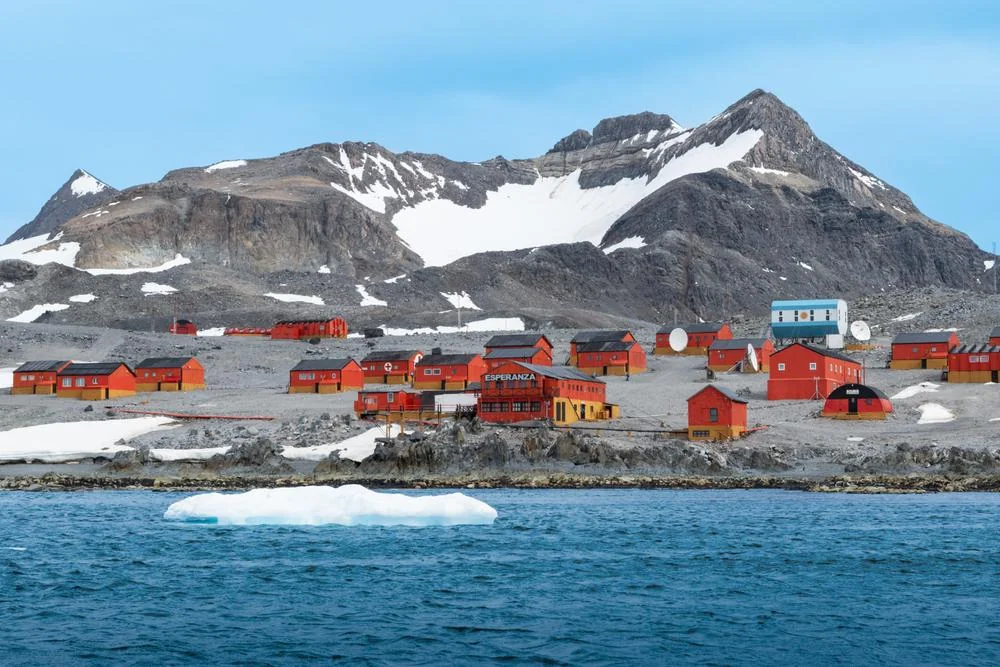
Eleven children have been born in Antarctica, almost all at Argentine and Chilean bases, as part of symbolic efforts in the 1970s and 1980s to reinforce those countries’ territorial claims. The focus keyword “children born in Antarctica” refers to these rare births at research stations such as Argentina’s Esperanza Base and Chile’s Villa Las Estrellas, which were politically motivated but did not create any legal right to Antarctic land.
The first of these children, Emilio Marcos Palma, was born at Argentina’s Esperanza Base in 1978 and is listed by Guinness World Records as the first person born on the Antarctic mainland, a milestone that drew worldwide attention to how far governments were willing to go to signal sovereignty in a place no country officially owns.�cita�c0turn0search0�c0turn0search11�c0turn0search3�c0turn0search7�c1
What does it mean to have children born in Antarctica?
When people talk about children born in Antarctica, they are referring to a tiny group of eleven documented births on or near the Antarctic mainland, all tied to Argentine and Chilean research bases between 1978 and 1985. The children are citizens of their parents’ countries, not of Antarctica itself, because under international law citizenship is determined by parental nationality rather than place of birth in this region.�cita�c0turn0search7�c1
These births were not spontaneous outcomes of long-term civilian settlements. In many cases, governments deliberately sent pregnant women, or encouraged families with young children, to Antarctic stations so that a birth would take place there. Argentina’s military government in particular treated the first Antarctic birth as a public relations victory, celebrating Emilio Palma as proof of an “Argentine” presence on the continent.�cita�c0turn0search12�c0turn0search3�c1
According to Guinness World Records, Emilio Marcos Palma, born on 7 January 1978 at Esperanza Base, is the first human known to be born on the Antarctic mainland.
In practice, these children grew up and live their lives in Argentina or Chile. The Antarctic births are historically interesting and politically symbolic, but they do not create a distinct Antarctic nationality, nor do they change who legally controls the land where they were born.
How many children have been born in Antarctica and where?
Historical records and research organizations agree that there have been at least eleven documented human births in Antarctica. Most were at Esperanza Base, an Argentine station at the tip of the Antarctic Peninsula, and three at Villa Las Estrellas, the Chilean settlement attached to the Presidente Eduardo Frei Montalva Base on King George Island.�cita�c0turn0search12�c0turn0search13�c0turn0search15�c0turn0search16�c1
The best documented births include:
- Emilio Marcos Palma (Argentina): Born 7 January 1978 at Esperanza Base, regarded as the first person born on the Antarctic continent.�cita�c0turn0search11�c0turn0search3�c1
- Marisa de las Nieves Delgado (Argentina): Born May 1978 at Esperanza, the first girl born in Antarctica.�cita�c0turn0search12�c0turn0search15�c1
- Six additional Argentine children born at Esperanza between 1979 and 1983, for a total of eight births at that base listed in the Argentine civil registry.�cita�c0turn0search12�c0turn0search15�c1
- Juan Pablo Camacho (Chile): Born 21 November 1984 at Villa Las Estrellas, the first Chilean born in the Antarctic region and the first person conceived on the continent.�cita�c0turn0search16�c1
- Gisella Cort�e9s Rojas and Ignacio Miranda Lagunas (Chile): Born in late 1984 and early 1985 at Villa Las Estrellas; Ignacio’s birth in January 1985 is often cited as the most recent Antarctic birth.�cita�c0turn0search12�c0turn0search16�c1
Counting the eight Argentine and three Chilean births produces the commonly cited figure of eleven children born in Antarctica.�cita�c0turn0search7�c0turn0search13�c1
Research by the Environmental Literacy Council notes “at least eleven documented births in Antarctica,” concentrated at Argentine and Chilean research stations during a short period from 1978 to 1985.
There is occasional debate about whether earlier births on subantarctic islands, such as Solveig Gunbj�f8rg Jacobsen born in South Georgia in 1913, should count as “Antarctic” births. However, those locations lie north of the Antarctic mainland, so most official lists and record books treat 1978 as the beginning of human births on the continent proper.�cita�c0turn0search6�c0turn0search11�c1
Why did Argentina and Chile encourage children to be born in Antarctica?
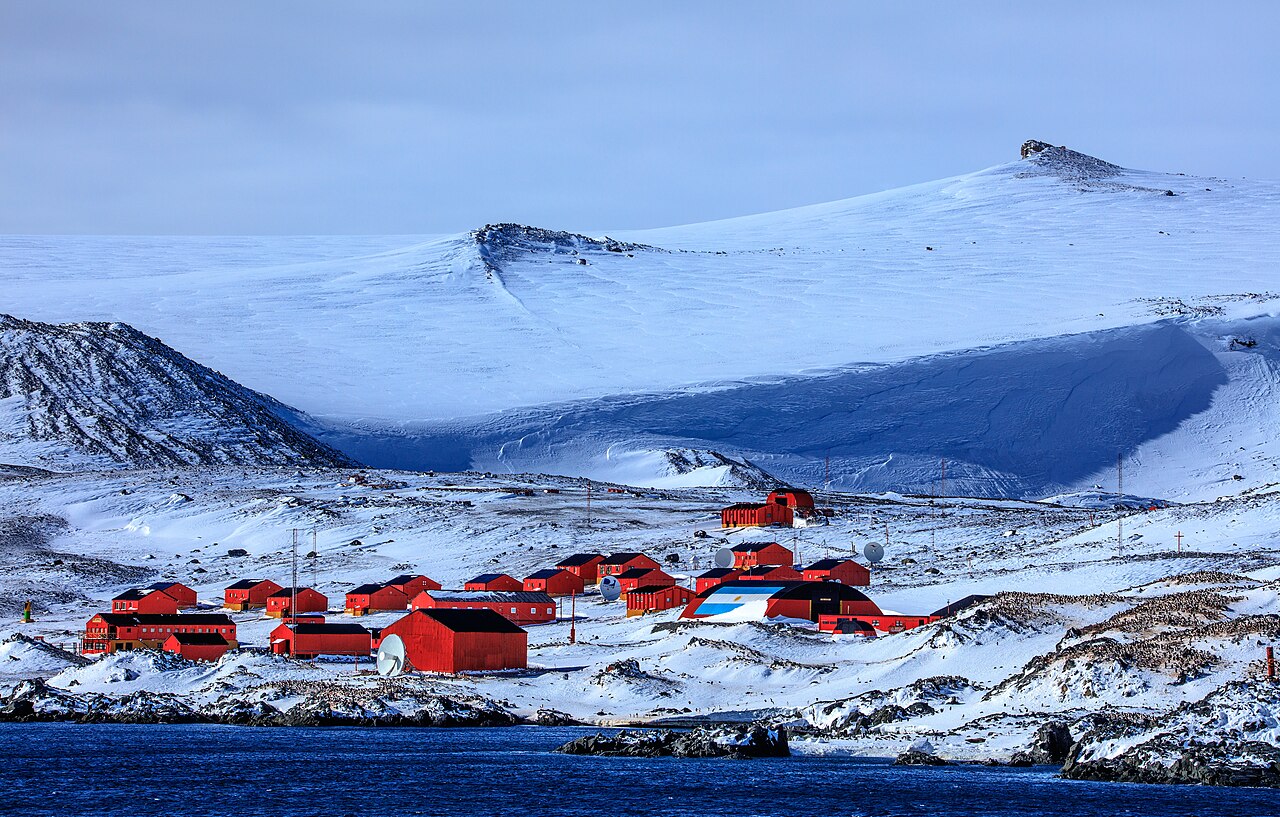
Argentina and Chile encouraged children born in Antarctica mainly to strengthen their competing territorial claims. Both countries claim wedges of the Antarctic Peninsula that overlap with each other and with the British Antarctic Territory. During the 1970s and 1980s, especially under military governments, having families and births at their bases was seen as a way to demonstrate a “permanent population” and thus a deeper connection to the land.�cita�c0turn0search12�c0turn0search16�c1
In Argentina’s case, historical accounts and contemporary reporting describe how the regime flew a woman who was seven months pregnant, Silvia Morello de Palma, to Esperanza Base specifically so that her child would be born there. Her son, Emilio, was then widely publicized as “the first Antarctic” and received attention in national textbooks and media.�cita�c0turn0search12�c0turn0search3�c0turn0search1�c1
- The presence of families, not just military or scientific staff, was meant to signal a settled community.
- Births provided powerful symbols that could be used in diplomacy and domestic politics.
- In Chile, government documents and later interviews state explicitly that families were sent to Villa Las Estrellas so a child could be conceived and born there as a sovereignty gesture.�cita�c0turn0search16�c1
It is important to note that these actions were primarily symbolic. The international community did not accept that a handful of births created or expanded legal sovereignty. But for governments in Buenos Aires and Santiago, they provided vivid stories to tell both at home and abroad about their “ownership” of parts of Antarctica.
What does the Antarctic Treaty say about land claims and births?
The 1959 Antarctic Treaty, which entered into force in 1961, is the key international agreement governing the continent. It freezes existing territorial claims and bans new ones, while designating Antarctica as a zone for peaceful scientific cooperation. Article IV explicitly states that no activities in Antarctica can be used to assert, support, or deny a claim to sovereignty, and that existing disputes are set aside but not resolved.�cita�c0turn0search2�c0turn0search7�c1
Under the treaty, even a birth at a national base “does not confer citizenship or territorial rights,” and the usual rules of birthright citizenship do not apply because no state is recognized as owning the land.
In most of the world, many countries grant citizenship based on jus soli, the right of the soil, where birth on the territory is enough to become a citizen. In Antarctica, however, there is no agreed national territory. Legal experts and education resources emphasize that citizenship there follows jus sanguinis, the right of blood, so a child born at Esperanza or Villa Las Estrellas inherits the nationality of their parents, just as if they had been born in Buenos Aires or Santiago.�cita�c0turn0search7�c1
This means that no matter how often a government highlights its Antarctic births, those events cannot be used, under the Treaty system, to claim new land or transform a research station into recognized national territory. The claims by Argentina, Chile, and the United Kingdom still overlap and remain frozen, and no country can legally enforce them on the ground without breaking the treaty framework.
How risky is it to have a baby at an Antarctic base?
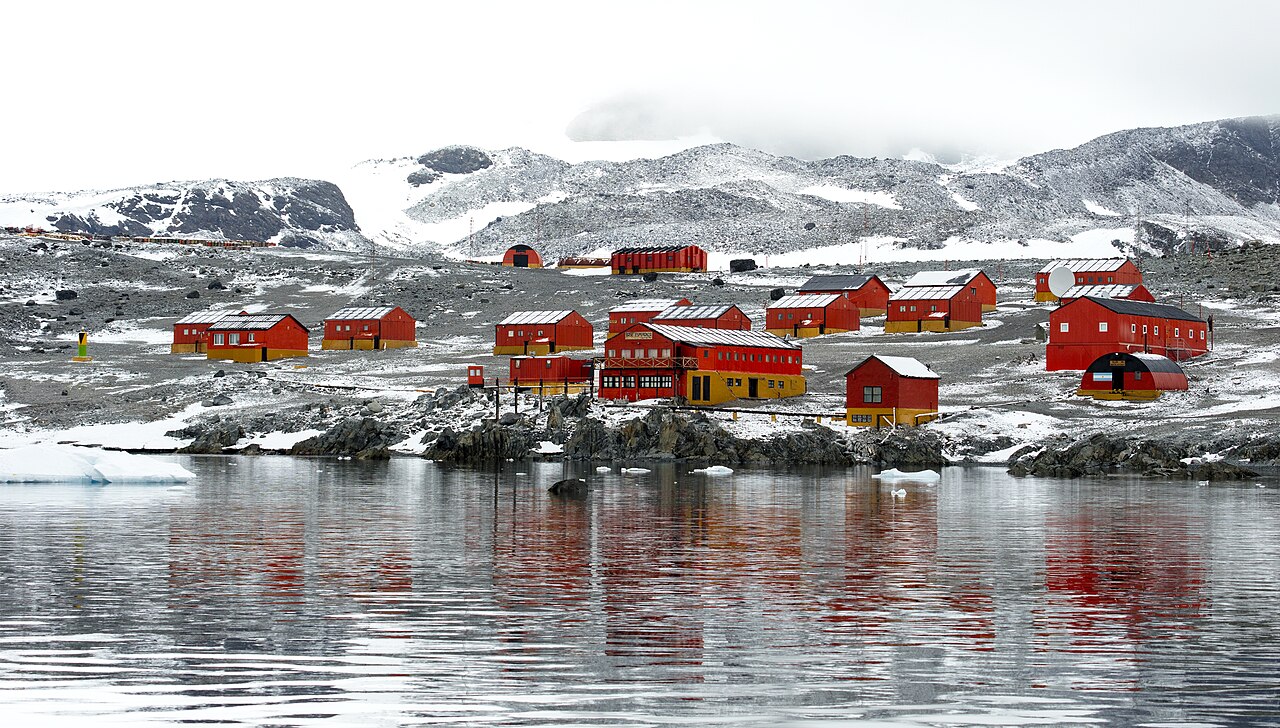
From a medical perspective, giving birth in Antarctica carries additional risks compared with hospitals in large cities. Bases like Esperanza and Villa Las Estrellas are extremely remote, with limited facilities and harsh weather that can prevent aircraft from landing for long periods. Any serious complication would require evacuation over hundreds or thousands of kilometers, something that is not always possible in time.�cita�c0turn0search2�c0turn0search3�c1
Historical accounts describe at least one difficult Antarctic birth. Argentine sources note that one child at Esperanza was born prematurely and initially believed stillborn, highlighting how stressful these deliveries could be in such an environment.�cita�c0turn0search12�c1 At the same time, governments did not leave the mothers unattended. Stations were staffed with doctors, and in some cases, specialists were flown in from the mainland specifically for an expected delivery. Chile, for example, brought a medical team to Villa Las Estrellas for the birth of Juan Pablo Camacho, and a military transport plane was on standby in case evacuation was necessary.�cita�c0turn0search16�c1
- Facilities: Antarctic bases have clinics, not full-scale hospitals, so complex surgeries and intensive care are difficult.
- Evacuation: Weather, darkness, and ice can delay flights for days or weeks during the austral winter.
- Modern practice: Today, national programs generally avoid planned pregnancies at Antarctic stations, and the era of deliberately sending pregnant women there has ended.�cita�c0turn0search7�c1
In short, while the eleven Antarctic births were managed successfully, they are best understood as carefully staged exceptions, not a model for routine childbirth. Modern safety standards and the scientific focus of most stations make similar politically motivated births very unlikely today.
Could being born in Antarctica ever create an Antarctic nationality?
At present, there is no such thing as “Antarctic citizenship,” and being one of the few children born in Antarctica does not create any special legal status beyond symbolism. The identity of people like Emilio Palma or Juan Pablo Camacho is tied to their Argentine or Chilean nationality, and they live under those legal systems.�cita�c0turn0search11�c0turn0search16�c1
Some scholars and writers have used these births as a starting point to imagine what a future civilian society in Antarctica might look like, especially if climate change or technological advances make year-round habitation more practical. They point to the small schools, chapels, and family housing at Esperanza and Villa Las Estrellas as early experiments in “Antarctic communities.” But these are thought experiments rather than policy plans, and current treaties explicitly aim to keep Antarctica focused on science and environmental protection rather than settlement and sovereignty.�cita�c0turn0search2�c0turn0search4�c1
For now, then, the eleven children born on the continent are a historical curiosity and a reminder of Cold War era geopolitical competition, not the founders of a new nation at the bottom of the world.