
Racially motivated eminent domain refers to the government practice of condemning and seizing private property while using a false or pretextual “public use” reason in order to remove people of a particular race. It works by combining the legal power of eminent domain with discriminatory intent: officials claim they need land for a road, park, or public project, but in reality the main goal is to dispossess a targeted racial group, often under pressure from local residents or white supremacist groups.
In the United States, this tactic has been used against Black landowners and other communities of color for more than a century, from the 1920s seizure of Bruce’s Beach in Manhattan Beach, California, to the 1924 forced removal of Sidney and Irene Dearing, the first Black homeowners in Piedmont, California. In both cases, the promised public projects were never built or were secondary at best, yet the families lost valuable property and decades of potential generational wealth.
What is racialized eminent domain?
Racialized eminent domain is not a separate law but a discriminatory way of using existing eminent domain powers. Under U.S. law, governments can take private property for “public use,” as long as they provide just compensation. In racialized cases, the public-use rationale is exaggerated or fabricated, and the real motive is to remove unwanted residents based on race, often to preserve a segregated neighborhood or satisfy racist political pressure.
These seizures usually follow a pattern. A family from a marginalized group buys or builds on valuable land in a mostly white area. Neighbors and local officials launch a campaign of complaints, negative press, or even direct intimidation. Authorities then identify a supposed public purpose that requires taking the land, such as widening a road or creating a park. After condemnation, the land is often left vacant or repurposed in ways that clearly do not match the stated need. Historians who have studied housing discrimination, like James Loewen, have found that many so-called “sundown towns” used legal tools exactly this way to keep Black residents out of white enclaves.
In practice, racially motivated eminent domain turns a neutral public power into a tool for enforcing residential segregation and transferring wealth away from targeted families.
How did racialized eminent domain affect Black families historically?
For Black Americans in the 20th century, land and home ownership were some of the few available paths to building generational wealth. When cities used eminent domain in racially targeted ways, they did not just force families to move. They erased businesses, community centers, and home equity that might have been passed down over decades. According to civil rights historians, these losses compound over time: missed opportunities for appreciation in property values, lost rental income, and the inability to borrow against a home to start a business or send children to college.
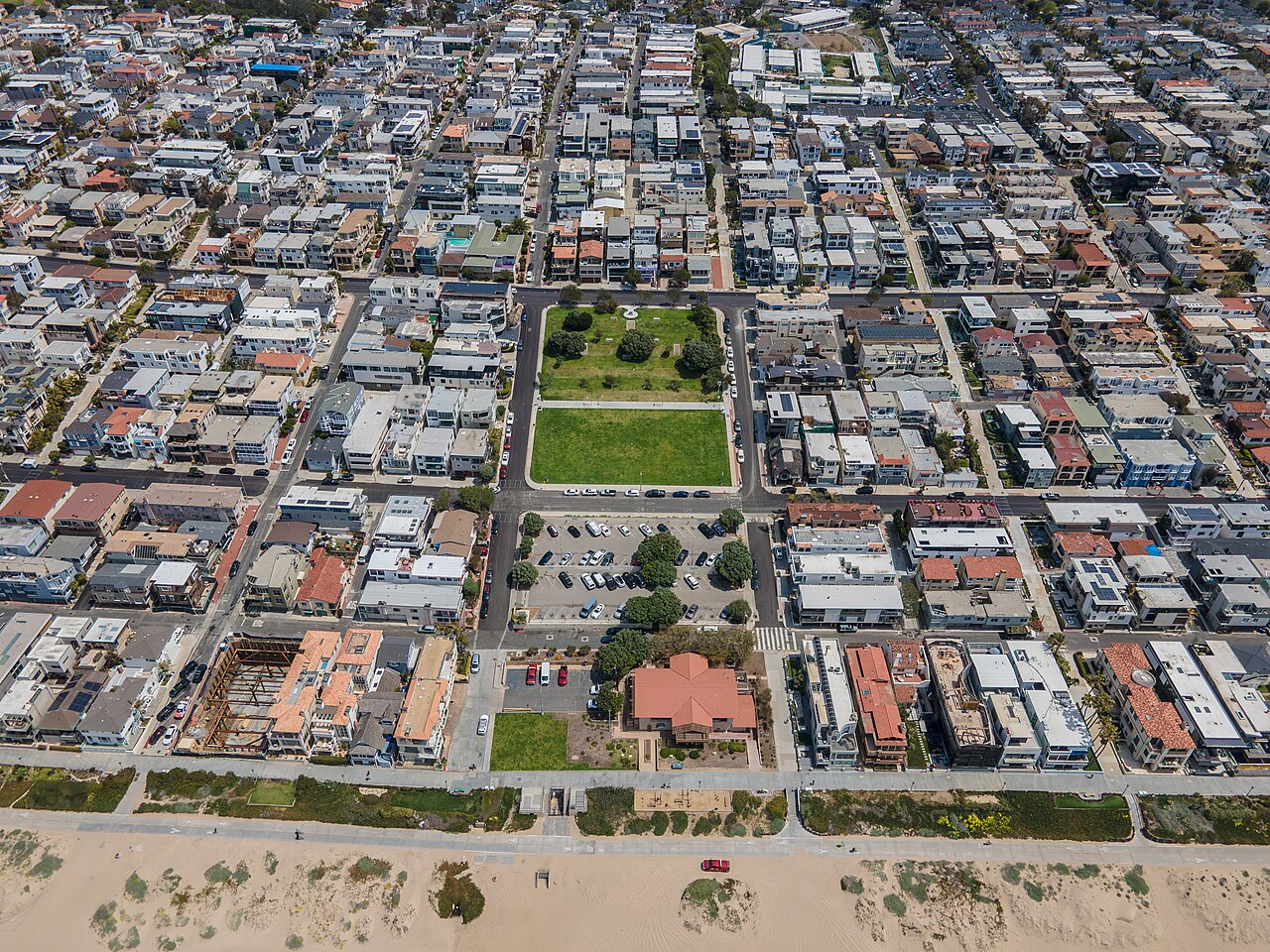
One well-documented example is Bruce’s Beach in Manhattan Beach, California. In 1912, Willa and Charles Bruce bought oceanfront land and built a seaside resort where Black visitors, excluded from many other beaches, could gather. Facing racist harassment and Ku Klux Klan intimidation, the city condemned the property in the 1920s, officially for a public park. As reporting in the Los Angeles Times and later The Guardian recounts, the land sat largely undeveloped for years, and the Bruce family was left impoverished instead of benefiting from what became some of the most valuable coastal real estate in the region. The land, eventually controlled by Los Angeles County, was worth around 20 million dollars when it was finally returned to the family’s heirs, more than a century after the seizure.
Another pattern emerged in urban renewal programs from the 1940s through the 1970s, when predominantly Black neighborhoods were labeled “blighted” and cleared in the name of progress. Highways, stadiums, and civic centers were built over homes and businesses that had anchored Black communities for generations. Legal scholars note that the public uses here were real, but the choice of which neighborhoods to sacrifice often reflected racial power, not neutral planning. The result was a massive, uneven transfer of urban land away from Black residents to governments and private developers.
How does the Piedmont case show racialized eminent domain at work?
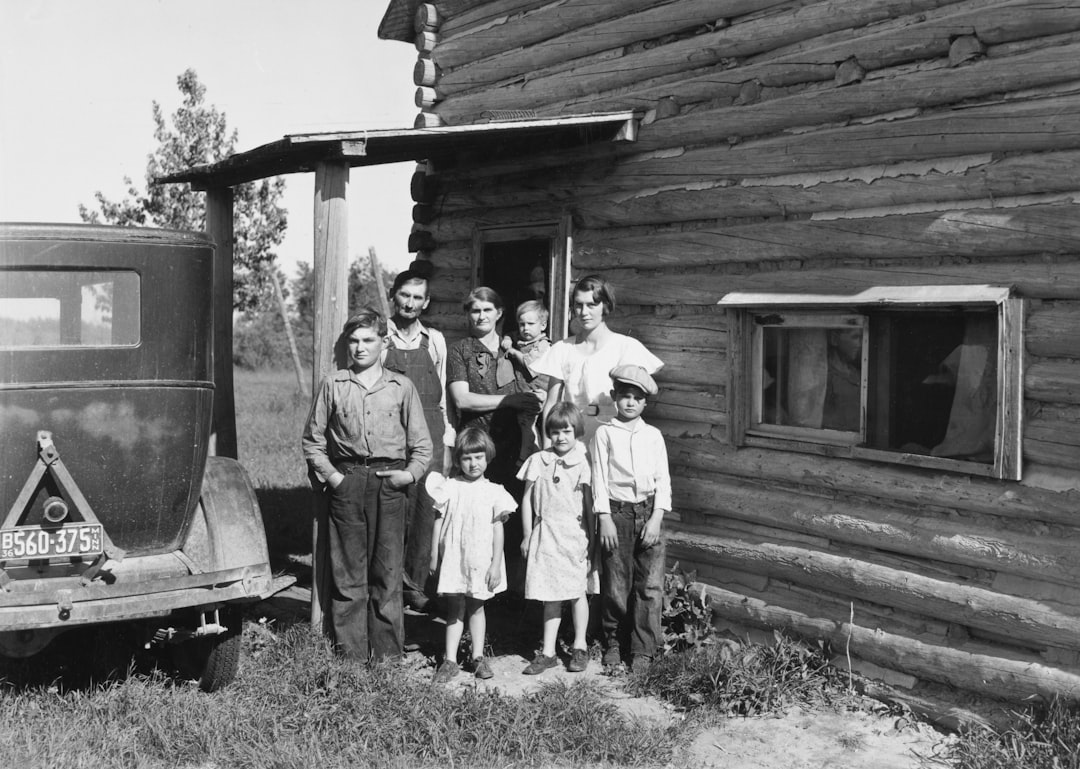
The story of Sidney and Irene Dearing, the first Black homeowners in Piedmont, California, illustrates racialized eminent domain in precise detail. In January 1924, the Dearings acquired a house at 67 Wildwood Avenue in an affluent enclave surrounded by Oakland. Because of racially restrictive covenants, Sidney’s white mother-in-law initially bought the home with his money and then transferred it to the couple, a common workaround for Black buyers at the time, according to local historians and a dedicated archival project about the family.
Almost immediately, white residents organized to drive them out. Contemporary accounts describe a mob of about 500 white neighbors gathering outside the Dearing home in May 1924, demanding they leave. The city’s police chief, an open member of the Ku Klux Klan, failed to protect the family from escalating violence: bombs were discovered near the property, bricks were thrown through windows, and gunfire hit the house and parked cars. According to a lawsuit filed in 2026 by the Dearings’ descendants, threats of lynching and cross burnings created a climate of terror that made normal life impossible.
Instead of defending the Dearings, the city council used eminent domain. In June 1924, Piedmont filed a condemnation action in court, claiming it needed the Dearing property to build a road connecting two local streets. However, records uncovered by researchers and cited by the Legal Defense Fund indicate that the city never intended to build the road. Within months of settling the condemnation, officials put the home up for sale and transferred it to a white buyer, while no road appeared at the site. Today, the property’s value is estimated at over two million dollars, a measure of the wealth the Dearing family might have accumulated if they had been allowed to remain.
Attorneys for the Dearing descendants argue that the “public use” claim was a pretext and that the real purpose of the condemnation was to remove the city’s first Black homeowners.
For nearly a century, the full story remained buried in local archives and newspapers. It was only in the 2020s, after a Piedmont resident created a public history project and researchers obtained key city records, that the details of the road that was never built became widely known. According to the new lawsuit, that late discovery is central to the family’s effort to overcome statutes of limitation and seek a modern remedy.
How does the Bruce’s Beach precedent relate to the Dearing lawsuit?
The Bruce’s Beach case in Manhattan Beach has become an important reference point for efforts to address past uses of racialized eminent domain. There, city officials condemned the Bruces’ beachfront resort in the 1920s, again using a public-park rationale while white residents and the Ku Klux Klan agitated against a successful Black business on the shore. For decades, the land eventually passed into the hands of Los Angeles County rather than the original owners.
In 2021 and 2022, California lawmakers and county officials crafted a legal pathway to transfer the property back to the Bruce family’s heirs, explicitly acknowledging that the original condemnation was racist. According to statements by Los Angeles County supervisors and reporting in major newspapers, the county entered into a lease-back and buy-back agreement. The heirs, constrained by current zoning and limited ability to develop the oceanfront parcel, ultimately sold the land back to the county for nearly 20 million dollars. Local officials framed the payment as a form of targeted reparations that helped restore some of the wealth the family had been denied for generations.
The Dearings’ descendants are seeking a similar recognition that eminent domain was abused for racial reasons in their case. Their lawsuit against the City of Piedmont argues that the condemnation violated equal protection guarantees under the California Constitution and that the city’s concealment of crucial documents for decades should allow the courts to revisit what happened. Civil rights attorneys point to Bruce’s Beach and other restitution efforts as evidence that governments can, when they choose, correct historic wrongs even long after the original harm occurred.
However, there are key differences. In Bruce’s Beach, the land was still publicly owned, which made it possible to return the title to the heirs through state legislation and county action. In Piedmont, the Dearing home was quickly resold to private owners. That history makes a direct return of the exact property unlikely, which is why the plaintiffs are asking for financial compensation pegged to the modern value of the lot instead. The court will have to decide whether the documented racial motive and the fraudulent public-use claim justify this kind of remedy so long after the fact.
Why do cases like Piedmont and Bruce’s Beach matter today?
Debates around cases such as the Dearings’ lawsuit often center on the question of living victims and responsibility. Critics sometimes argue that there are no surviving direct victims or perpetrators and that compensating descendants for century-old wrongs is unfair to present-day taxpayers. Supporters respond that the financial and social effects of racialized eminent domain are not frozen in the past. The lost equity, missed investment opportunities, and forced displacement shape families’ prospects for generations.
Economists studying the economics of crime and housing discrimination note that forced dispossession of property based on race directly contributes to today’s racial wealth gap. A family that loses a home to a fraudulent condemnation loses far more than a roof. They lose an appreciating asset, leverage for small businesses, and the ability to help children and grandchildren with education or down payments. Over decades, that absence of capital can be the difference between financial stability and chronic precarity.
There is also a civic dimension. When governments use legal tools like eminent domain for racist purposes, they damage public trust in the rule of law. A city that once deployed police and condemnation powers to appease a racist mob, as alleged in Piedmont, has to confront that history honestly if it hopes to claim equal protection today. In recent years, some municipalities have issued formal apologies or created memorials acknowledging these events. Piedmont itself has moved forward with a memorial project dedicated to Sidney and Irene Dearing, recognizing the injustice of their forced removal.
Symbolic gestures, while important, do not by themselves repair the concrete economic harm done when families are stripped of property by racially motivated legal action.
That is why the Dearing descendants, like the Bruce heirs before them, are seeking more than a plaque. Their lawsuit is part of a broader conversation about reparations and the appropriate role of the legal system in addressing historic racial wrongs. Whatever the outcome, these cases are forcing courts, lawmakers, and the public to look closely at how seemingly neutral tools like eminent domain have sometimes been used to enforce racial hierarchies and to ask what justice should look like a century later.