
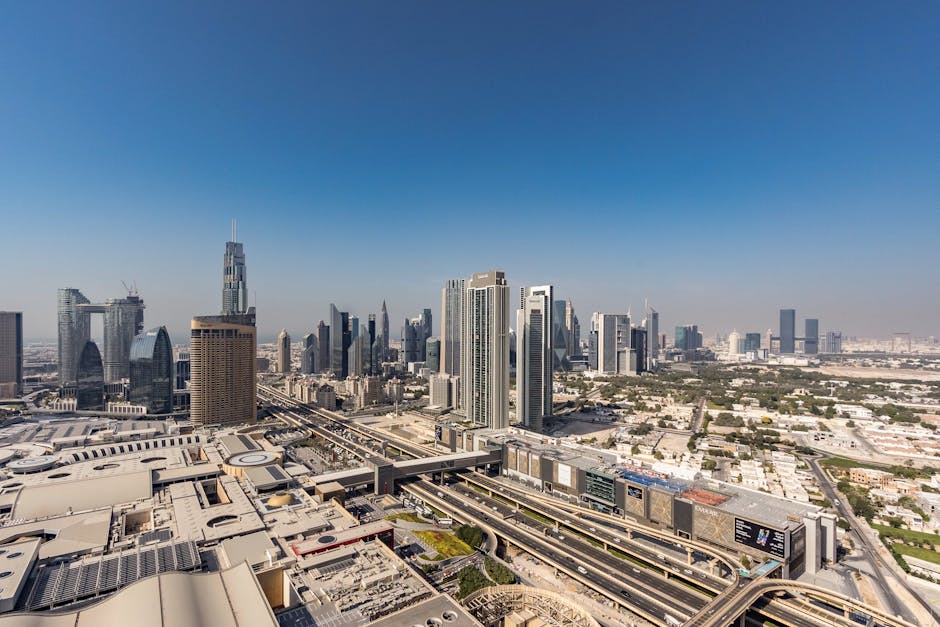
A Dubai lifestyle creator films burning missile debris outside her window, posts it to millions, then quietly deletes it the next morning. Hours later, headlines everywhere: Dubai influencers warned they could face prison for posting about the Iran conflict.
Everyone’s treating this as either “authoritarian censorship” or “responsible crisis management.”
It’s both, and that’s exactly the point.
The warning isn’t just about silencing critics. It’s about conscripting the city’s most visible expats into a legal obligation: help project calm, or stay silent.
And that has a very specific side effect: it breaks the open-source firehose that the rest of the world now relies on to understand what’s happening in real time.
What the UAE warning said and who it covers
The official line, as reported by Gulf News and Deutsche Welle, is deceptively narrow: the UAE Public Prosecution warned people “against publishing or circulating rumours and information from unknown sources” about the attacks, especially content that could harm public order, national unity or the reputation of the state.
Penalties cited in coverage: at least one year in prison and fines around AED 200,000 (roughly $54,000) for certain online “false” publications under the UAE cybercrime / anti‑rumour framework.
Notice what’s missing.
Nobody said “influencers” in the statute. Legally, this applies to everyone: residents, tourists, the person filming from a hotel balcony. But the public messaging and the media framing, The Standard’s “influencers in Dubai warned they face prison,” DW, The Guardian, put a very specific group in the spotlight.
That’s deliberate.
If you want to shape how a city under missile fire looks to the outside world, you don’t start with random bystanders. You start with the people whose entire job is to broadcast the city, daily, to millions.
And it worked: multiple influencers told reporters they deleted footage; others flooded feeds with near-identical “Dubai is safe, we are calm, we are protected” posts.
Why “Dubai influencers warned” is more than PR control
You can tell a lot about a government by who it thinks is dangerous.
Traditionally, it was journalists and activists. In 2026, it’s also the woman filming missile debris between brunch ads and gym selfies.
Here’s the non-obvious part: this isn’t just about what Emiratis see. It’s about what the rest of us can verify.
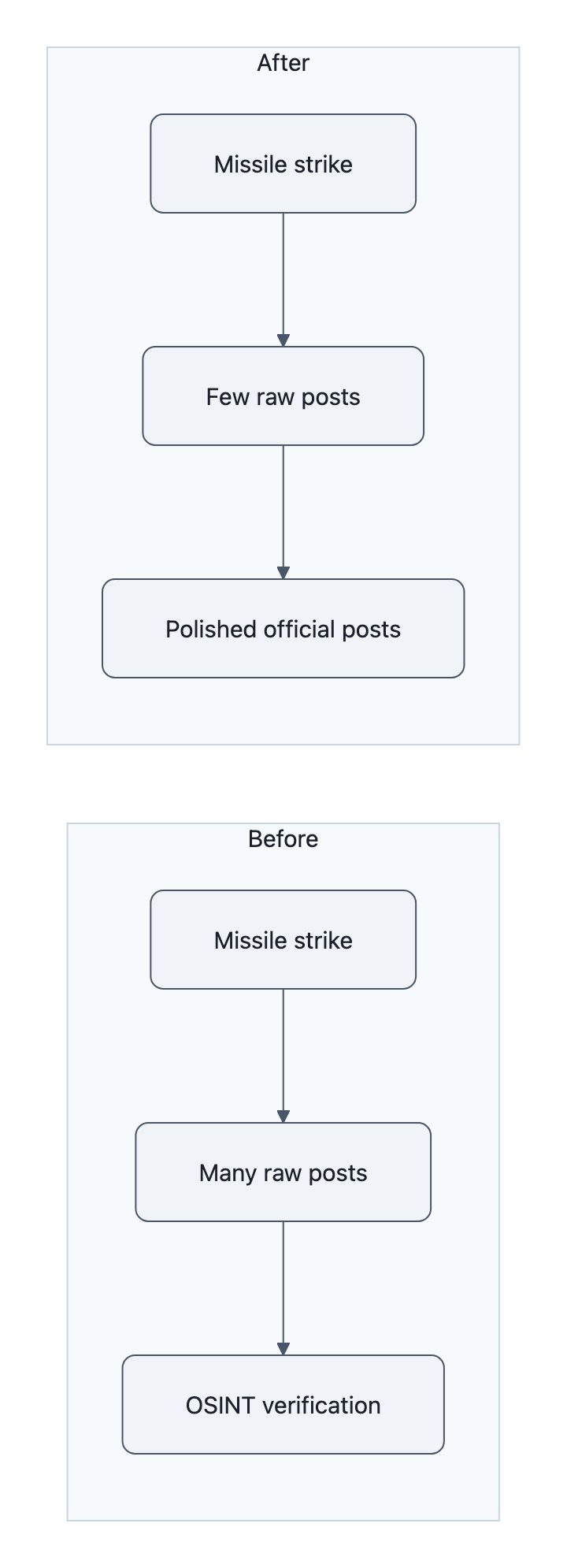
Before this warning:
- A missile strike happens at 10:03 pm.
- Within minutes, Telegram, X, TikTok are full of shaky videos from every angle.
- OSINT researchers geolocate, timestamp, cross-check against official statements.
After the warning:
- The same videos exist, for a few minutes.
- Their creators panic, remember the phrase “public order” and AED 200,000, and hit delete.
- What stays up are polished “everything is fine, Dubai is safe” clips and official government footage.
Same event. Very different data exhaust.
You still get some information, but it’s delayed, curated, decontextualized. Enough to reassure tourists and investors; not enough to reconstruct a precise timeline of what actually happened.
This is where the UAE’s move is more sophisticated than generic censorship.
Instead of just blocking platforms, it weaponises ambiguity. When “rumour” and “harm to the reputation of the state” can mean almost anything, rational creators will:
- Avoid posting raw, real‑time footage of sensitive events.
- Default to either silence or boosterism.
- Self-censor before any moderator or censor has to step in.
You don’t need a takedown system if you can make people take it down themselves.
If you’ve read NovaKnown’s earlier takes on how a loud minority warps online perception or why low‑quality news outperforms on social platforms, this should feel familiar: whoever is most willing to speak under pressure gets to define reality.
In Dubai, that’s not the person filming burning debris. It’s the person posting a well-lit reassurance reel two days later.
Legal risk: which UAE laws and penalties apply
This isn’t a vibes-based threat. There’s a concrete legal stack behind the “Dubai influencers warned” headlines.
The key piece is Federal Decree-Law No. 34 of 2021 on combating rumours and cybercrime, as summarised by Freedom House and echoed in local reporting:
- Spreading “false news,” “rumours,” or content that harms public order or the state’s reputation online is a criminal offence.
- Certain offences carry a minimum of one year’s imprisonment and fines typically reported around AED 200,000.
- The law is broad enough that a captioned video of missile debris could, in theory, be argued to “spread panic,” mislead about security conditions, or damage the country’s image.
Campaign group Detained in Dubai and lawyers quoted by outlets like ITV make the same point: the line is so vague that people don’t know when they’ve crossed it. Previous cases in the UAE have involved:
- Social media posts criticising public services.
- Private WhatsApp messages later used against the sender.
- Photos or comments deemed insulting or harmful to “public morals.”
So are foreigners and tourists really at risk?
Strictly: yes. UAE law applies to anyone within its jurisdiction, and there are documented cases of visitors facing:
- Fines and confiscation of devices.
- Short jail terms.
- Travel bans preventing them leaving until matters are “resolved.”
Realistically: the average tourist who posts a generic “crazy night in Dubai” story is not the target. The risk climbs with:
- Visibility: large follower counts, viral posts, tagging news outlets.
- Content type: close‑up debris, air-defence activity, crowds, emergency response.
- Framing: captions implying chaos, government failure, or criticising officials.
Think of it as a speed limit with no signs and a cop who only pulls over fast cars that annoy him. Most people cruise under the threshold. The outliers learn where the line really is.
What creators, residents and visitors should do now
So if you live in or travel to Dubai, how do you not become a test case, without turning into unpaid state PR?
Three practical rules.
1. Separate recording from posting
You filming something doesn’t break UAE social media laws. Publishing might.
- If you witness something newsworthy, debris, arrests, clashes, record first, post later from a safer jurisdiction if you can.
- Back up footage to non‑UAE cloud or encrypted storage.
- Don’t livestream sensitive events from within the country.
This keeps evidence available for journalists and OSINT, but lowers your personal risk while you’re under UAE law.
2. Strip out interpretation
The easiest thing to criminalise is the story you attach.
Bad (from a risk perspective):
“Dubai chaos as Iran missiles overwhelm defences, authorities lying.”
Lower risk:
Short clip, no faces, no identifying landmarks, no caption beyond time and general area.
You’re still contributing data, angles, sound, sequence, without giving prosecutors a neat line about “damaging the reputation of the state.”
3. Use “boring” channels for urgent safety info
If you actually need to warn people in‑country (“avoid this road,” “airport terminal closed”), use:
- Encrypted, private groups (Signal, WhatsApp, Telegram with small trusted circles).
- Plain, factual wording: time, place, observable facts only.
The UAE’s cybercrime regime does reach into private messages, but the enforcement pattern has mostly hit public amplification and clear criticism, not a one‑to‑one “are you OK?” exchange.
Key Takeaways
- The “Dubai influencers warned” moment isn’t just PR control; it’s a tactical use of broad UAE cybercrime law to make high‑visibility creators police their own content.
- Vague bans on harming “public order” or “the reputation of the state” push influencers toward silence or boosterism, shrinking the pool of real‑time eyewitness data for journalists and OSINT.
- Penalties under current UAE social media laws are serious, commonly reported as minimum one year in prison plus hefty fines, and have previously hit both residents and foreigners for online content.
- Creators and visitors can reduce legal risk by recording but delaying publication, avoiding interpretive captions about the Iran conflict in Dubai, and using private channels for urgent safety information.
- The net result: official crisis messaging gets cleaner, but the public record gets noisier, thinner, and easier for the state to curate after the fact.
Further Reading
- Influencers in Dubai warned they face prison for posting material about the conflict with Iran, The Standard, Reporting on the initial warning, fines, and influencers deleting footage.
- Iran strikes highlight Dubai influencers’ free speech limits, Deutsche Welle, Explains the Public Prosecution statement and cites specific penalties.
- Dubai influencers’ lives of luxury interrupted by Iran strikes, The Guardian, Interviews with creators and how their content pivoted to “everything is fine.”
- US-Israel war on Iran escalates; UAE airlines extend flight cancellations, Gulf News, Local coverage of official UAE statements and media guidance.
- United Arab Emirates: Freedom on the Net 2024, Freedom House, Background on UAE cybercrime and anti‑rumour laws and how they’re enforced.
Censorship used to look like men with tape and scissors. In Dubai 2026, it looks like a ring light, a million followers, and an influencer deciding that, for now, the safest story to tell is no story at all.