
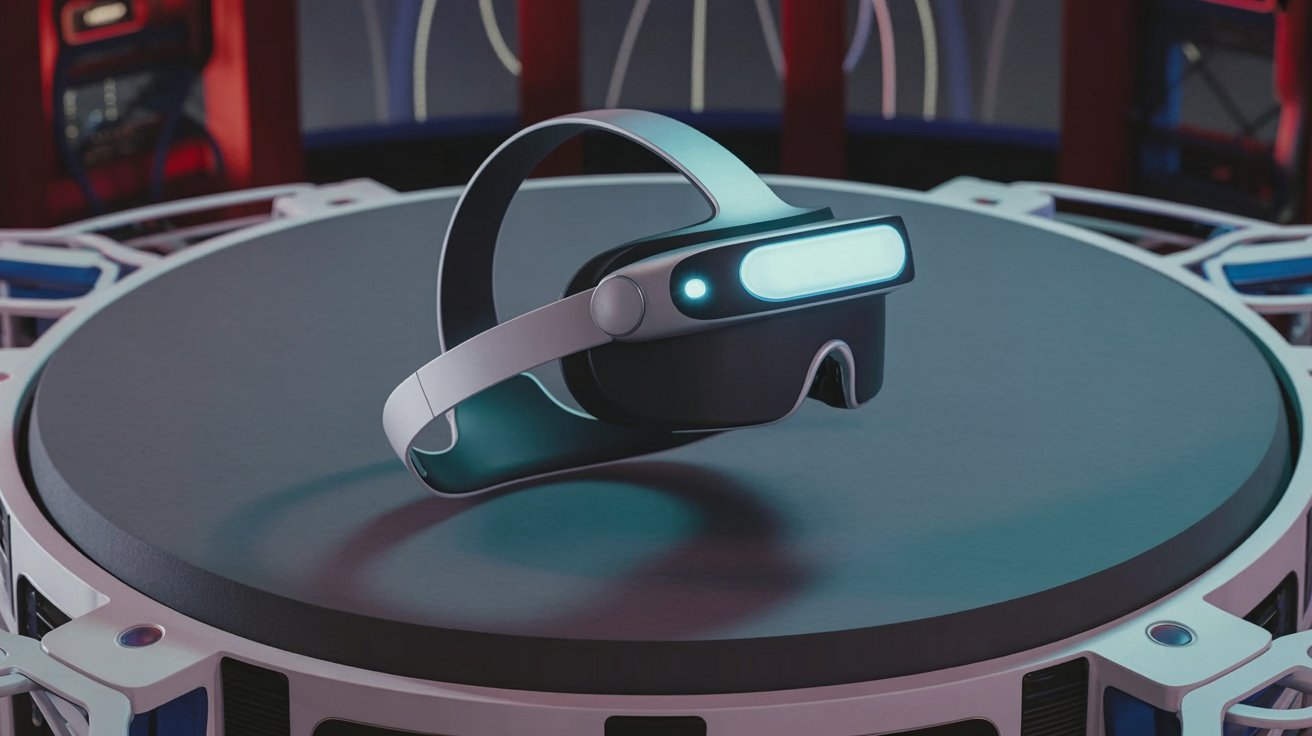
A small research team says focused ultrasound can make people perceive smells without releasing any chemicals at all. If that holds up, the smell problem in VR just changed shape: less “how do we ship scent cartridges?” and more “can we safely and reliably stimulate the olfactory system through the skull?”
That made me pause because smell-in-VR has been failing in the same boring way for decades. Smell-O-Vision, AromaRama, theater gimmicks, headset clip-ons like Feelreal and Vaqso, all of them ran into the same wall: cartridges, refills, lingering odors, limited scent libraries, and ugly logistics.
The new claim is we might not need the smells themselves. We might only need to trigger the brain strongly enough that it reports one.
What focused ultrasound smell stimulation actually does
Here’s the verified part: according to recent reporting from UploadVR, a four-person team built a prototype that uses focused ultrasound aimed through the skull at the olfactory bulb, with a transducer placed on the forehead. UploadVR reports the team first presented the work in November 2025.
The reported hardware details are unusually specific, which is a good sign that there is at least a real technical setup behind the claim. The article cites:
- 300 kHz ultrasound frequency
- 39 mm focal depth
- 50-55° steering angles
- 5-cycle pulses at 1200 Hz repetition rate
Those are concrete parameters, not marketing fog. What is not independently verified yet is the core experiential claim: that this setup can reliably induce recognizable smell perceptions across people and sessions.
According to the reporting, participants described sensations like fresh air, garbage or rotting fruit peels, ozone or air-ionizer-like, and campfire or burning wood. That is interesting. It is also still one team’s report, filtered through a news article, not a broadly replicated result.
Wait, can ultrasound really make someone smell something with no molecules hitting their nose? Maybe. But the evidence here is about reported smell-like perception, not a proven synthetic smell display with precise control. That gap matters a lot.
How the olfactory bulb is being targeted through the skull

The mechanism is the real story.
Old smell devices target the air. They spray or diffuse chemicals and hope your nose does the rest. This prototype targets the neural pathway instead. The olfactory bulb sits just above the nasal cavity and is one of the earliest processing hubs for smell. If you can perturb activity there non-invasively, you might be able to produce a smell percept without any odorant.
That is why the forehead placement matters. UploadVR reports the transducer sits on the forehead and aims toward the olfactory bulb through the skull. The team is not trying to vibrate the nose. They are trying to stimulate brain tissue associated with smell.
There’s a broader technical backdrop here. Non-invasive brain stimulation with ultrasound has been studied for years because ultrasound can, in principle, focus energy deeper and more precisely than approaches like transcranial electrical stimulation. A related Brain Stimulation journal article provides background for ultrasound neuromodulation, but it is background only, not independent confirmation of the smell prototype.
The thing that’s actually interesting under the hood is that smell may be a better target than it first sounds. The olfactory system is unusually direct. UploadVR notes that smell connects into the limbic system, the circuitry tied to memory and emotion, more directly than many other senses. That helps explain why smell is so evocative. It also means even a crude interface could feel surprisingly powerful.
If you’ve been following neural interfaces, this is the same broader move as systems trying to bypass messy physical output layers and talk to the nervous system more directly. We’ve seen adjacent versions of that in speech decoding and motor control; our piece on Neuralink ALS speech covered the invasive end of that spectrum. This smell work is much earlier and much less proven, but it belongs to the same family of ideas.
Why focused ultrasound matters beyond VR novelty
The obvious use case is VR. And yes, this would be a cleaner story than clip-on scent cartridges.
Chemical smell systems have four structural problems:
| Problem | Cartridge systems | Ultrasound approach |
|---|---|---|
| Consumables | Requires refills | No cartridges reported |
| Scent library | Limited to stored chemicals | Potentially software-driven, if real |
| Lingering odors | Hard to clear quickly | No physical smell in the room |
| Regulation/logistics | Closer to inhaled chemical products | More like neuromodulation hardware |
That last row is the twist. The logistics problem may shrink, but the safety and targeting problem gets much harder.
Beyond VR, the plausible upside is bigger than gaming. Smell is tightly linked to memory, mood, appetite, and environmental awareness. A reliable interface could matter for:
- Therapy and memory cues
- Accessibility and sensory substitution
- Human-computer interfaces that don’t rely only on screens, audio, or haptics
- Research on how perception is constructed in the first place
That last point is my favorite one. If a forehead-mounted ultrasound rig can produce “campfire” or “ozone” without smoke or ions, then smell starts to look less like a property of the room and more like a state the brain can be pushed into. That is a weird and useful idea.
It also connects to a broader pattern in frontier tech: once a demo works once, everyone starts talking as if the product already exists. We’ve seen that movie in AI too; our recent piece on the AI reproducibility crisis is basically about that exact mistake.

What is verified, and what safety questions remain
Here’s the clean split between fact and speculation.
Verified by current reporting:
– A team of four researchers is associated with the prototype.
– They reportedly presented the work in November 2025.
– The setup reportedly uses focused ultrasound through the skull.
– The target is reportedly the olfactory bulb.
– Reported technical parameters include 300 kHz, 39 mm focal depth, 50-55° steering, and 5-cycle pulses at 1200 Hz.
Plausible but not independently verified:
– The system can induce distinct smell categories like fresh air, ozone, garbage, or campfire.
– The effect is reliable across users.
– The stimulation is precise enough for future consumer interfaces.
– The method could scale into VR or other products.
Still open, and important:
– How many participants were tested?
– Were there controls, sham stimulation, or blinding?
– How consistent were reports across sessions?
– What intensity levels reached the target tissue?
– What short- and long-term safety data exist for this exact protocol?
That last question is the one you should not skip past. One commenter linked a Brain Stimulation paper and worried about tissue effects; that concern is understandable, but the comment itself is not evidence. The broader safety issue is real anyway. Ultrasound neuromodulation is not the same thing as a harmless speaker on your skin. Parameters matter. Exposure matters. Skull geometry matters. “Non-invasive” does not mean “risk-free.”
There’s also a design problem hiding inside the safety problem. Smell is not a single slider. Natural odor perception involves combinatorial patterns, adaptation, context, and expectation. Even if the device can evoke a smell-like sensation, that is very different from rendering arbitrary scents on demand.
And that’s where the story lands for me: the old bottleneck was shipping smells around. The new bottleneck may be whether we can hit the right neural tissue, with the right pattern, safely enough, repeatedly enough, to make synthetic smell more than a demo.
A weird prototype is not a product. But it is a hint about where the real engineering problem has moved.
Key Takeaways
- Focused ultrasound shifts smell-in-VR from chemical delivery to neural targeting.
- The most solid facts right now are the reported setup, target region, and stimulation parameters, not broad product claims.
- The olfactory bulb is a compelling target because smell is tightly tied to memory and emotion.
- Cartridge-free smell would solve old logistics problems, but replace them with harder safety and reproducibility questions.
- The big story is not “VR finally gets smell.” It’s that sensory interfaces may increasingly bypass the environment and talk to the brain directly.
Further Reading
- Researchers Induce Smells With Ultrasound, No Chemical Cartridges Required, The main reported source on the prototype, team, target region, and technical parameters.
- Brain Stimulation Journal article, Background on ultrasound brain stimulation; useful context, but not independent proof of the smell device.
- Scientific Reports paper on ultrasound and sensory perception, Related evidence that ultrasound can modulate sensory perception, though not this exact olfactory claim.
- Neuralink ALS speech, A different neural interface case, useful for comparing invasive and non-invasive approaches.
- AI reproducibility crisis, Why one exciting demo is not the same thing as a reliable technology.
The next useful update here is not another hype cycle. It’s a real paper with methods, controls, participant counts, and safety data.