
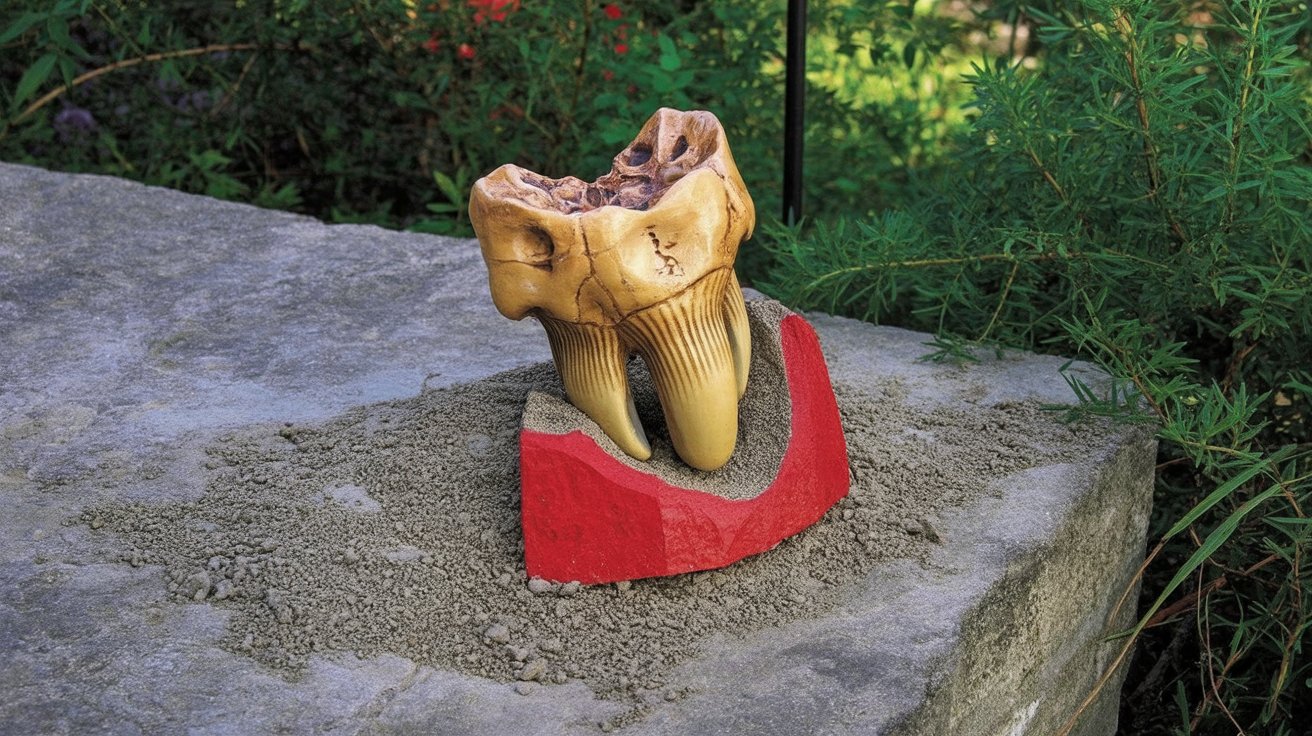
A Neanderthal dentistry study published May 13 in PLOS One says a 59,000-year-old molar from Chagyrskaya Cave in Siberia preserves the earliest documented case of invasive cavity treatment. The paper by Alisa Zubova and colleagues describes microscopic traces on the tooth that the authors say match deliberate drilling or rotating with a sharp stone tool.
The tooth, known as Chagyrskaya 64, is a lower left second molar from an adult Neanderthal. According to the paper and coverage from CNN, its crown has a deep, irregular hole that extends into the pulp chamber, where nerves and blood vessels sit.
Neanderthal dentistry claim centers on a 59,000-year-old tooth
The PLOS One paper dates the intervention to about 59,000 years ago and identifies the specimen as coming from Chagyrskaya Cave in Russia’s Altai region. The authors call it the earliest documented example of caries treatment involving an invasive procedure.
CNN reported that the tooth stood out among dozens found at the site because the cavity took up most of the chewing surface. That is the unusual part here: this was not a small chip or ordinary wear mark, but a large opening in a badly decayed tooth.
The journal abstract says the concavity was human-generated and formed during the individual’s lifetime. That matters because the claim is not that the tooth happened to break after burial, but that someone modified it while the Neanderthal was alive.
The Chagyrskaya 64 tooth showed marks consistent with drilling
The Neanderthal dentistry argument rests on the shape of the cavity and the fine marks around it. The paper says traceological analysis and micro-CT scanning found evidence of deliberate artificial manipulation on the chewing surface.
EurekAlert, summarizing the journal study, said the hole extended into the pulp cavity and that the surrounding microscopic traces were consistent with intentional treatment using a sharp stone tool rather than normal wear alone. CNN likewise reported scratches around the hole that suggested tool use.
The authors also describe two distinct types of manipulation in addition to the drilling or rotating motion. In the paper’s abstract, they say these patterns imply different tools and complex finger movements were involved.
Experiments with stone tools matched the fossil traces
The study did not stop at looking at the fossil. According to PLOS One and EurekAlert, the team compared the original traces with marks produced in experiments and found a clear match.
National Geographic reported that researchers made small pointed tools from jasper found around Chagyrskaya Cave and used them on modern human teeth, including an extracted wisdom tooth. The point of that replication was simple: make marks with plausible local tools, then see whether the marks look the same under a microscope.
That comparison is doing a lot of the work in the Neanderthal dentistry claim. EurekAlert says the microscopic traces on the fossil matched the experimental traces, supporting the interpretation that a stone drill or rotating lithic perforator produced the cavity.
The paper places the find in the context of Neanderthal medical care
The paper frames the tooth as part of a broader record of Neanderthal care for sick and injured group members. In the abstract, the authors say the drilled cavity suggests Neanderthals could identify the source of pain and deliberately choose an intervention to remove it.
CNN quoted lead author Alisa Zubova of the Russian Academy of Sciences saying, “What amazed me was how intuitively the person who owned this tooth understood exactly where the pain was coming from and realized that its source could be removed.” ABC News, cited in the research brief, reported that senior author Kseniya Kolobova said the procedure would have released pressure and removed infected tissue.
There is also some caution in outside coverage. Scientific American reported that dentist Léon Pariente, who consulted on archaeological findings, questioned whether such severe decay in a single back tooth was likely, even while the drilling evidence itself was treated as substantial in coverage.
Wear on the tooth suggests it remained in use after the intervention. CNN reported continued wear patterns after treatment, and other reporting cited in the brief said the individual appears to have kept chewing with that molar afterward.
Key Takeaways
- A PLOS One paper published May 13 describes Chagyrskaya 64, a Neanderthal molar from Siberia, as the earliest documented case of invasive cavity treatment.
- The tooth has a deep cavity reaching the pulp chamber, plus microscopic marks the authors say were made during life by deliberate tool use.
- Researchers used scans, trace analysis, and replication experiments on modern teeth to test whether a stone drill could have produced the observed traces.
- Journal-linked coverage says the experimental marks matched the fossil, supporting the Neanderthal dentistry interpretation.
- Scientific American reported some expert caution about aspects of the pathology, even as the evidence for deliberate manipulation drew attention.
Further Reading
- Earliest evidence for invasive mitigation of dental caries by Neanderthals | PLOS One, Primary journal article describing the tooth, trace analysis, and experimental work.
- Neanderthals performed earliest known dental cavity treatment | CNN, Overview of the tooth, its context, and quotes from the lead author.
- PLOS-linked EurekAlert release, Journal summary highlighting the microscopic trace match and stone-tool interpretation.
- National Geographic: Neanderthal dentist tooth, Reporting on the jasper-tool replication experiments and outside expert comment.
- Scientific American: 59,000-year-old Neanderthal tooth may be oldest evidence of dentistry, Coverage that includes expert caution alongside the dentistry claim.