
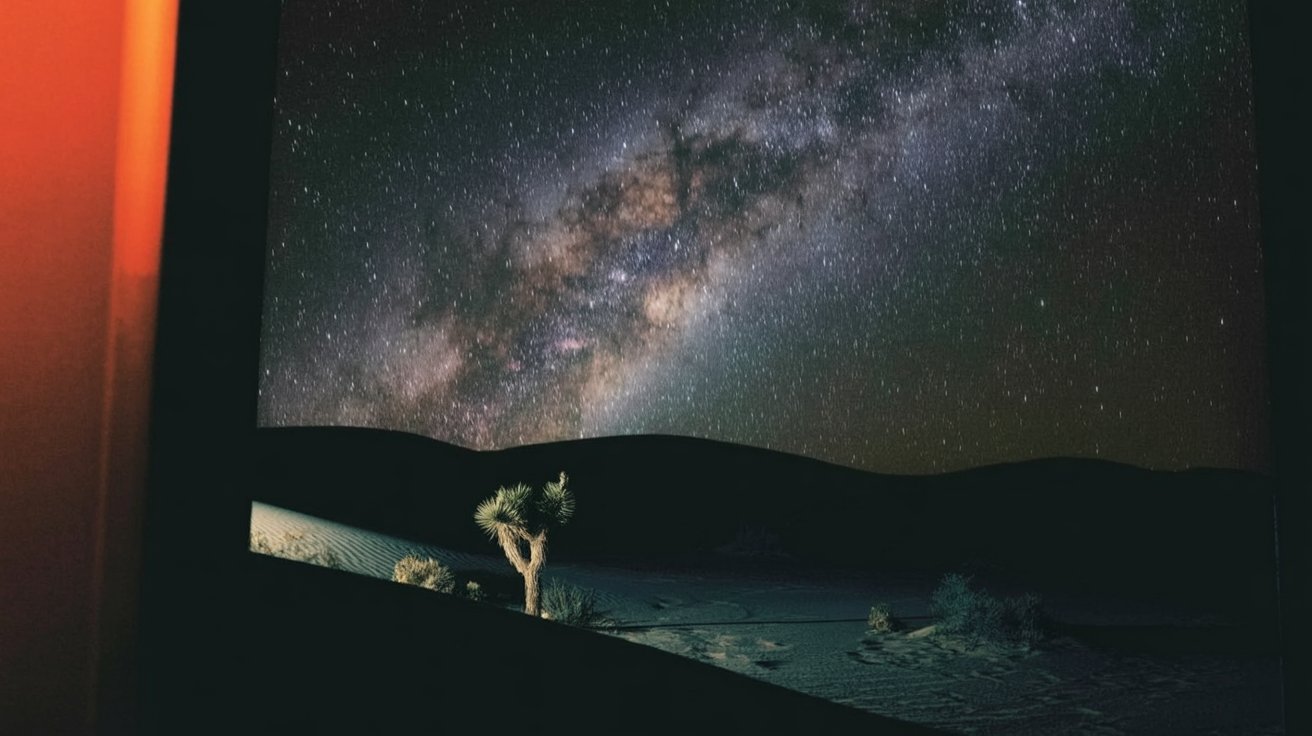
The Milky Way gets the “raspberries and rum” line because astronomers detected ethyl formate in a dust cloud near the galaxy’s center, and that molecule is associated on Earth with the flavor of raspberries and the smell of rum. That does not mean anyone has literally smelled the galaxy; it means astronomers matched a molecular fingerprint in space to a compound we already know from terrestrial chemistry, much as NASA explains for interstellar molecules identified by their spectra.
That is the whole trick. The famous line is chemistry dressed up in sensory language, not a report from someone sticking their nose out an airlock.
Why the Milky Way gets the raspberries-and-rum line
NASA’s Ames astrobiology explainer says the comparison comes from a large dust cloud at the center of the Milky Way, where astronomers found ethyl formate. On Earth, ethyl formate is used as a shorthand sensory reference because it contributes to raspberry flavor and smells like rum.
So when people say the Milky Way smells like raspberries and rum, what they really mean is narrower and less magical: one known molecule in one region of the galaxy has Earthly smell-and-taste associations.
That distinction matters because the Milky Way is huge. A molecule detected in a central cloud is not a sensory profile for the whole galaxy any more than one bakery proves a city smells like pie.
What astronomers actually detected
Astronomers do not identify interstellar molecules by sniffing them. They identify them through spectra and absorption features: light interacting with matter leaves patterns that act like molecular barcodes. NASA describes these as distinct spectral signatures, and JPL similarly explains that molecules in space can be recognized by spectral “fingerprints”.
That is the core scientific fact. The “raspberries” part is an analogy layered on top of a spectroscopy result.
Here is the useful mental model:
- Astronomers detect a molecule’s spectral fingerprint.
- Chemists already know what that molecule does on Earth.
- Writers translate that chemistry into smell or flavor language people recognize.
It is a fair shortcut, but still a shortcut. The same NASA material that popularized the line ties it specifically to ethyl formate in the Milky Way’s central dust cloud, not to empty space in general, not to every star system, and not to the galaxy as a literally scented object.
For scale, the galaxy whose center hosted that detection is vastly larger than any one cloud, as work on Milky Way disk measurements makes clear. The joke travels farther than the measurement.
What space smell claims do and do not mean
No, the Milky Way does not literally “smell like raspberries and rum” in any direct human sense. Space is a near vacuum, and the popular claim points to a molecule detected remotely, not to an astronaut or instrument experiencing a raspberry aroma.
Likewise, “Does the universe smell like raspberries?” is too broad to be true. The sourced claim is about one compound in one dust cloud near the Milky Way’s center. It is not a universal scent map.
And “Does the Milky Way taste like raspberries?” is really just a category mistake. NASA’s own casual flavor language exists to connect known chemistry to familiar human experience; it is analogy, not menu design.
The clean answer is this: astronomers detected ethyl formate, and people describe that molecule with raspberry-and-rum language because that is how it is known on Earth. The claim is about molecular identification, not literal galactic perfume.
Key Takeaways
- The “raspberries and rum” claim comes from ethyl formate detected in a dust cloud near the Milky Way’s center.
- Ethyl formate is associated on Earth with raspberry flavor and the smell of rum.
- Astronomers identify such molecules through spectral signatures and absorption features, not by literally smelling space.
- The claim applies to a specific detected molecule in a specific region, not to the whole universe or a literal human sensory experience.
Further Reading
- Interesting Fact of the Month 2021 – NASA, NASA’s explainer on ethyl formate in the Milky Way’s central dust cloud.
- Hubble Finds Tiny “Electric Soccer Balls” in Space, Helps Solve Interstellar Mystery – NASA Science, How astronomers use spectra to identify molecules in space.
- Jiggling Soccer-Ball Molecules in Space – NASA JPL, JPL’s explanation of spectral fingerprints.
- Eye-popping ‘Berries’ – NASA Science, Context for sensory analogy language in science communication.
References
- NASA, 2021, Interesting Fact of the Month 2021
- NASA Science, Hubble Finds Tiny “Electric Soccer Balls” in Space, Helps Solve Interstellar Mystery
- NASA JPL, Jiggling Soccer-Ball Molecules in Space
- NASA Science, Eye-popping ‘Berries’
Last reviewed: 2026-06