

Times Beach, Missouri is still the classic example of a town that had to be abandoned because dioxin contamination, amplified by a major flood, led federal and state officials to relocate more than 2,000 residents in 1983 and then carry out one of Superfund’s most famous full-town cleanups. What made it stick in public memory is that it was not just a polluted site or a bad floodplain: it became an entire town that government decided people could no longer safely live in.
The case also stands out because the contamination was unusually widespread. According to the EPA’s history of Times Beach, waste oil contaminated with dioxin had been sprayed on local roads for dust control in the early 1970s, and then the December 1982 Meramec River flood spread contaminated material through the community just as officials were already investigating elevated dioxin levels.
The shorthand version is simple: Times Beach abandonment story became a national reference point because it joined three things that rarely line up in one place, toxic waste, a natural disaster, and a government-ordered mass relocation.
Why Times Beach became the abandonment case everyone remembers
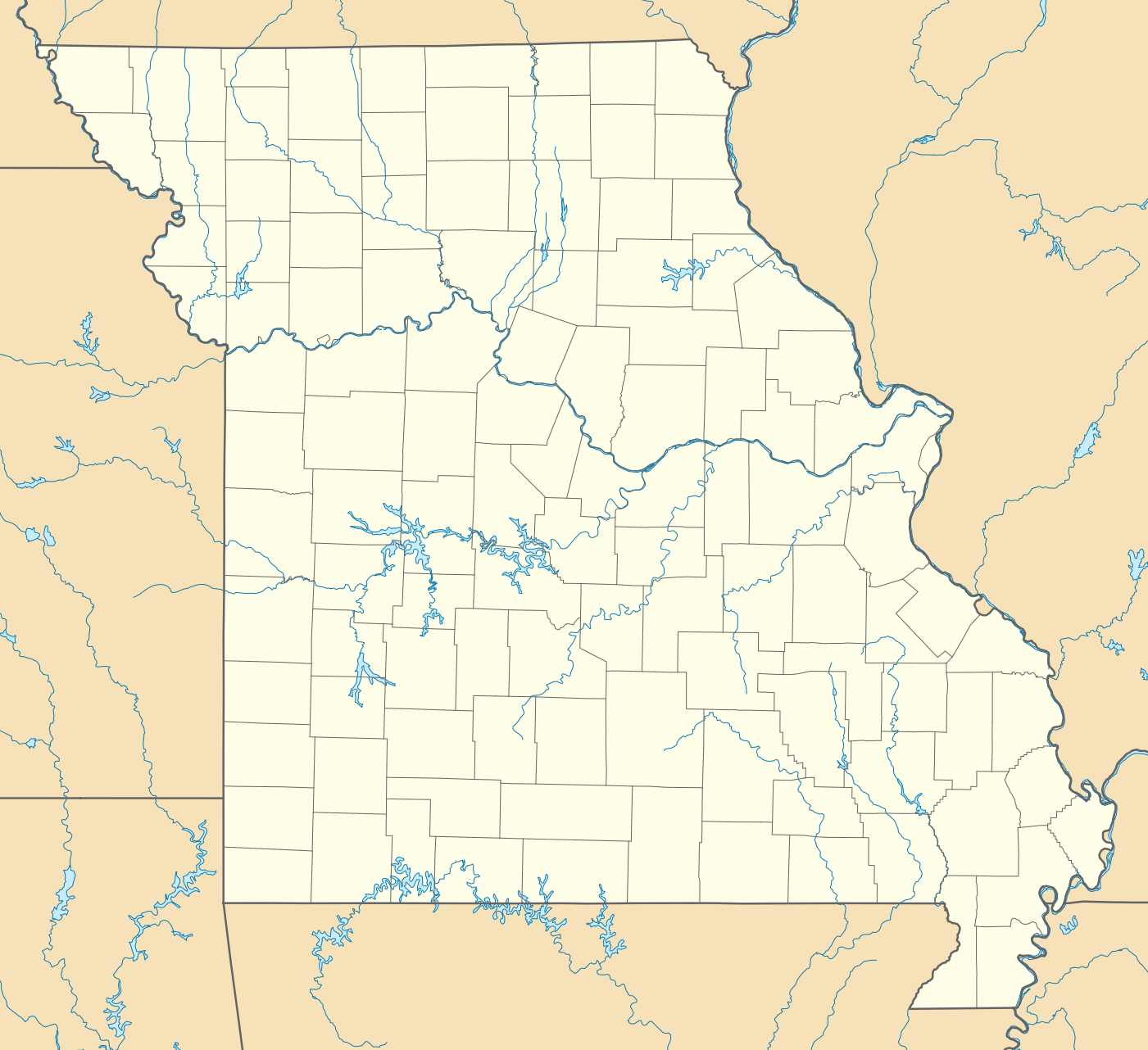

Times Beach was a small town along the Meramec River in eastern Missouri, and its roads were sprayed with waste oil to control dust in the early 1970s. The problem, later traced by investigators, was that some of that oil was contaminated with dioxin, a highly toxic chemical associated with serious health risks and already notorious from other contamination cases.
What made Times Beach exceptional was scale. The EPA’s February 1983 press release said samples found dioxin contamination at 23 locations in Times Beach, with levels ranging from 0.2 parts per billion to 33 parts per billion. That is the key distinction: this was not one factory lot behind a fence. It was contamination measured across a town where people lived, drove, and tracked dust into their homes.
Then the flood made a bad contamination case much harder to contain. In December 1982, the Meramec River flooded Times Beach, inundating much of the community. The EPA later described the disaster as the moment that turned the town into a national symbol, because floodwaters spread contaminated soils and forced officials to confront both immediate recovery and long-term habitability at once.
A useful way to think about it is that contamination, which might once have been mapped street by street, became, after the flood, a whole-town problem. That is why Times Beach is remembered more vividly than many other toxic sites: the hazard was no longer abstract or localized.
How the evacuation and cleanup unfolded
In February 1983, federal and Missouri officials announced a plan to buy out and relocate the town’s residents. The EPA said the action would affect more than 2,000 residents. For a contaminated community, that is the number that made Times Beach different: this was a town-sized relocation, not a handful of homes around a dump.
The site was then placed on the National Priorities List in 1983, making it one of the early flagship Superfund cases. In 1988, EPA signed the Record of Decision selecting on-site incineration as the remedy for contaminated soils, sediments, buildings, and debris.
That cleanup was large even by Superfund standards. The 1988 Record of Decision called for treatment of about 265,000 tons of contaminated soil and related material. The later EPA Superfund site profile says the incinerator ultimately treated about 265,700 tons, which is roughly 133 tons of contaminated material per relocated resident using the EPA’s “more than 2,000 residents” figure. That is the kind of ratio that makes the case feel less like a cleanup project and more like a municipal-scale reset.
“Joint federal/state action” was how the EPA described the 1983 relocation decision, which captured the reality of the moment: the town was not being patched up. It was being unwound.
Cleanup construction was completed in 1997, according to EPA’s site profile, after years of treatment and demolition.
Why the case still matters in environmental history
Times Beach remains a reference point because it crystallized the hardest version of environmental abandonment: contamination serious enough, and spread widely enough, that leaving was more practical than trying to keep a town inhabited. The EPA’s historical overview explicitly treats it as one of the defining episodes of the Superfund era.
It also left behind an unusually visible afterlife. The former town site later became Route 66 State Park, according to the EPA archive for the park area. That transformation matters because it turned a place once associated with poisoned dust and floodwater into a public landscape managed under a very different set of assumptions.
The case still gets cited because it sits at the intersection of several enduring themes:
- industrial waste mismanagement
- disaster-driven spread of contamination
- mass relocation as a public-health response
- Superfund’s ability to handle a town-scale cleanup
The basic answer, then, is not just that Times Beach was contaminated. It is that Times Beach combined toxic contamination, a flood that spread it, a buyout of an entire community, and a cleanup so large it became one of Superfund’s signature cases. Plenty of places have suffered one of those things. Very few became shorthand for all four.
Key Takeaways
- Times Beach became the classic abandoned-town case because dioxin contamination and the 1982 flood turned the whole community into a habitability problem.
- Federal and Missouri officials announced relocation for more than 2,000 residents in February 1983.
- EPA sampling cited in that announcement found dioxin at 23 locations, ranging from 0.2 to 33 parts per billion.
- EPA’s selected cleanup remedy called for incineration of about 265,000 tons of contaminated material.
- The former town site later became Route 66 State Park.
Further Reading
- Times Beach | US EPA, EPA’s historical overview of the contamination, relocation, and cleanup.
- 1983 Press Release: Joint Federal/State Action Taken to Relocate Times Beach Residents | US EPA, Primary source for the relocation announcement and sampling results.
- Times Beach Record of Decision Signed | US EPA, EPA’s 1988 cleanup decision and remedy details.
- Times Beach | Superfund Site Profile | US EPA, Cleanup completion record and tonnage treated.
- A Town, a Flood, and Superfund: Looking Back at the Times Beach Disaster Nearly 40 Years Later | US EPA, EPA retrospective on why the case became so memorable.
References
- US EPA, Times Beach
- US EPA, 1983, Joint Federal/State Action Taken to Relocate Times Beach Residents
- US EPA, 1988, Times Beach Record of Decision Signed
- US EPA, Times Beach Superfund Site Profile
- US EPA, A Town, a Flood, and Superfund
- US EPA, Sampling Activity at Route 66 State Park near Eureka, Missouri
Last reviewed: 2026-06