

Russian influence operations have published at least 906 fake news reports under the names of 163 real news outlets in 21 countries between March 2023 and September 2026, according to the misinformation-tracking company NewsGuard. Euronews was the brand they borrowed most, 82 times. That is roughly one fake in every eleven.
The method needs no hacking. The operators write a smear that people would ignore if it came from an anonymous account. They then dress it in a broadcaster’s logo and on-screen graphics, and sometimes in the cloned voice of one of its reporters, so it reaches people looking like a news clip worth forwarding to a friend.
The report, by NewsGuard analysts Alice Lee and Madeline Roache, credits the fakes to three Kremlin-linked campaigns. The most-impersonated outlets are mostly European:
| Outlet | Fake reports in its name |
|---|---|
| Euronews | 82 |
| Libération | 39 |
| BFM | 35 |
| France 24 | 34 |
| BBC | 30 |
Further down the list come Deutsche Welle and Le Parisien at 28 each, Politico and CNN at 22, USA Today at 12, Bloomberg at 6, the Washington Post at 5 and NBC News at 4. Small titles were used too, including The Kyiv Independent, the Yorkshire Post and the French regional paper La Montagne.
NewsGuard also appears on its own list, with 25 fakes in its name, so it is counting attacks on itself. Most of the individual fakes below were flagged by other groups as well: France’s foreign-interference agency Viginum, Ukraine’s Center for Countering Disinformation, the volunteer researchers at Antibot4Navalny, and Euronews itself.
The trend figure needs more care. NewsGuard counted 44 such fakes in the first half of 2025 and 421 in the first half of 2026, and its newsletter first reported this as a jump of “850 percent”. The full report has since dropped that headline. Its editor’s note says the figure “may have overstated the uptick in activity” because its 2025 searches “were not as rigorous as they have been in 2026.” Part of the rise reflects NewsGuard looking harder. The 906 total does not depend on the trend.
What a hijacked report looks like
The basic version copies the outlet’s logos, layouts and graphics, sometimes on a new site with a web address close to the real one. Viginum documented fake Le Monde and Bild pages at lemonde.com.co and bild-news.ltd. A real Le Monde journalist whose name was put on one of these fakes said:
“I have absolutely nothing to do with this content.”
The stories often include invented quotes from real experts. Video is where the forgeries are most convincing. In January, Euronews reported that cloned voices of its own reporters had been used to blame a Ukrainian refugee for the Crans-Montana fire, illustrated with a photo of a 2019 explosion in Poland. Another clip blamed pension shortfalls on spending for refugees. The videos spread through a Telegram channel with 34,861 subscribers.
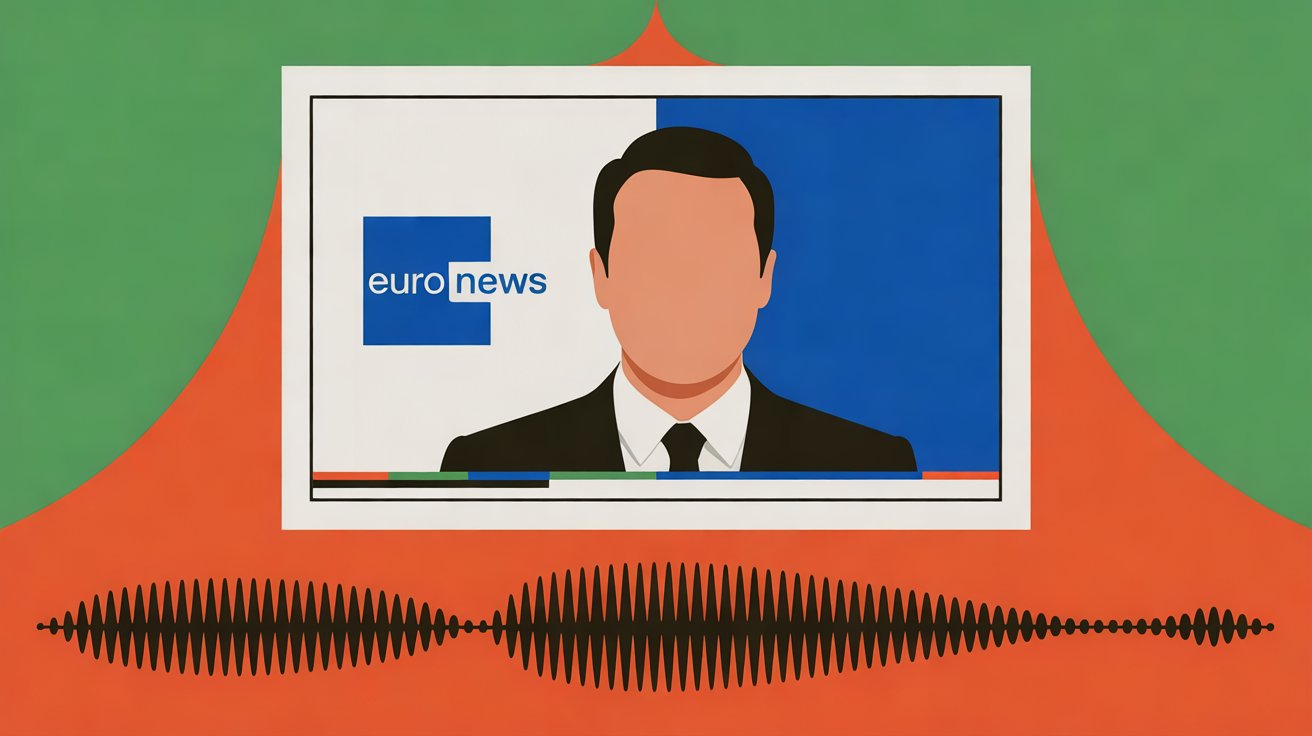
In July, a fake copy of Euronews’ Europe Today show used an AI-generated voice to claim that $11 million (€9.6 million) had gone to Volodymyr Zelensky’s parents. It drew millions of views. Ukraine’s Center for Countering Disinformation attributed it to Matryoshka, the most prolific of the three campaigns.
Other fakes include:
- a fake Euronews clip from March 2026 in which Hungarian opposition leader Péter Magyar calls Donald Trump a “senile grandpa”
- a fake Reuters video putting a slur about Viktor Orbán’s voters in Zelensky’s mouth
- a forged BBC report from April 2025 claiming Olena Zelenska had sought asylum
- fake Euronews reports about “Ukrainian looters” in Dubai and a $170 million UAE flat owned by Armenian prime minister Nikol Pashinyan, which his spokesperson denied
A fake Le Point story from April 2026 claimed that 20,000 Ukrainian soldiers evacuated to France had deserted and joined gangs. NewsGuard’s report puts the number of Ukrainian soldiers France has sent for treatment at 6,400. France 24 gives a separate count of about 200 Ukrainians transferred to French hospitals. Neither figure comes close to 20,000. Le Point said it “never published such a report.”
Three campaigns, one borrowed credibility
The campaigns work at different scales. Matryoshka posts around a dozen low-quality fake videos a day on X and Telegram. Storm-1516 posts fewer, more elaborate fakes and pushes them through networks of X accounts, often reaching tens of millions of views. Doppelganger, which cloned whole news sites, has slowed sharply since 2024.
Storm-1516 is the best documented. In May 2025, Viginum reported that it was first identified in December 2023, had run more than 290 “CopyCop” sites, and had carried out at least 20 operations around elections, with articles rewritten by generative AI. Researchers who write about CopyCop are describing the same operation.
AI is also why the volume is possible. Chine Labbé of NewsGuard told France 24 that “it costs nothing to create a fake news site using AI”. The real outlets spent decades building the trust that makes these fakes work, and the operators get to use it almost for free. The forgeries also undermine trust in credible media, so the operation gains either way: a fake that is believed spreads the smear, and a fake that is exposed teaches viewers that a familiar logo proves nothing. The same borrowed-identity logic runs through a China-origin influence operation posing as Americans and through partisan sites dressed up as local news.
How to spot a hijacked news report:
- Check the outlet’s own website or app. If a story isn’t there, the outlet didn’t publish it. Le Point’s 20,000-deserters story never appeared on Le Point’s site.
- Read the web address letter by letter.
lemonde.com.cois not Le Monde. - Be wary of a branded video clip that circulates only on X or Telegram. That is how Matryoshka distributes its fakes.
- A familiar voice proves nothing. Euronews reporters’ voices have been cloned.
- Search for the quoted expert’s name together with the quote. The quotes in these fakes are often invented.
France is the main target after Ukraine
Eight of the 15 most-impersonated outlets are French. After Ukraine, France and Germany are the countries most often targeted, and both are among Ukraine’s strongest backers in Europe. The smears run from claims that Zelensky embezzled Western aid and is addicted to cocaine to fabricated pedophilia accusations against Emmanuel Macron and Friedrich Merz.
Franceinfo has counted 85 fakes aimed at France’s 2027 presidential race since the summer. They target candidates including Raphaël Glucksmann, Gabriel Attal and Édouard Philippe, and the presidential campaign has barely started.
Further Reading
- Hijacking Trusted Media Brands: Russian Campaigns Push 900 Fake News Reports, NewsGuard’s full report: 906 fakes, 163 outlets, per-outlet counts, examples and the editor’s note revising the 850% claim.
- Russia Hijacks Trusted Media Brands, NewsGuard’s Reality Check summary, with the half-year counts and the three campaigns’ methods.
- Russia ramps up disinformation attacks on French media ahead of 2027, France 24 on being impersonated, with comments from NewsGuard’s Chine Labbé.
- La désinformation russe explose (Franceinfo, Le vrai du faux), Franceinfo’s count of 85 fakes tied to the 2027 presidential race.
- Fake Euronews video claims Zelenskyy’s parents under corruption investigation, the fake Europe Today clip with an AI-generated voice.
- Euronews journalists’ voices stolen in fake anti-Ukraine videos, cloned reporter voices used to blame a refugee for the Crans-Montana fire.
- Fake Euronews reports used to spread disinformation about Middle East war, Matryoshka fakes imitating Euronews, Le Point, USA Today and Al Jazeera.
- Matryoshka fakes impersonating Reuters, Euronews, RFI, Politico over Hungary, The Insider on fakes targeting Hungary’s election debate.
- Storm-1516: the pro-Russian disinformation operation threatening the public debate, EDMO’s summary of Viginum’s May 2025 report on Storm-1516.
- Russia’s Storm-1516 fabricates Ukrainian threat (DisinfoWatch), lookalike domains spoofing Le Monde and Bild, and a Le Monde journalist’s response.