
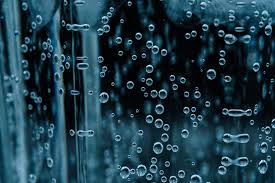
They were dissolved, tucked into the liquid by pressure, temperature, and some elegant chemistry that dictates when gas will stay in a drink and when it will burst free.
The invisible bubbles: gas dissolved like sugar in tea
Just as sugar disappears into hot tea, carbon dioxide (CO2) disappears into water. In this dissolved state, CO2 molecules mingle among water molecules; there are no visible bubbles because the gas isn’t a separate phase. Chemists describe this with Henry’s law: the amount of gas a liquid holds at equilibrium is proportional to the gas’s partial pressure above the liquid, and it depends strongly on temperature.
That relationship explains two everyday observations. First, colder drinks hold more CO2, which is why a frosty bottle keeps its fizz better than a warm one. Second, when you open a container and drop the pressure above the liquid, the equilibrium shifts—the liquid is suddenly “overloaded” with gas, and CO2 leaves the solution, forming bubbles that race upward.
Bottling under pressure: how the fizz gets in
Modern bottling lines don’t simply trap air; they work with nearly pure CO2. The water or soft drink is chilled—often close to 0–4°C—because cold liquid absorbs CO2 more readily. The beverage is then contacted with CO2 at elevated pressure until it reaches a target carbonation level measured in “volumes of CO2.” One volume means one liter of CO2 (at standard temperature and pressure) dissolved in one liter of liquid. Many sodas are packaged at roughly 3 to 4 volumes, while sparkling wines can exceed 5 volumes.
Once the drink is carbonated, counter-pressure fillers keep it under CO2 as it flows into bottles or cans, minimizing foaming and loss of gas. The sealed package ends up with a CO2-rich headspace and internal pressure that might sit in the range of a few bar, depending on temperature and carbonation level. That pressure doesn’t make the drink fizzy on its own; it maintains the equilibrium that keeps the CO2 dissolved.
Inside the liquid, a small fraction of CO2 reacts with water to form carbonic acid, which adds the characteristic bite to seltzer and soda. Most of the gas, however, remains as dissolved CO2, poised to escape when conditions change.
Why the level doesn’t rise (and why the fizz keeps coming)
If a liter of soda contains several liters of CO2 by the “volumes” measure, why doesn’t the bottle look overfilled? Because dissolved molecules don’t occupy space the way a free gas does. They contribute only their partial molar volume—far smaller than the space that the same amount of gas would take as bubbles. In practical terms, the liquid level changes so little when CO2 dissolves that you won’t notice it.
Open the cap and the headspace pressure collapses to atmospheric. But the dissolved CO2 doesn’t vanish in an instant. It must diffuse through the liquid and collect into bubbles before it can escape. That takes time, which is why fizz persists for minutes after opening and continues to taper off over hours or days as the drink approaches a new equilibrium with the surrounding air.
How bubbles are born: nucleation and the slow surge
Bubbles don’t form everywhere at once. They need nucleation sites—tiny imperfections, scratches on glass, microscopic fibers, or trapped pockets of gas—where the first specks of a bubble can stabilize. From there, CO2 molecules migrate into these nascent bubbles, which expand and detach in graceful trains that you can watch climbing the walls of a glass.
The scarcity and distribution of nucleation sites govern the fizz’s tempo. Smooth containers and very clean liquids produce fewer, steadier streams of bubbles; textured surfaces or added particles can unleash a froth. That’s the physics behind dramatic demonstrations like dropping rough candy into soda: the candy offers a vast landscape of nucleation points, so the gas rushes out all at once.
What shaking really does
Shaking a sealed bottle doesn’t manufacture extra gas, but it does make a mess of the equilibrium. Agitation pulls dissolved CO2 into countless microscopic bubbles dispersed throughout the liquid. Many of those bubbles lodge on surfaces and particles, multiplying nucleation sites.
Open the bottle immediately and every one of those microbubbles becomes a tiny expanding balloon. As the pressure at the top mouth drops to atmospheric, the buoyant, growing bubbles force liquid upward, pushing foam out in a hurry. That geyser happens less because the overall internal pressure skyrocketed and more because the gas has been primed to escape everywhere at once.
Temperature, taste, and the bite of bubbles
Temperature is the quiet master switch for carbonation. Lower temperatures increase gas solubility and tamp down kinetic energy, making it harder for bubbles to nucleate and grow. That’s why a very cold bottle hisses politely when opened, while a warm one can froth aggressively even if you handled it gently.
Temperature also shapes flavor. CO2’s transformation into a small amount of carbonic acid is more perceptible at certain temperatures, and colder liquids carry sharper, more refreshing carbonic bite. Warmer temperatures dull the sparkle by encouraging gas to leave the solution and by softening that acid snap, changing the drink’s texture and taste.
Beyond beverages: the same physics under water
The rules that govern your soda also apply in the sea and even in the human body. Fish rely on dissolved gases—oxygen and carbon dioxide—in water; Henry’s law helps explain how gills and aquatic plants exchange gases. In medicine and diving, changes in pressure can force inert gases to leave solution too quickly, forming dangerous bubbles in tissues and blood, a condition known as decompression sickness. Different settings, same equilibrium story.
Keeping the sparkle: a few practical takeaways
To preserve fizz, keep carbonated drinks cold and sealed. Cold slows the escape of CO2, and a tight cap maintains the headspace pressure that keeps gas in solution. Pouring along the side of a tilted glass reduces turbulence and nucleation, which helps retain carbonation longer. If a drink has been jostled, letting it rest allows bubbles to migrate upward and collapse in the headspace before you open it—saving you from a foam-over.