
Open model document extraction is the clearest practical AI story of the day. NuExtract3 puts that workload on a 4B, self-hostable model, while the rest of the docket is a reminder that the platform and infrastructure layers are still moving too, from Chrome’s attempt to absorb framework territory to MySQL finally closing a bug old enough to rent a car.
NuExtract3 pushes open model document extraction local

NuMind has released NuExtract3, a 4B vision-language model for document extraction that targets a very unglamorous, very real enterprise task: turning PDFs, screenshots, forms, receipts, tables, and multi-page documents into Markdown or structured JSON. Per the Hugging Face model card, the model supports multimodal inputs, multilingual documents, and both reasoning and non-reasoning inference modes. The company says it is designed as a unified model for OCR and schema-based extraction, with private deployment and self-hosting as a core use case.
The interesting part is not just size, but deployability. In the launch notes and community post, NuMind says NuExtract3 can run with as little as 4 GB of VRAM and ships with Safetensors, GGUF, and MLX weights, which moves document AI from API-only territory into laptops and regulated environments. NuMind also reports self-benchmarked results on an internal set of about 600 documents, with a score of 0.651 plus or minus 0.019 for NuExtract3.4_4B-RL, versus 0.538 for gemma-4-E4B-it and 0.417 for Qwen3.5-4B, according to the Hugging Face card. Those numbers are vendor-reported, not independent. One caveat: the licensing story is messy. Vendor materials surfaced in the notes describe the model as MIT in some places and Apache-2.0 in others, which matters more than usual when the whole pitch is self-host it anywhere.
Chrome proposes native partial page updates
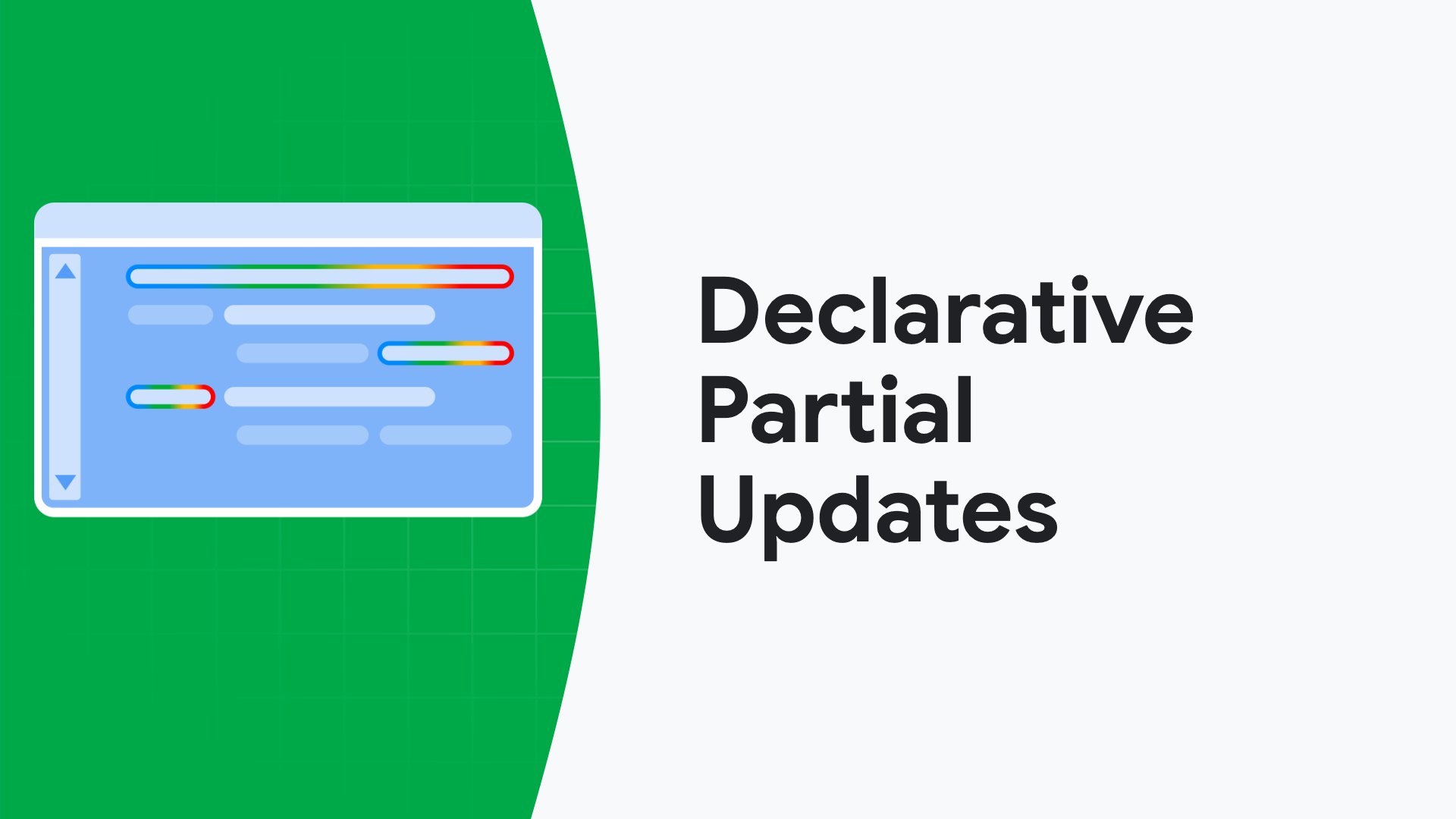
Chrome has published a proposal for declarative partial updates, a set of HTML primitives for updating parts of a document without a full page refresh. According to the Chrome Developers blog, the goal is to handle same-document navigations, loading states, and streamed HTML updates in the platform instead of pushing that work to JavaScript frameworks. The associated WICG explainer says the proposal is aimed at the modern pattern of independently updated page fragments, with browser-native support for HTML streaming and a path toward client-side includes.
This is a standards story as much as a developer ergonomics one. The Chrome post is dated May 19, 2026, and the WICG repository calls the document a living explainer, which is polite language for not done yet. The pitch is straightforward enough: less custom JavaScript for a broad class of interactive sites. The tension is also familiar. If this lands, HTML-first development gets stronger; if it stalls, it becomes another case where Google prototypes the future of the web in public and everyone else gets to react later.
IBM forms standalone quantum chip foundry

IBM said on May 21 it plans to create Anderon, a standalone company in Albany, New York, to operate what it calls America’s first pure-play quantum foundry. Per IBM’s newsroom announcement, the plan is backed by a proposed $1 billion CHIPS award from the U.S. Department of Commerce and $1 billion in IBM cash, plus intellectual property, assets, and workforce contributions. IBM says the facility will be a 300-millimeter quantum wafer foundry.
The important qualifier is that this is not done yet. IBM says the launch is subject to negotiation and execution of definitive documents, so the clean framing is planned spinout, not completed separation. Axios reports the foundry sits inside a broader $2 billion federal push into quantum companies, which makes this less like corporate org-chart cleanup and more like supply-chain policy for a hardware stack that still lacks manufacturing depth.
MySQL fixes Bug 11472 after two decades

MySQL Bug #11472, filed about 20.9 years ago, is now marked fixed in Oracle’s own bug tracker. The issue was that child table triggers were not executed during foreign key cascade actions, which meant cascades happened but trigger-based auditing, derived data maintenance, and business logic could quietly miss them. Oracle’s MySQL engineering blog says MySQL 9.7 now allows those triggers to execute during SQL-layer foreign key cascades, with a new enable_cascade_triggers server variable to keep the change opt-in.
That opt-in matters. According to the Oracle blog, the team chose backward compatibility over purity, which is sensible when a 2005 bug has had time to become accidental application behavior. The worklog tied to WL#17024 states the requirement directly: triggers must fire for foreign key cascade action. Ancient bugs are part of the stack too; this one just finally stopped being folklore and rejoined the changelog.
A surprisingly coherent day: the useful AI work moved closer to the edge, and the old layers underneath kept changing shape.
Sources
- A 4B open model turns PDFs and screenshots into data, huggingface.co
- Chrome wants the web to do partial page updates natively, developer.chrome.com
- IBM is spinning out a standalone quantum chip foundry, newsroom.ibm.com
- MySQL finally fixed a bug that survived 20 years, blogs.oracle.com
Related reading
- DeepSeek Tests Open Model Economics; Foreign Coauthors (2026-05-23)
- llama.cpp Becomes a Local Agent Host; Hidden Audio Still Threatens Voice Agents; Dutch Raid Hits Cybercrime Plumbing (2026-05-25)
- Microsoft AI Costs Hit Budget Walls; Anthropic Says AI Is Finding Real Bugs; Vibe Coding Creates Cleanup Work (2026-05-24)