
The sharpest story today is Heretic, because it turns model safety from a lab policy into a forkable artifact. Elsewhere, the same pattern shows up in milder forms: architecture dogma is being questioned, robotics claims need stricter reading than the viral version, security buyers are discovering that “autonomous” often means supervised by tired humans, and Norway is treating language models as cultural infrastructure.
Heretic guardrail removal gets hard to ignore

The Heretic guardrail removal story moved from niche open model circles into mainstream reporting this week. According to the Financial Times, cited via secondary reporting from The Insider, the paper used the GitHub tool Heretic to remove safety guardrails from Meta’s Llama 3.3 in less than 10 minutes and without specialist hardware. Heretic’s own GitHub repository describes the project as open source software for “fully automatic censorship removal for language models,” which is the part that matters. This is not a clever prompt trick. It is a public workflow for modifying weights after release.
The second beat is scale, although it is less directly verified. Secondary discussion of the FT report says creator Philipp Emanuel Weidmann told the paper Heretic had been used to create more than 3,500 “decensored” models and that those modified systems had been downloaded 13 million times. Those figures were not independently confirmed in the sources reviewed, but even as reported claims they shift the story from one jailbreak to a broader distribution problem. Open weights always came with this tradeoff; once a model is out, post-release control gets thin fast, and the argument moves from safety engineering to distribution, forks, and lawyers.
Security teams are testing the limits of autonomous SOC claims

Security vendors keep selling an autonomous future, but their own source material is more cautious than the pitch decks. In OpenAI’s May 7 post, the company said GPT-5.5-Cyber is in limited preview for defenders and emphasized trusted access and safeguards; AWS, in its security blog, frames multi-agent security systems as an evolution of existing testing workflows rather than a replacement for them. That is a useful reality check. The primary sources are describing constrained, supervised systems, not a self-driving SOC.
The gap is operational. A practitioner thread this week described teams spending time “babysitting a hallucinating chatbot,” and one commenter claimed CrowdStrike had fired tier-1 MDR analysts and then rehired some after AI escalated nearly everything. That specific anecdote is unverified and should be read as practitioner signal, not settled fact. The broader complaint is easier to support: even the vendors are still talking about safeguards, restricted access, and human oversight. In a high-stakes domain like security, a noisy agent is not labor elimination. It is another queue.
The post transformer debate leaves transformer consensus looking thinner
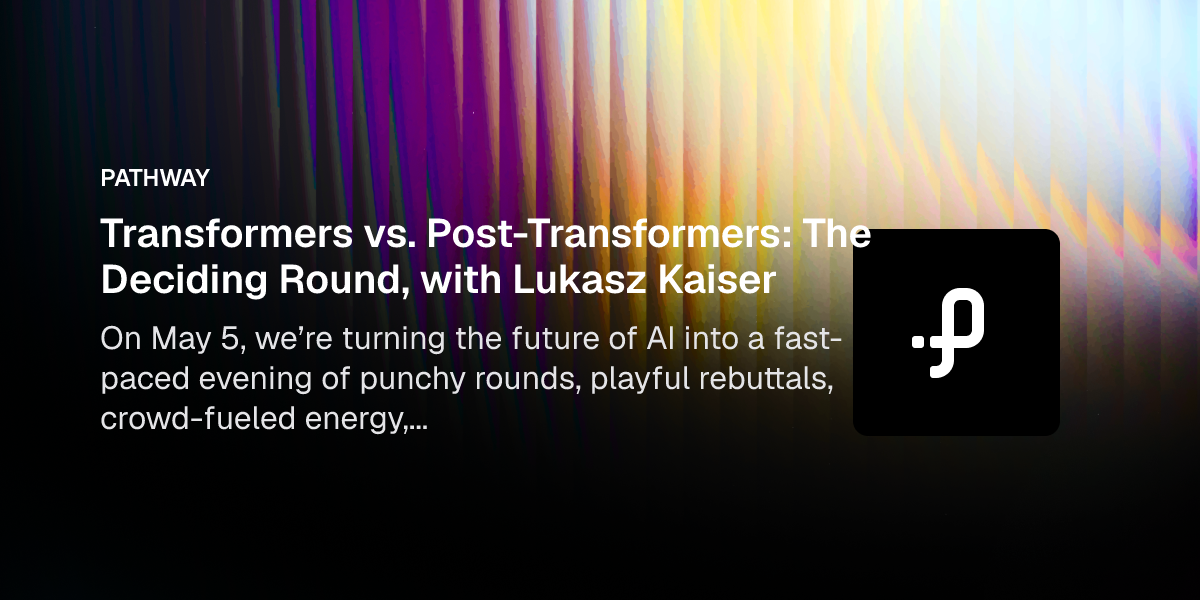
A co-author of Attention Is All You Need is now publicly arguing for life after the architecture that runs most of modern AI. On Pathway’s event page for its May 5, 2026 debate, the company lists Llion Jones, identified there as a co-inventor of transformers and CTO and co-founder of Sakana AI, on the post-transformer side against Lukasz Kaiser. Pathway is not a neutral host here. Its homepage calls itself “the first post-transformer frontier model,” and its research page says BDH solved Sudoku Extreme with 97.4% accuracy, while “leading LLMs are close to 0,” which should be treated as a company claim.
Still, the debate matters because Jones has been making this case outside Pathway’s marketing too. VentureBeat reported in late 2025 that he said he was “absolutely sick” of transformers. The live argument now is less whether transformers work, clearly they do, and more whether the field has confused a very effective implementation with the underlying idea of intelligence. That is an awkward question for an industry spending enormous sums on the assumption that scaling the current recipe remains the main road ahead.
Norway pushes a sovereign model from national collections

Norway appears to be building the pieces of a sovereign-language model stack around public collections rather than waiting for English-first frontier labs to cover the gap. The National Library of Norway’s AI lab says it builds datasets and models for libraries, archives, and museums, and its models page lists Norwegian systems including NB-BERT and NB-GPT-J-6B. Its datasets page describes the Norwegian Colossal Corpus as a public large-scale text corpus for machine learning on Norwegian, with a reported size of 45GB. The Library’s Språkbanken initiative is even more explicit about the goal: prevent Norwegian “domain loss” in technology-dependent areas, per the National Library’s site.
What is new is the sovereign framing. Blocks & Files reported on May 22, 2026 that Norway’s Ministry of Culture tasked the National Library with building a sovereign AI or LLM, using the country’s digitized collection and 2 petabytes of Huawei flash storage in the training pipeline. The caution is that the official sources reviewed do not contain a single clear government announcement using that exact language, and they do not say whether this is training from scratch, fine-tuning, or retrieval over national holdings. For smaller-language countries, that distinction is not a technical footnote. It is the difference between owning a model and renting one with local branding.
Figure showed real endurance, just not eight straight days
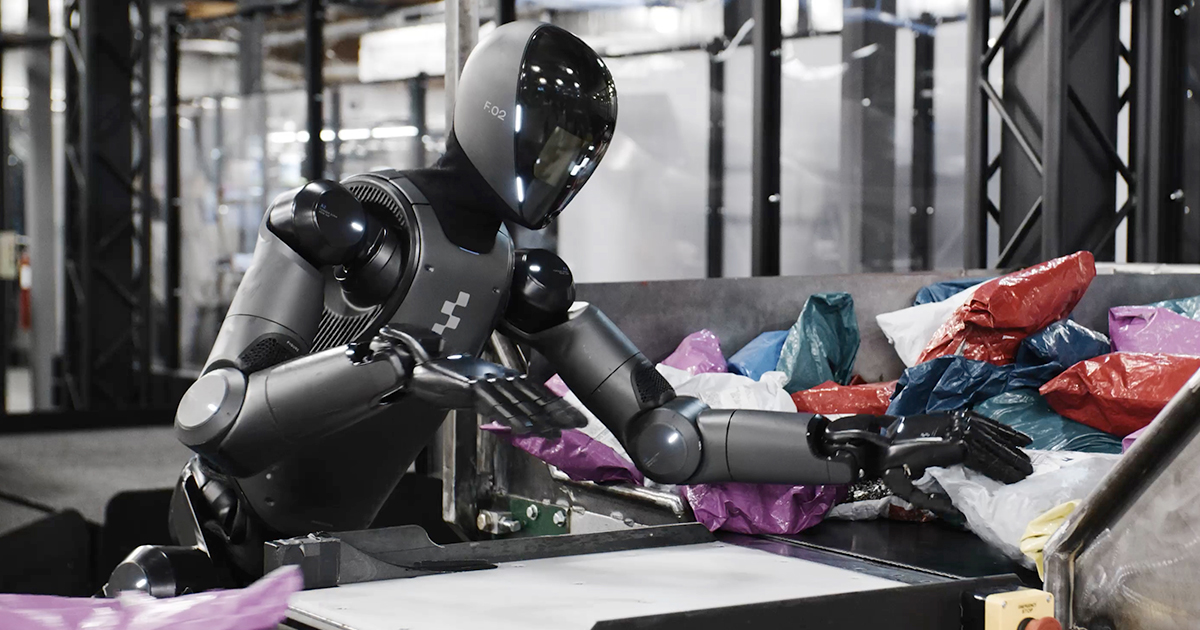
Figure’s warehouse robot demo was more substantial than the usual humanoid sizzle reel, but the viral framing outran the reporting. Figure’s own logistics post says execution speed reached 4.05 seconds per package with about 95% barcode orientation success, according to the company’s newsroom. Third-party coverage then filled in the endurance angle: Interesting Engineering reported 24 hours of continuous autonomous work and more than 28,000 packages, while TechRepublic said the robots neared 40 hours and almost 50,000 packages in a livestreamed warehouse demo. That is real progress toward operational testing.
What the sources reviewed do not support is the cleaner social-media line that Figure ran robots 24/7 for eight straight days. Figure’s official materials did not confirm that figure, and the strongest reporting points to 24-plus to roughly 40 hours, not 192. The distinction matters because robotics is moving from parkour clips to uptime claims, and uptime claims are where ambiguity gets expensive fast.
The common theme is not that AI is slowing down. It is that the easy narratives are getting harder to maintain once the systems meet operators, users, and time.
Key Takeaways
- Heretic turns model safety changes into a forkable post-release workflow.
- Security vendors are still describing AI agents as supervised systems, not autonomous replacements.
- Transformer skepticism is moving into public debate, not just theory.
- Norway is building language-model infrastructure around national collections.
- Robotics demos are increasingly being judged on uptime, not clips.
Sources
- GitHub tool strips Llama guardrails in 10 minutes, github.com
- Security teams say AI agents create more work, openai.com
- A transformer coauthor says the field should move on, pathway.com
- Norway is building a sovereign LLM on national archives, ai.nb.no
- Figure ran warehouse robots live for 8 straight days, figure.ai
Further Reading
- DeepSeek Tests Open Model Economics; Foreign Coauthors, 2026-05-23
- Open Document AI Gets Cheaper; Chrome Rewrites Partial Page Updates; IBM Plans a Quantum Foundry Spinout; MySQL Buries a 20 Year Bug, 2026-05-26
- llama.cpp Becomes a Local Agent Host; Hidden Audio Still Threatens Voice Agents; Dutch Raid Hits Cybercrime Plumbing, 2026-05-25