
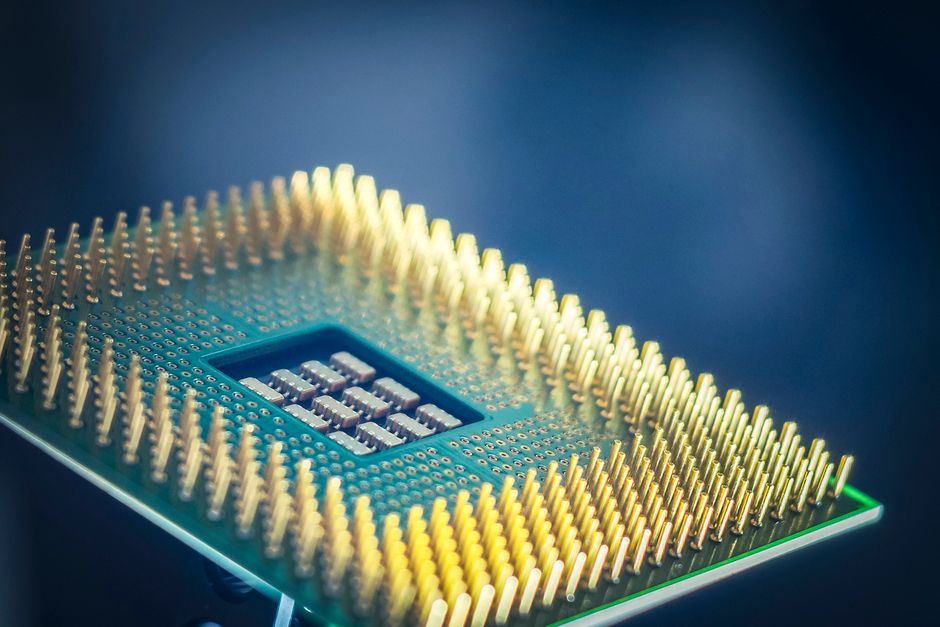
OpenAI’s Jalapeño chip is its first custom AI accelerator, built with Broadcom specifically for LLM inference rather than training, and its immediate job is to lower serving costs and chip power use rather than replace Nvidia outright. Broadcom said the processor is LLM-optimized and claimed better performance per watt than general-purpose GPU deployments, but neither company has published benchmark data yet, so the headline today is architectural intent more than proven field performance (Broadcom, TechCrunch).
What changed on June 24, 2026 is simple: OpenAI moved from talking about custom silicon to showing its first named chip. That matters because inference is where model providers burn money continuously, one query at a time, and shaving watts there scales faster than almost any glossy benchmark chart.
Jalapeño is OpenAI’s first inference chip
OpenAI and Broadcom unveiled Jalapeño as an inference processor tuned for serving large language models, not as a universal replacement for the GPU stack used to train frontier models (Broadcom, Reuters). In plain terms: this is the chip you build when you want to answer huge volumes of prompts more cheaply, not the chip you trust to run the full, bruising training cycle for GPT-scale systems.
Broadcom said Jalapeño was developed in nine months and framed it as an LLM-optimized intelligence processor aimed at efficiency under real model-serving loads (Broadcom). That puts OpenAI in the same strategic lane as other hyperscale buyers and model labs that want more control over cost, availability, and system design, much like ByteDance’s inference silicon push aimed to do for its own AI workloads.
The reason to build this in-house is not mysterious. Nvidia GPUs are still the default compute currency for advanced AI, but they are expensive, supply-constrained, and designed to be broadly useful across workloads. Custom ASICs give up that flexibility to do one job better. If your business runs enough inference, that trade starts to look less like a gamble and more like accounting.
The Broadcom roadmap targets 10 gigawatts by 2029
The larger plan is not one chip but a deployment program. In an earlier announcement on October 13, 2025, OpenAI and Broadcom said they would work together to deploy 10 gigawatts of OpenAI-designed AI accelerators by 2029 (OpenAI). That is the scale number that matters here.
| Milestone | What the sources say |
|---|---|
| First chip | Jalapeño is OpenAI’s first custom accelerator for inference (TechCrunch) |
| Workload | Built for LLM inference, not full training replacement (Broadcom) |
| Commercial timing | Initial commercial use is expected by late 2026 (Axios) |
| Broader rollout | Larger-volume deployment is expected in 2027 (Axios) |
| Long-term target | 10 gigawatts by 2029 across OpenAI-designed accelerators (OpenAI) |
That timeline is the key caveat. Jalapeño does not meaningfully remake OpenAI’s compute mix this quarter. Axios reported that commercial use should start by the end of 2026, with larger-volume deployments only in 2027 (Axios). So yes, this reduces Nvidia dependence in direction. No, it does not yet reduce it in bulk tonnage.
A 10-gigawatt target also helps explain why OpenAI has been expanding physical infrastructure with partners including Oracle; custom silicon only matters if you have places to put it, cool it, and keep it fed with power and networking, which is where the company’s OpenAI Oracle data center buildout becomes part of the same story.
OpenAI’s Jalapeño chip is its first custom AI accelerator, built with Broadcom specifically for LLM inference rather than training, and its immediate job is to lower serving costs and chip power use rather than replace Nvidia outright.
Nvidia stays central for training as OpenAI diversifies inference compute
The clean answer to the Nvidia question is this: Jalapeño starts to reduce OpenAI’s dependence on Nvidia for inference, but Nvidia remains central for training (Reuters, TechCrunch). That is not a contradiction. It is just what AI infrastructure looks like when a lab gets large enough to stop buying only off-the-shelf compute.
Reuters described the chip as part of OpenAI’s effort to lower costs and create an alternative to Nvidia hardware (Reuters). TechCrunch and Axios both framed the move as OpenAI going beyond exclusive reliance on standard Nvidia GPUs for serving models (TechCrunch, Axios).
The limit is equally clear. OpenAI and Broadcom have not released independent benchmark results, only early claims of better efficiency, and most deployment details still come from the companies and launch-day reporting rather than outside testing (Broadcom, TechCrunch). For now, Jalapeño is best understood as the first brick in a longer wall: inference specialization first, broader infrastructure benefits later.
The next milestone is broader commercial deployment in late 2026, with larger-scale rollout expected in 2027 and the broader 10-gigawatt accelerator program running through 2029 (Axios, OpenAI).
Key Takeaways
- Jalapeño is OpenAI’s first custom chip, built with Broadcom for LLM inference rather than training.
- The chip’s near-term purpose is to cut inference costs and power use, not to replace Nvidia across OpenAI’s full AI stack.
- OpenAI and Broadcom have claimed better performance per watt, but they have not published benchmark data yet.
- Commercial deployment is expected to begin in late 2026, with broader volume rollout in 2027.
- OpenAI and Broadcom’s longer roadmap targets 10 gigawatts of OpenAI-designed accelerators by 2029.
Further Reading
- OpenAI unveils its first custom chip, built by Broadcom, TechCrunch’s launch-day report on Jalapeño and what it means for OpenAI’s infrastructure.
- OpenAI and Broadcom Unveil LLM-Optimized Intelligence Processor, Broadcom’s announcement with positioning, development timing, and efficiency claims.
- OpenAI and Broadcom announce strategic collaboration to deploy 10 gigawatts of OpenAI-designed AI accelerators, OpenAI’s roadmap announcement for the larger custom accelerator buildout.
- OpenAI moves beyond Nvidia, Axios on expected commercial timing and the 2027 volume ramp.
- OpenAI unveils custom chip it designed with Broadcom to boost its AI infrastructure, Reuters on cost reduction and diversification away from standard GPU dependence.