
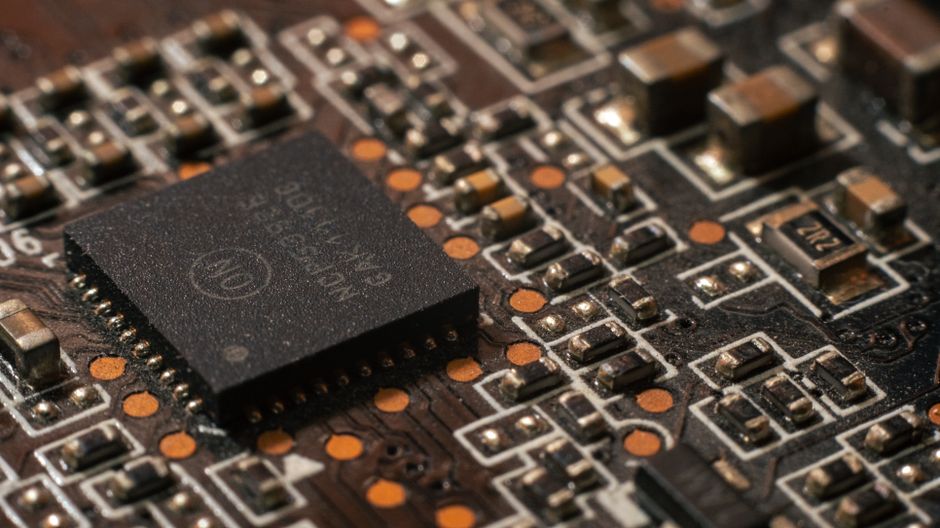
Anthropic has reportedly begun preliminary work on a custom AI chip and is discussing Samsung Foundry as a manufacturing partner, according to The Information-backed reporting summarized by StreetInsider on July 2, 2026. The important part is not that Anthropic suddenly lacks compute; it already has announced access to multiple gigawatts of Google TPU capacity starting in 2027 and nearly half a million AWS Trainium2 chips through Project Rainier.
That makes the signal fairly plain: custom silicon now looks like a serious hedge against Nvidia-era cost and supply pressure even for a frontier lab that already has unusually deep cloud backing. The reported project is still early, with no finalized chip design or public roadmap, and Anthropic told follow-on reporters that AWS, Google, and Nvidia chips remain central to its strategy.
Anthropic’s chip effort is still preliminary
The reported move is real enough to matter, but it is not a product launch. The syndicated report citing The Information said Anthropic has begun preliminary work on its own AI chip and is in talks with Samsung. Samsung’s role, if a deal happens, would be manufacturing through its foundry business rather than building Anthropic into a chip company overnight.
Follow-on coverage from The Decoder added the key restraint: the effort is still in an early stage. No launch date, process node, workload target, or deployment volume has been publicly confirmed.
That matters because custom chips are slow, expensive projects with long lead times. A frontier lab can decide it wants one this year and still be years away from meaningful deployment. The existence of talks with Samsung says more about Anthropic’s strategic direction than about a near-term hardware rollout.
Anthropic already has multi-gigawatt TPU and Trainium capacity
Anthropic is not pursuing this because it has no alternatives. In October 2025, the company said it planned to expand its use of Google Cloud to include up to one million TPUs and well over a gigawatt of compute capacity in 2026. In April 2026, Anthropic said it had expanded its partnership with Google and Broadcom for multiple gigawatts of next-generation TPU capacity starting in 2027.
Independent reporting put a sharper number on that scale. TechCrunch and Tom’s Hardware both reported a Broadcom filing showing 3.5 gigawatts of Google TPU capacity for Anthropic from 2027. That is hyperscaler-scale infrastructure by any normal standard.
Anthropic also has a massive AWS buildout. Amazon said Project Rainier, which it is building with Anthropic, will use nearly half a million Trainium2 chips and deliver more than five times the compute used for Anthropic’s previous AI models.
So the logic here is not “TPUs failed” or “Trainium is insufficient.” The logic is uglier and more practical: if you expect inference demand to keep climbing, owning part of the silicon roadmap can improve cost, supply certainty, and workload fit. That is the same logic behind OpenAI’s Jalapeño custom inference chip, and behind broader efforts such as Huawei’s push to cut inference memory costs.
Custom silicon is spreading from hyperscalers to frontier labs
The bigger shift is that custom silicon is no longer just a hyperscaler trick. Google has long used TPUs; Amazon has Trainium and Inferentia; Meta has its own accelerator efforts. What is changing is that model labs themselves are moving closer to the chip layer.
OpenAI made that explicit in June 2026, when it announced Jalapeño, described as its first custom inference chip, and called it the first step in a multi-generation compute platform. That was not framed as a science fair project. It was infrastructure. OpenAI had already announced a broader 10-gigawatt strategic collaboration with Broadcom in October 2025.
Custom silicon now looks like a serious hedge against Nvidia-era cost and supply pressure even for a frontier lab that already has unusually deep cloud backing.
Anthropic’s reported Samsung talks fit the same pattern, with one difference: Anthropic already publicly leans on both Google TPU and AWS Trainium at enormous scale, so a custom-chip exploration is even harder to dismiss as tinkering. If a lab with that much third-party capacity still wants its own silicon path, the economics are probably pushing harder than vendor marketing admits.
There is still an obvious caveat. This report rests on sourced media reporting and follow-on coverage, not a formal Anthropic or Samsung chip announcement. But even at that stage, the direction is revealing: frontier-model economics increasingly reward any credible route around general-purpose GPU scarcity.
The next concrete milestone is simple: either Anthropic or Samsung will have to say more, or later supply-chain reporting will fill in the missing details on the chip’s target workload, manufacturing node, and deployment scale.
Key Takeaways
- Anthropic has reportedly begun preliminary work on a custom AI chip and is discussing Samsung as a manufacturing partner, based on July 2, 2026, reporting linked to The Information.
- The reported Anthropic-Samsung effort is still early, with no public launch date, finalized design, process node, or deployment target.
- Anthropic already has announced access to multiple gigawatts of Google TPU capacity and nearly half a million AWS Trainium2 chips.
- Anthropic told follow-on reporters that AWS, Google, and Nvidia chips remain central to its strategy, so any custom chip would supplement existing suppliers.
- The reported move suggests custom silicon is becoming a practical requirement for frontier-model economics, not just an experimental side bet.
Further Reading
- Anthropic ups compute deal with Google and Broadcom amid skyrocketing demand, TechCrunch on Anthropic’s expanded TPU arrangement and demand growth.
- Anthropic expands partnership with Google and Broadcom for multiple gigawatts of next-generation compute, Anthropic’s announcement of its expanded Google-Broadcom compute partnership.
- AWS’s Project Rainier: the world’s most powerful computer for training AI, Amazon’s description of the Trainium2 cluster being built with Anthropic.
- OpenAI and Broadcom unveil LLM-optimized inference chip, OpenAI’s announcement of its first custom inference chip.
- Anthropic reportedly explores custom chip manufacturing with Samsung while insisting Nvidia still matters, Follow-on reporting on the Anthropic-Samsung talks and Anthropic’s public stance.