
The FTC and 22 states say Amazon quietly changed its ad auctions so sellers often paid close to their maximum bid, rather than just above a real rival’s bid. The August 31, 2026 federal complaint alleges the system extracted more than $20 billion from advertisers after Amazon introduced it to Sponsored Products in 2019.
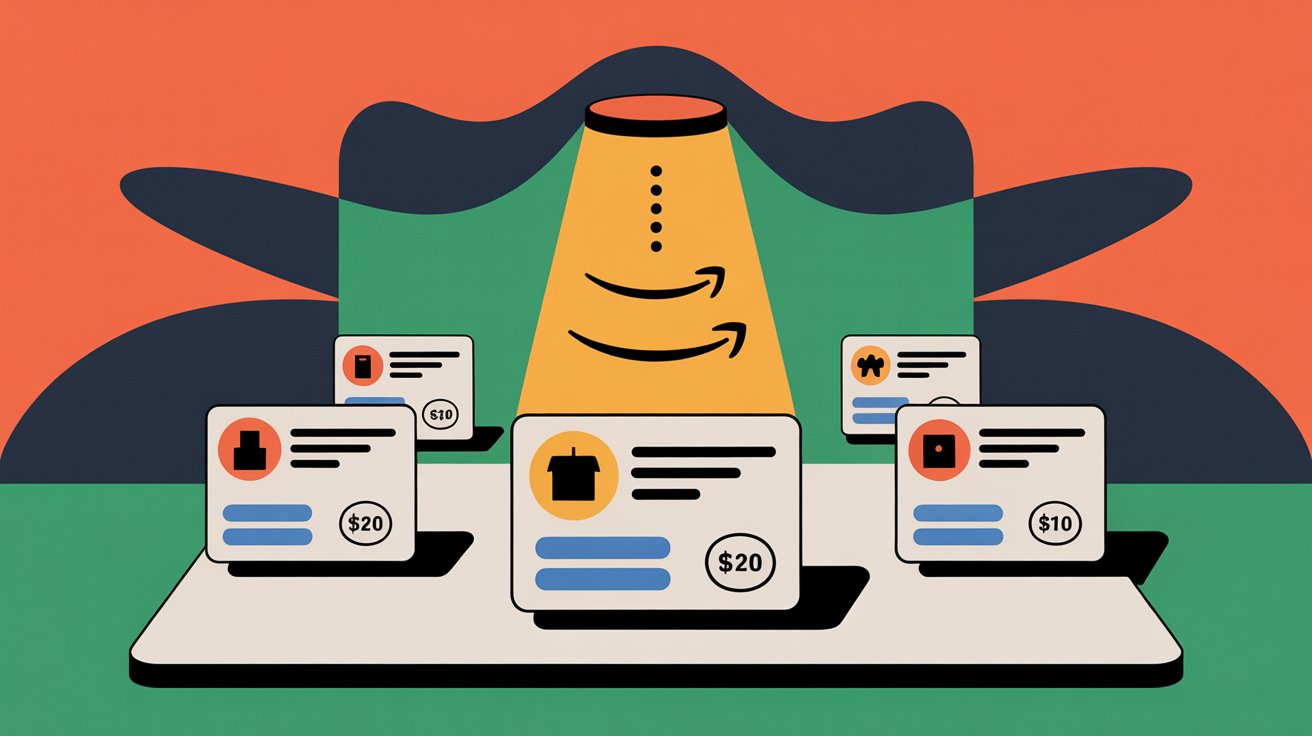
Sponsored Products are the paid listings that appear beside ordinary search results on Amazon. A seller chooses the most it is willing to pay when someone clicks; the FTC says Amazon then used an undisclosed internal price floor to charge that seller more than the auction’s next genuine bidder required.
Amazon disputes the account, calling the lawsuit misguided and arguing that relevance, not simply the largest bid, determines which ad appears. But independent advertiser-client benchmarks from 2019 show a less tidy backdrop: Sponsored Products click prices were rising, competition was intensifying, and Amazon had just rolled out bidding controls capable of moving bids sharply upward.
The FTC’s alleged shift from second-price to first-price charges
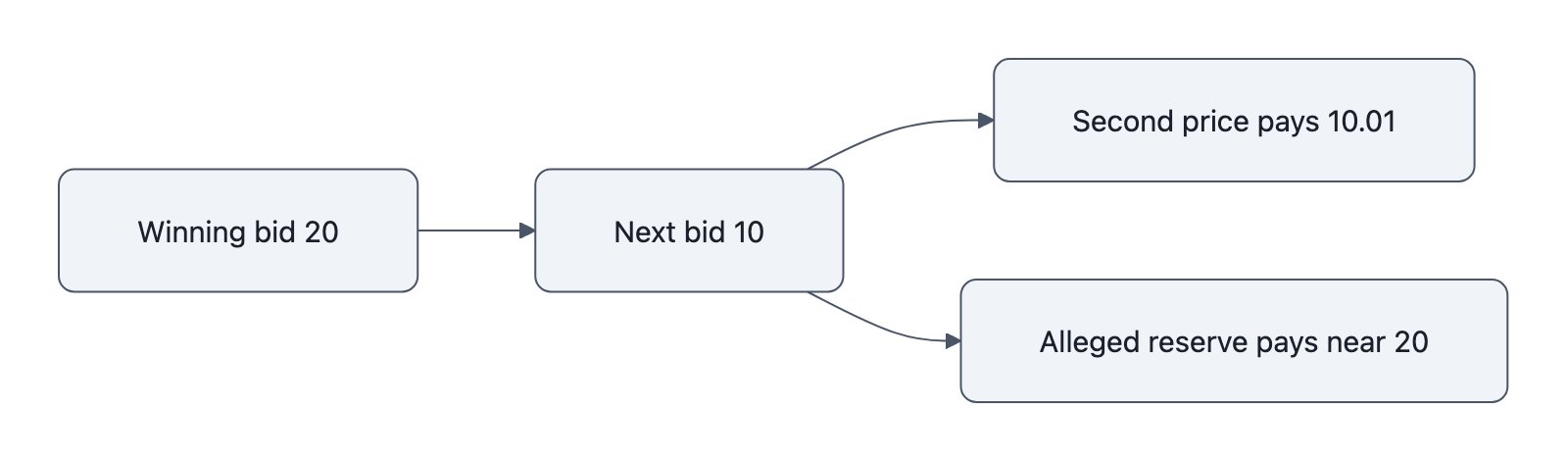
The legal theory turns on a small-sounding auction rule with large consequences. In a second-price auction, the winner pays only just above the next-highest competing bid. If one seller bids $20 for a click and the next seller bids $10, the winner would ordinarily pay about $10.01, not the full $20.
The FTC complaint alleges Amazon added a post-auction soft reserve price: an internal proxy that could exceed the next real bidder’s offer. In effect, the agency says, Amazon could manufacture a higher price after determining who had won.
That is not an allegation that Amazon merely set a minimum price before an auction. The complaint says the system looked at the winner’s bid and inserted a price closer to it. Sponsored Products advertisers paid their own winning bid close to 80% of the time after Amazon raised the surcharge, the FTC alleges.
“Average winning bids fell 50% from 2019 to 2025 on Sponsored Products search ads, and roughly 92% of placed ads are not given to the highest bid.”
Amazon made that defense in its response to the FTC lawsuit, arguing that its auction ranks ads by a mix of bid and relevance. It says that approach saved advertisers more than $8 billion between 2021 and 2025.
Those are Amazon’s own measurements of a marketplace it operates. The FTC’s $20 billion figure and its description of the auction as effectively first-price have not been proven in court; this is a pending case.
The alleged rollout also matters. The complaint says Amazon first used reserve pricing for Sponsored Brands during the 2018 holiday period, expanded similar pricing to Sponsored Products in 2019, and added it to Display Ads by 2023. That sequence places the central Sponsored Products allegation in 2019, not late 2018.
The case is part of a wider question about whether digital marketplaces can be trusted to both run and explain their own markets. Advertisers buy an outcome, a click or placement, not the underlying machinery. That makes an auction rule invisible until a regulator obtains the internal records. It resembles the basic transparency dispute in Amazon’s disputed AWS billing estimates: the customer sees a charge, while the platform controls the calculation behind it.
Sponsored Products CPC and spending data from 2018-2019
The public advertising data from that period does not prove the FTC’s theory. It does show that the price of participating in Amazon’s marketplace was moving around while the company changed several auction-related tools at once.
In Merkle’s Q4 2018 client report, Sponsored Products spending rose 15% year over year while average cost per click, or CPC, fell 7%. That is the quarter when the FTC says Amazon first introduced its reserve-pricing approach in Sponsored Brands, not Sponsored Products.
By the third quarter of 2019, the picture had changed. Tinuiti’s advertiser-client benchmark report found that U.S. Sponsored Products spend and sales each rose 30% year over year. Clicks rose 18%, meaning spending grew faster than clicks; average CPC rose 10%.
Clicks rose 18%, meaning spending grew faster than clicks; average CPC rose 10%.
Tinuiti said quarterly year-over-year Sponsored Products CPC growth had not fallen below 8% at any point in 2019, while advertiser competition continued to intensify. Return on ad spend, revenue attributed to ads divided by ad spending, remained steady in its sample, which suggests advertisers were not abandoning the format even as clicks cost more.
Amazon was also changing what advertisers could do. In January 2019, Search Engine Land reported that Sponsored Products gained machine-learning bid changes of up to 100% upward or downward, plus placement-specific adjustments of up to 900%. Tinuiti separately called Product Targeting, launched in late 2018, the product’s biggest update of the prior year.
That is why the historical CPC trend cannot isolate any soft-reserve effect. Bid automation, new placement options, product targeting, the mix of advertisers and products, and growing competition could all change the price sellers paid. But the data does undercut any casual attempt to treat Amazon’s later claim of falling average winning bids as a complete account of what advertisers experienced at the time.
Amazon’s auction defense and its 2026 cash-flow backdrop
Amazon’s core answer is that a lowest-price auction would produce worse ads. The company says relevance-based ranking meant advertisers saved more than $8 billion from 2021 through 2025, and that about 92% of ads placed in 2024 did not go to the highest bidder.
That can be true alongside the FTC’s complaint only if the system’s relevance logic and its alleged pricing logic are treated as separate questions. Choosing an ad that shoppers are likely to click is one decision. Deciding whether its winner pays the next real bid or an internal reserve is another.
Amazon enters the case while funding an unusually expensive buildout. Its trailing-12-month free cash flow was negative $7.6 billion at June 30, 2026, compared with an $18.2 billion inflow a year earlier. Property and equipment purchases reached $169 billion over the same period, up 64% year over year.
The company’s Q2 2026 shipping costs rose 19% to $27.9 billion, while online-stores sales grew 15% to $70.4 billion. Amazon forecast Q3 net sales of $197 billion to $202 billion, or 9% to 12% growth, slower than its reported 20% growth in Q2.
Those figures do not establish why Amazon designed an auction in any particular way. They do establish why a high-margin advertising business deserves scrutiny when regulators allege that its operator quietly changed the price rule.
The FTC’s case is, at bottom, about whether Amazon offered advertisers a second-price auction while charging them something else. The court will eventually need to test the internal auction records, not Amazon’s marketing metrics, and not a 2019 CPC chart, to answer that.
Key Takeaways
- The FTC and 22 states sued Amazon on August 31, 2026, over alleged hidden ad-auction surcharges.
- The complaint says Amazon deployed similar reserve pricing to Sponsored Products in 2019.
- The FTC alleges the system extracted more than $20 billion from advertising customers.
- Amazon says relevance-based auctions reduced average winning Sponsored Products bids by 50% from 2019 to 2025.
- Tinuiti’s client-sample data found Sponsored Products CPC rose 10% year over year in Q3 2019.
Further Reading
- Complaint for Permanent Injunction, Monetary Judgment Civil Penalty Judgment, and Other Relief, The FTC and state complaint detailing the alleged reserve-pricing system.
- Amazon’s response to the FTC’s lawsuit regarding Sponsored Ads, Amazon’s defense of its relevance-based auction design.
- Amazon Sponsored Products ads now support dynamic bidding, bid adjustments, Contemporary reporting on Amazon’s 2019 bidding-tool rollout.
- MERKLE DIGITAL MARKETING REPORT Q4 2018, Client-sample advertising performance data from late 2018.
- Amazon Report Q3 2019, Tinuiti’s benchmark data on Sponsored Products pricing and competition.
- Amazon.com Announces Second Quarter Results, Amazon’s Q2 2026 financial results and capital-spending figures.