

Florida Attorney General James Uthmeier sued Netflix on September 9, 2026, seeking billions of dollars, data deletion, and changes to the streamer’s child-profile design. The state alleges Netflix watched what families and children clicked, searched, paused, rewound, and abandoned, then turned those signals into advertising intelligence.
The lawsuit also targets default autoplay in Netflix Kids profiles: after one episode ends, the next begins without giving a child, or the busy adult nearby, a natural stopping point. Netflix says the case lacks merit and that it complies with privacy law and protects children.
Florida’s claims and the remedies sought
Florida’s 66-page complaint frames the case as a bait-and-switch. The state says Netflix sold families on an ad-free service that escaped “Big Tech surveillance,” while building an advertising business on detailed records of how people used the service.
“Netflix told Florida families they could pay a monthly fee to escape Big Tech surveillance. That was false.”
, Florida Attorney General James Uthmeier, in a statement on the lawsuit
The complaint calls these records user events: content watched, search keywords, pauses, rewinds, location signals, and other activity. It also alleges Netflix collected device and network information and IP-derived location data to help build profiles useful for advertising.

Netflix does not dispute that it collects this. Its April 17, 2025 Privacy Statement lists playback events, viewing history, search queries, app interactions, device and network information, general location inferred from an IP address, advertising information and inferred household preferences. The collection was written down. What Florida says was sold alongside it was an escape from exactly that, at a monthly price, to the households who paid it.
The central dispute is whether those disclosures and Netflix’s family-friendly marketing adequately told parents what was happening with their children’s activity. Florida says no: Kids profiles were presented as a protected space while feeding behavioral interactions into the company’s wider data infrastructure.
Netflix’s privacy notice says Kids profiles do not receive behavioral advertising, and that it processes limited personal information in those profiles to recommend age-appropriate content, run parental controls and show parents what a child watched. That is the company’s description of its own restraint, which is the weakest evidence available on the question, and it describes a choice Netflix can revise without telling anyone.
Not serving an ad to a six-year-old is not the same as not using what the six-year-old watched. The claim covers the profile; the data does not stay in the profile. Florida’s case is that the child and family records Netflix gathered fed the advertising business it went on to build. What a household bought was a subscription. What the household also supplied was raw material for the ad tier Netflix later sold.
On autoplay, Netflix has pointed since April 2020 to a switch: parents can turn off the next episode in account settings. A switch is not a default. Autoplay runs unless a parent knows the control exists, goes looking for it and changes it, which is the arrangement Florida is suing over. A company that wanted children to stop after one episode would not have needed the switch, because the episode would have stopped.
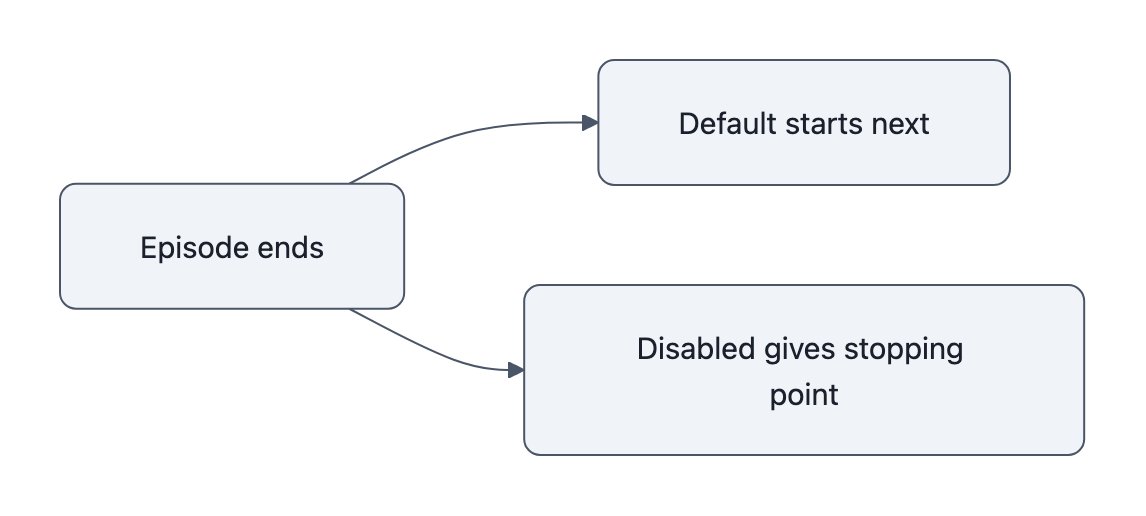
A 2025 controlled study of 76 moderate-to-heavy US Netflix users, run on adults in 2023, found that switching autoplay off reduced both daily viewing and session length. The default is not decorative. It is worth measurable additional watching per household, and that is why it is the default.
Florida says it wants billions of dollars in damages, deletion of data collected from Floridians, and orders halting allegedly addictive design features. The complaint alleges violations of Florida consumer-protection and privacy law. Netflix’s disclosures answer a question nobody asked. Whether the collection appeared in a privacy statement is a different question from whether a parent paying to keep their family out of Big Tech surveillance understood they were inside it.
The suit arrives after other privacy enforcement fights have put platform design under sharper scrutiny, including the Hims & Hers privacy-enforcement case, Meta’s New Mexico youth-safety judgment, and Instagram’s teen safety reminder design. Florida is applying that same pressure to a streaming interface: not just what it collects, but whether its defaults make it easier for children to keep generating more of it.
Netflix’s defence is that the disclosures, the controls and the safeguards exist. They do. Every one of them is something a parent has to go and find, and each shipped set the way that produces more viewing and more data. The arrangement a household got by default is the arrangement Netflix chose, and this site’s reading is that the defaults are the product: no company earns anything from the parent who reads the privacy statement, and this one was built for the parent who does not.
Key Takeaways
- Florida Attorney General James Uthmeier sued Netflix on September 9, 2026, over alleged family and children’s data collection and Kids-profile autoplay.
- Florida is seeking billions of dollars, deletion of Floridians’ data, and product-design changes.
- Netflix’s 2025 privacy notice disclosed collection of viewing, playback, search, device, network, location, and advertising-related data.
- Netflix says Kids profiles do not receive behavioral advertising and that their data is used for recommendations and parental controls.
- Netflix has offered parents a way to disable episode autoplay in Kids profiles since 2020.
Further Reading
- Netflix hit with major lawsuit over alleged secret tracking of families and children, Reports Florida’s allegations over viewer-event data, advertising, and Kids-profile autoplay.
- Florida sues Netflix over misleading parents over minors’ data collection, Covers the complaint, Florida’s requested remedies, and Netflix’s response.
- Privacy Statement, Netflix’s disclosure of usage, advertising, and Kids-profile data practices.
- More choice and control for families, Netflix’s 2020 announcement of autoplay controls for Kids profiles.
- An Experimental Study Of Netflix Use and the Effects of Autoplay on Watching Behaviors, Controlled study examining the effect of autoplay on viewing behavior.