
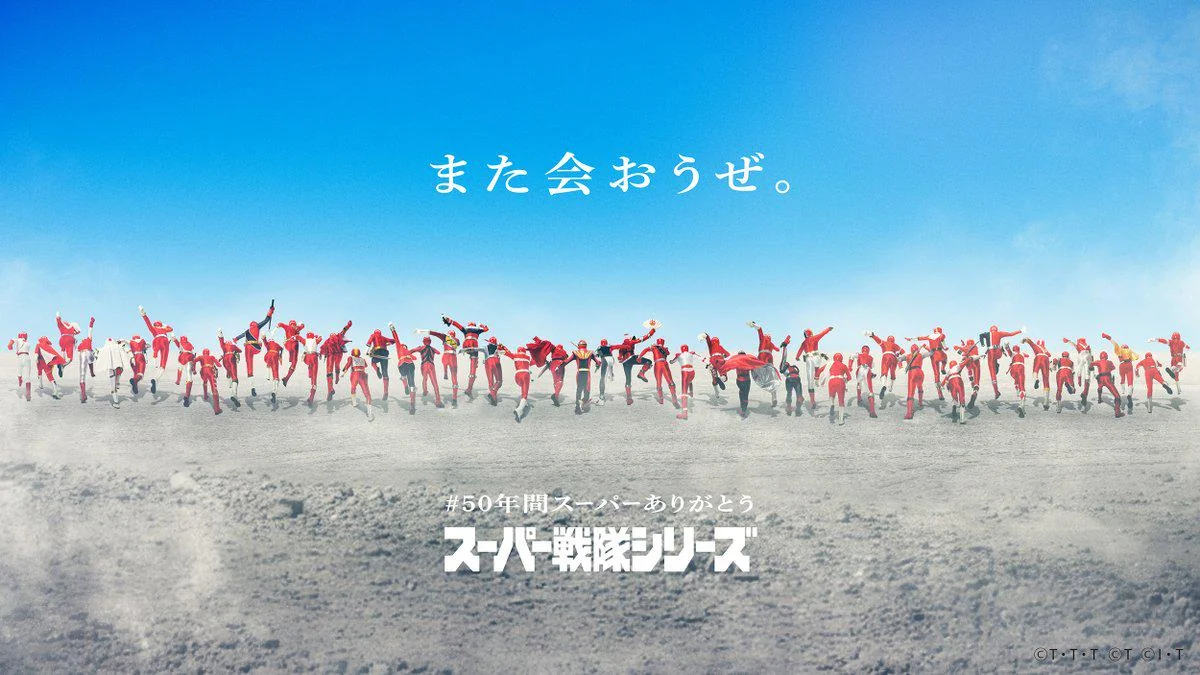
Super Sentai ending refers to reports that the long running Japanese tokusatsu superhero franchise, which began broadcasting in 1975 and inspired Power Rangers, has aired what may be its final episode after 49 seasons and 2,457 episodes. In practice, the current anniversary season has ended, and Toei is replacing the Super Sentai slot with a new experimental hero series, but there has been no clear, permanent cancellation announced by the main broadcasters or producers.
The confusion comes from the way Japanese TV handles long franchises: they end one title, launch another in the same time slot, and only later decide whether a break is a true ending, a rebrand, or a hiatus. So fans are watching what could be the end of an uninterrupted 50 year run, but industry statements still leave the door open to future revivals.
What is Super Sentai and why does its ending matter?
Super Sentai is a Japanese live action superhero franchise produced by Toei Company and broadcast primarily on TV Asahi. Debuting with “Himitsu Sentai Gorenger” in 1975, it features color coded teams of heroes who transform, fight monsters in suits, and pilot combining giant robots, all using practical effects typical of tokusatsu production. According to Toei and historical overviews of Japanese television, Super Sentai became one of the pillars of children’s programming, alongside Kamen Rider and Ultraman, and has been part of the Super Hero Time block since the early 2000s.
For viewers outside Japan, Super Sentai is best known as the source footage, costumes, and fight scenes adapted into the American and international Power Rangers franchise.
The series is structured as yearly installments, each with a new title, cast, story, and toy line, but all marketed under the shared Super Sentai brand. Over nearly five decades it accumulated 49 seasons and more than 2,400 episodes, an output comparable to other ultra long running Japanese shows like “Sazae san.” This consistency has made it a cultural touchstone in Japan and a deep well of nostalgia, which is why any suggestion that “Super Sentai is ending” feels like the close of an era rather than just another show finale.
Is Super Sentai really ending or just going on hiatus?
The short answer is that, based on publicly available statements and reporting, Super Sentai is concluding its current run and being replaced in its historic time slot, but it has not been definitively declared gone forever. Commenters in the original Reddit thread correctly note that Japanese press reports and fan translations describe this as a conclusion to the Super Sentai format, yet Toei and TV Asahi have avoided language that would completely rule out future projects.
Fans point out that other long running Japanese franchises have taken substantial breaks without being considered dead. For example, Kamen Rider, Super Sentai’s “sister” series, had hiatuses between 1975 and 1979 and again between 1989 and 2000, yet later returned as a stronger commercial brand. Likewise, the Godzilla film series has paused multiple times between eras but continues as a marquee property. In this context, the move away from Super Sentai in the weekly slot could be interpreted as a strategic pause or reconfiguration rather than a permanent burial.
Japanese media often uses cautious phrasing when discussing future programming decisions, which leaves room for reboots, anniversary specials, or new series that revive core elements under different branding.
Several commenters in the thread emphasize this nuance, describing the situation as a hiatus and noting that Toei has already framed what comes next as a new IP with a different format. That makes it more accurate to say that the continuous annual run of Super Sentai is ending at its 50th anniversary milestone, while the franchise itself moves into an uncertain but not definitively closed future.
Why did Super Sentai stop after nearly 50 years?
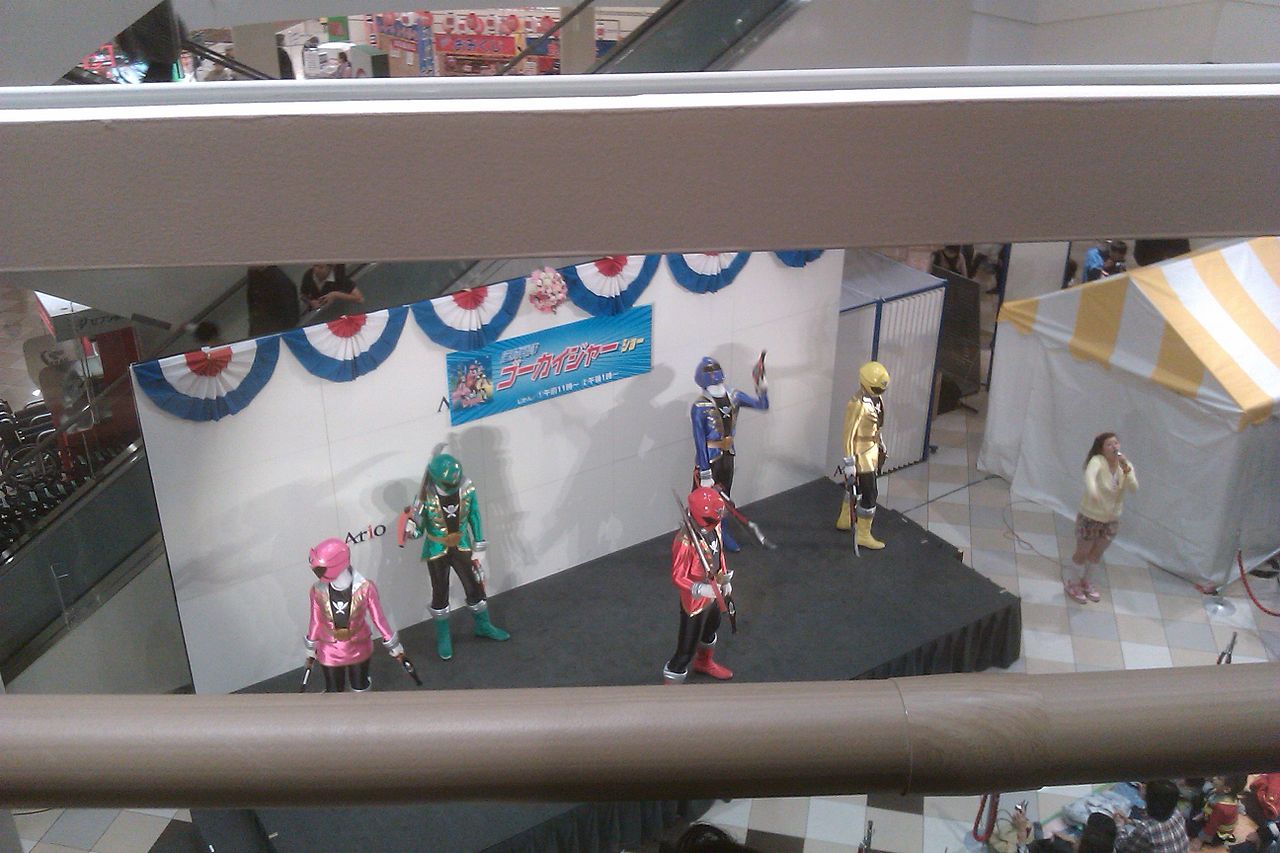
According to the Reddit post and follow up comments that summarize producer statements, several overlapping reasons help explain why Super Sentai stopped its uninterrupted run around the 50 year mark. One is simple symbolism: ending on a 50th anniversary season creates a clean narrative arc for a franchise that has already achieved more longevity than most television properties ever reach.
More concretely, however, economics and format fatigue appear to be central. Commenters reference producer comments that the “Sentai” team format has become “too limited and repetitive,” and that Super Sentai has been underperforming financially for roughly two decades. Toy sales and related merchandising, which are critical for these shows, reportedly lag behind those of Kamen Rider, even when global Power Rangers revenue is taken into account. This is consistent with broader industry analysis that notes Kamen Rider’s stronger domestic sales and brand growth during the 2000s and 2010s.
There is also mention of controversy around the cast of the most recent season, which may have contributed to a sense that this was an opportune time to close the chapter and pivot. While individual scandals rarely end a major franchise on their own, they can accelerate changes that producers are already considering. Combined with shifting media consumption habits, more fragmented children’s audiences, and competition from streaming first content, the pressure to experiment with a fresher structure has likely become hard to ignore.
In short, Super Sentai did not end simply because it reached exactly 2,457 episodes or an arbitrary number of seasons. It reached a symbolic anniversary, faced long running profitability challenges compared with its peers, and was constrained by a formula that producers publicly described as limiting. The convergence of those factors made 50 years feel like the right moment to pause and rethink.
What is replacing Super Sentai in its TV slot?
The Reddit discussion describes a new franchise stepping into Super Sentai’s long held weekend time slot. Commenters identify this as an “experimental series” under the umbrella name Project R.E.D., with the first installment titled something like “Super Space Sheriff Gavan Infinity.” These details echo Toei’s history of cycling between brands such as Metal Hero and Super Sentai while retaining core visual and thematic elements.
Several features of the replacement series are notable. First, it appears to draw inspiration from the earlier Metal Hero shows, which focused on armored individuals rather than colorful teams. Second, information in the thread suggests that the new format will make heroes more independent, with less emphasis on teamwork and coordinated multi member transformations. This is clearly influenced by the relative success of Kamen Rider, which typically centers on one or two primary heroes, and by modern action storytelling that leans toward solo protagonists.
The producers, as paraphrased by fans, argue that a shift away from tight five person teams could open up new story structures and merchandising strategies that are harder to execute within the traditional Sentai template.
Importantly, the new IP does not erase Super Sentai from continuity. Past teams, characters, and motifs remain available for crossovers, anniversary films, and other media, much as prior Riders or Ultraman hosts reappear in later projects. In that sense, what is replacing Super Sentai weekly on television is best thought of as the next iteration of Toei’s broader tokusatsu experiment, not a clean slate that pretends the previous 50 years did not happen.
How is the Super Sentai ending connected to Power Rangers?
For English speaking audiences, the most common follow up question is whether a Super Sentai ending also means that Power Rangers is ending. Commenters in the thread note that Power Rangers, which had been adapting Super Sentai footage since the early 1990s, effectively concluded its long running TV format with “Cosmic Fury,” often cited as airing two to three years prior to this Super Sentai finale and featuring original suits and a female red ranger leader for the first time.
Historically, Saban and later Hasbro licensed Super Sentai footage and designs, recut them with new English language scenes, and localized themes to produce Power Rangers. This meant that the health of Super Sentai directly influenced what raw material was available each year. In recent years, though, Hasbro has signaled more interest in controlling its own live action and animated adaptations without being locked to Toei’s yearly cycles. That strategic shift, together with rights and streaming complications that commenters mention, has made the link between the two franchises looser than it once was.
Thus, the end of Super Sentai’s continuous run does not suddenly terminate an active Power Rangers show, because that show has already wrapped. Instead, it marks the end of the original Japanese pipeline that fed Power Rangers for thirty years. Future English language revivals will likely rely on fully original production or selective reuse of past Super Sentai concepts, in much the same way that comic book adaptations draw from decades of back catalog rather than a live annual series.
Could Super Sentai come back in the future?
Given the history of tokusatsu and the entertainment industry’s fondness for revivals, it is realistic to assume that Super Sentai may return in some form. Fans in the Reddit thread compare the situation to Godzilla’s cycles of films and to the long gap between early Kamen Rider shows and the Heisei revival. Intellectual properties with deep recognition, large casts of legacy actors, and strong toy potential tend to resurface when market conditions are right.
There are several plausible paths. One is a straightforward anniversary revival, perhaps a decade after the current ending, framed as a return of “the squadron format” for a new generation of viewers. Another is a series of streaming first miniseries that revisit specific fan favorite teams or eras, an approach already used successfully by other Japanese and Western franchises. A third possibility is that the Project R.E.D. concept will gradually fold back more explicit Sentai elements until it essentially becomes Super Sentai again under a refreshed name.
What seems unlikely is the permanent disappearance of color coded team heroes from Japanese popular culture. The tokusatsu tradition, as outlined in general histories of the form, has repeatedly reinvented its core ideas, from kaiju films to Kyodai Hero shows to modern masked riders. Super Sentai’s apparent ending fits into that broader pattern of cyclical change rather than a sharp break with the past.
For now, the safest way to summarize the situation for anyone who encounters headlines or posts is this: the 50 year, 2,457 episode run of Super Sentai as an annual TV franchise has ended, its time slot is being taken over by a new experiment, and while producers hint that the old format is exhausted, the door is open to future revivals, specials, and reimaginings that keep its legacy alive.