
BYD Blade Battery 2.0 is being sold as the moment EVs finally “beat” gasoline: 5‑minute charges, 621‑mile range, million‑kilometer lifetimes, and prices drifting toward $20,000.
Except the interesting part isn’t the battery. It’s the system BYD is quietly building around it.
At the March 5 event, BYD claimed their second‑gen Blade cells plus “Flash Charging” hardware can add ~400 km of range in about five minutes on megawatt‑class chargers, and that high‑end models will top 1,000 km CLTC (≈621 miles) on a charge. Reuters reports a target of 20,000 flash‑charging stations in China and Europe by the end of 2026.
If those numbers are even half‑true at scale, the EV game stops being “who has the best software?” and becomes “who owns the factories, the chargers, and the grid contracts?”
That’s the provocation: BYD Blade Battery 2.0 is less a battery breakthrough, more a vertical‑integration flex.
What BYD Blade Battery 2.0 actually claims, in normal units
Let’s translate the headline numbers into physics instead of vibes.
- Range: >1,000 km CLTC on some premium models, which is probably 600-700 km (370-430 miles) in EPA terms. China’s CLTC test is famously generous; a rough rule of thumb is to knock 25-30% off.
- Charging: Demo figures of ~400 km added in ~5 minutes; Reuters quotes BYD’s Wang Chuanfu saying 20-97% in under 12 minutes at −20 °C. CnEVPost reports 10-97% in ~9 minutes in ideal conditions.
- Power: To cram ~80-100 kWh in 10 minutes, you’re looking at roughly 0.5-1.0 megawatt peaks. Bloomberg’s coverage pegs BYD’s Flash chargers in that 1-1.5 MW class.
- Network: BYD says it will build or expand to 20,000 flash‑charging stations by 2026, with several thousand on highways.
Those are not “only on a lab bench” numbers. They’re being attached to specific cars (Denza, Yangwang), prices, and a deployment plan.
Are they independently validated? Not yet. Bloomberg and TechCrunch are explicit that we need third‑party testing for both the sustained charging curves and any “620,000‑mile” type lifetime claims.
But even if the curves are a bit softer in the real world, BYD is clearly doing something serious: cell‑to‑pack Blade architecture, LFP chemistry pushed to its limits, heavy emphasis on thermal management, and a proprietary megawatt EV charging network.
That last word is the important one.
Why “5‑minute charging” doesn’t kill gasoline yet: the megawatt problem
On Reddit and X, people are arguing whether 5‑minute charging makes gasoline “obsolete.” They’re looking at the wrong bottleneck.
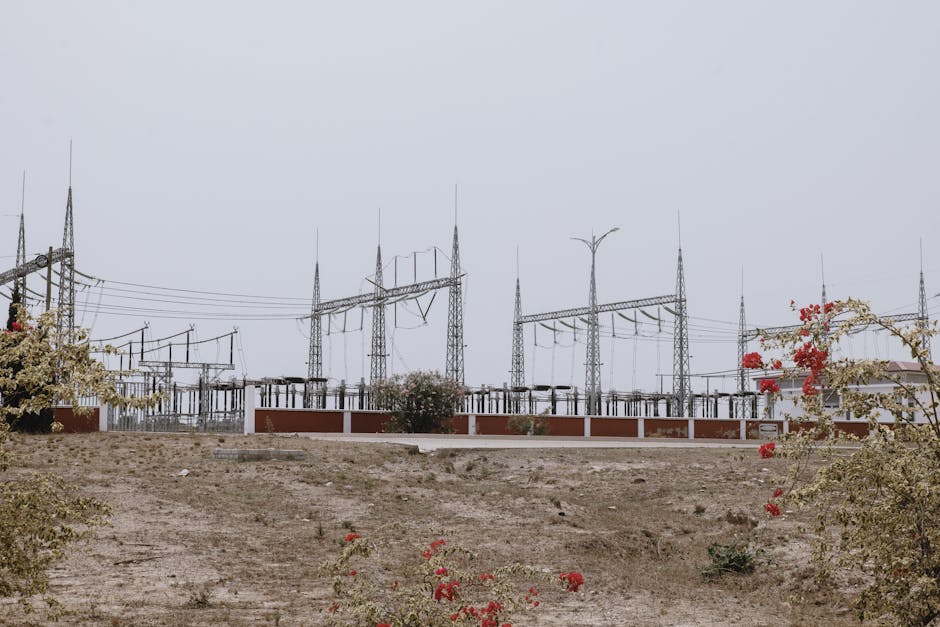
The limiter isn’t BYD Blade Battery 2.0. It’s the rest of the electrical world.
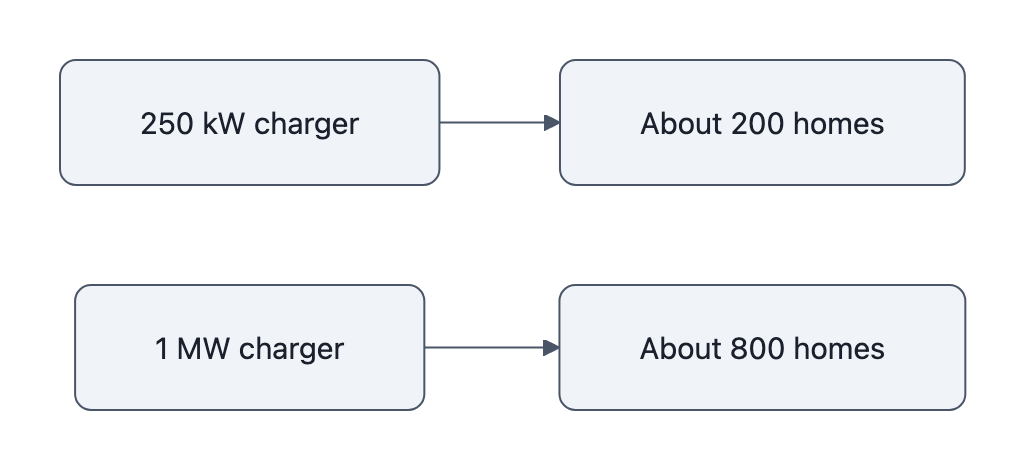
To dump 100 kWh into a car in 6 minutes, you need an average power of 1 MW. That’s:
- Roughly 700-1,000 homes’ worth of peak load in many countries.
- For a 6‑stall highway station, 6 MW, basically a small industrial facility or data‑center feed.
Today’s “fast” chargers in the West are mostly 150-350 kW. A Tesla V3 stall is 250 kW. BYD is proposing 4x that power, per car, as a normal thing.
TechCrunch walked through the headaches:
- Grid capacity: The local distribution network often can’t support multi‑MW spikes without an expensive substation upgrade.
- Cabling and connectors: At these currents, cables get thick and hot. You’re into liquid‑cooled connectors and complex safety systems.
- Heat inside the pack: All that power ends up as heat somewhere. You need serious thermal management and cooling, exactly the kind of thing elastocaloric cooling research is chasing in other domains, and that EVs will increasingly need to borrow ideas from.
So yes, you can build stations like this. But you can’t drop them on every corner without:
- New transformers and substations
- On‑site buffer batteries or flywheels to smooth demand
- Long‑term grid planning instead of “stick another charger on the pole”
We are not entering an era where every 7‑Eleven has megawatt EV charging any time soon.
That doesn’t make BYD’s claims fake. It just means the “5‑minute charge” experience will start as a premium, sparse, highway‑and‑hub feature, not a universal norm. Think early fiber‑to‑the‑home coverage, not Wi‑Fi.
Why BYD’s announcement still matters: vertical integration beats software
So if gasoline doesn’t die tomorrow, why does BYD Blade Battery 2.0 matter?
Because it clarifies who wins the next phase of electrification: the vertically integrated industrialist, not the “asset‑light” software optimist.
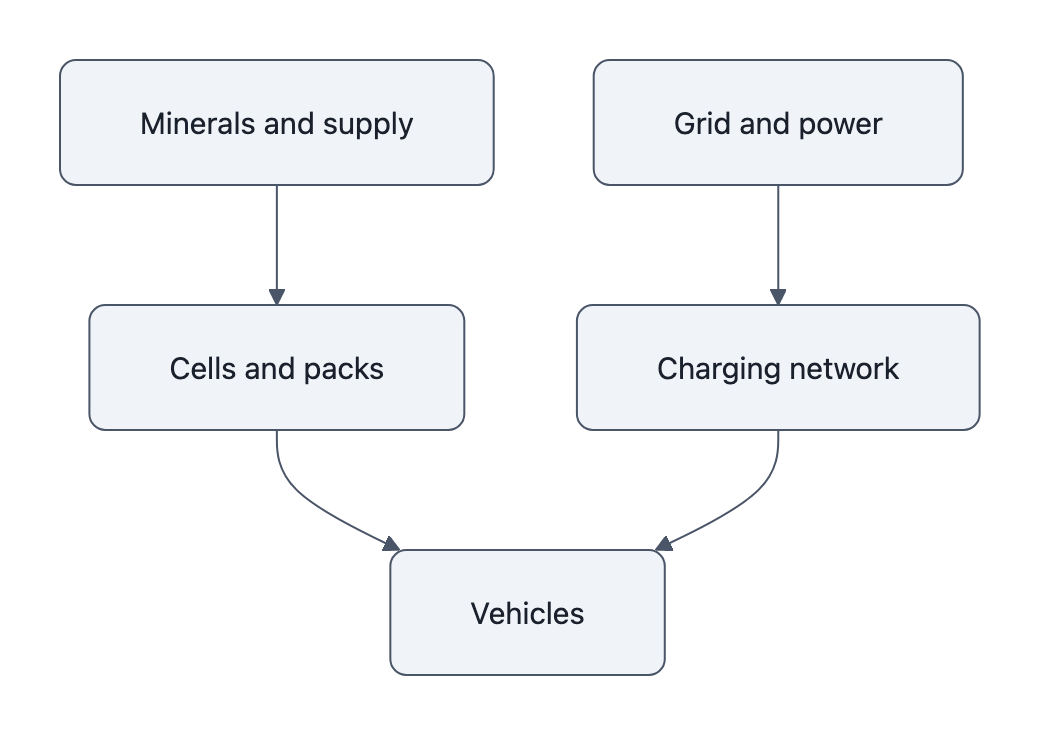
Look at what BYD is trying to own, end‑to‑end:
- Cells and packs: Blade 2.0 is a structural cell‑to‑pack design. Fewer modules, more direct integration into the chassis. That’s not a drop‑in commodity; it’s co‑designed with the vehicle.
- Mineral supply: BYD is already deeply tied into lithium and cathode supply in China. Pair this with emerging techniques like solar‑powered lithium extraction and you see the play: secure cheap upstream inputs, then scale down the cost curve while competitors haggle on spot markets.
- (We’ve written about that extraction tech here. The short version: whoever controls cheap lithium at scale controls a big chunk of EV economics.)
- Charging network: 20,000 flash‑charging stations is not a hobby. That’s a de‑facto private utility and toll road combined.
- Power electronics and thermal: You don’t do 1 MW charging repeatedly without serious in‑house expertise in inverters, busbars, and cooling. This is heavy engineering, not UX polish.
This is the opposite of the Western “fabless” fantasy. There is no equivalent of “we design the chip, TSMC builds it for everyone” in EV charging at this scale. If you want megawatt‑class road infrastructure, you’re signing up to be part auto OEM, part grid planner, part construction firm, and part miner.
BYD is saying: we’ll be all of those at once.
The competitive implications:
- Price war: If BYD can ship $17k-20k cars with long‑range Blade packs and access to flash charging, it compresses margins everywhere. Rivals who only “do software” get squeezed.
- Lock‑in: A BYD‑designed car, with a BYD‑designed pack, on a BYD‑owned megawatt charger network, powered by BYD‑financed upstream lithium, is a closed loop. That’s Apple levels of control, but for a chunk of the energy system.
- Policy leverage: A company that can say “we’ll electrify your buses, taxis, AND build your highway fast‑charging network” has a very different seat at the table than a startup with a pretty app.
This is also where fast‑charging battery degradation stops being a Reddit myth and becomes a bargaining chip.
If BYD’s cycle life claims under megawatt EV charging hold up, say, hundreds of thousands of miles with modest loss, as early Blade tests suggest is feasible for LFP, then they can credibly promise fleets and regulators that “5‑minute” is not a battery‑killing party trick. If it doesn’t hold, whoever solves thermal management best will have an edge; new approaches to cooling (like elastocaloric concepts) suddenly look commercially relevant.
Either way, this is industrial power, not UX power.
What to watch next (and what you should actually do)
Treat BYD Blade Battery 2.0 as the opening move in a systems fight, not a reason to delay buying a car.
A few specific things to watch:
- Real‑world tests, not launch events
Independent EPA/WLTP ranges for Blade‑2.0 cars outside China, and third‑party charging logs. If the “400 km in five minutes” curve repeats reliably a few hundred times without brutal degradation, that’s huge. If it quietly turns into “150 kW after the third hit,” you know the marketing overshot the chemistry. - Where the flash chargers actually go
20,000 stations sounds impressive. Are they:- Clustered in coastal China and a few prestige sites in Europe?
- Integrated with grid‑storage projects to flatten those megawatt spikes?
- Open to other OEMs, or a BYD‑only club?
- Copycats and national champions
Expect at least one Western or Korean OEM to announce its own megawatt EV charging “roadmap” within 24 months. The question is whether they are willing to copy BYD’s vertical integration, or try to outsource the hard bits to utilities and suppliers. My bet: the ones who outsource lose negotiating power and margin. - Policy reaction
Regulators and energy ministries will have to decide: do we let private OEMs effectively build parallel power distribution systems along highways? Or do we pre‑emptively standardize connectors, tariffs, and access, like we eventually did with telecom and rail?
And for individual buyers?
No, this is not a reason to freeze all EV purchases waiting for 5‑minute charging. Current 150-250 kW cars that go 250-300 miles and charge in 15-25 minutes are already good enough for how most people drive. The average Dutch driver doing 32 km a day doesn’t need a 1,000 km pack, they need a car that charges overnight and occasionally fast‑charges on holidays.
If you were about to buy an EV, this changes almost nothing today. If you were about to spend your country’s next $10 billion on gas subsidies instead of grid reinforcement, it should change a lot.
Because the real race now isn’t torque or range. It’s: who owns the factories, who upgrades the wires, and who writes the rules around the megawatt plugs.
Key Takeaways
- BYD Blade Battery 2.0 is less a magic battery and more a systems bet: megawatt EV charging, proprietary packs, and a private high‑power network rolled into one.
- “5‑minute charging” is real in demos but grid‑limited in practice; each megawatt stall is the load of hundreds of homes, so universal deployment requires major infrastructure upgrades.
- BYD’s vertical integration, from lithium supply through Blade packs to 20,000 planned flash‑charging stations, shifts EV competition from software stories to industrial control.
- Fast charging battery degradation will become a key differentiator: if Blade 2.0 survives repeated megawatt hits, BYD can lock in fleets and regulators; if not, cooling and pack design become the new arms race.
- For consumers, current EVs remain perfectly sensible buys; the announcement mostly changes what governments and automakers should be planning for in the next decade, not what you should drive this year.
Further Reading
- BYD launches new generation Blade Battery with rapid charging in cold environments, Reuters, Straight reporting on BYD’s March 5 event, charging claims, and flash‑network rollout targets.
- BYD Unveils Battery System That Charges an EV in Five Minutes, Bloomberg, Covers the early five‑minute charging claims, market reaction, and why independent validation matters.
- How BYD plans to make EV charging as fast as filling a gas tank, TechCrunch, Good explainer on the technical approach and the infrastructure and thermal constraints on megawatt charging.
- BYD unveils 2nd‑gen Blade Battery, shattering charging speed records, CnEVPost, China‑focused trade coverage with model‑level specs and BYD’s demo numbers.
- Global EV Outlook 2023, IEA, Background on EV deployment, charging‑infrastructure needs and grid implications, useful context for where megawatt EV charging fits in.
In other words: BYD didn’t “kill” gasoline this month. It did something more unsettling for the West, it made clear that whoever owns the wires and the mines, not the apps, will call the shots in the EV era.