
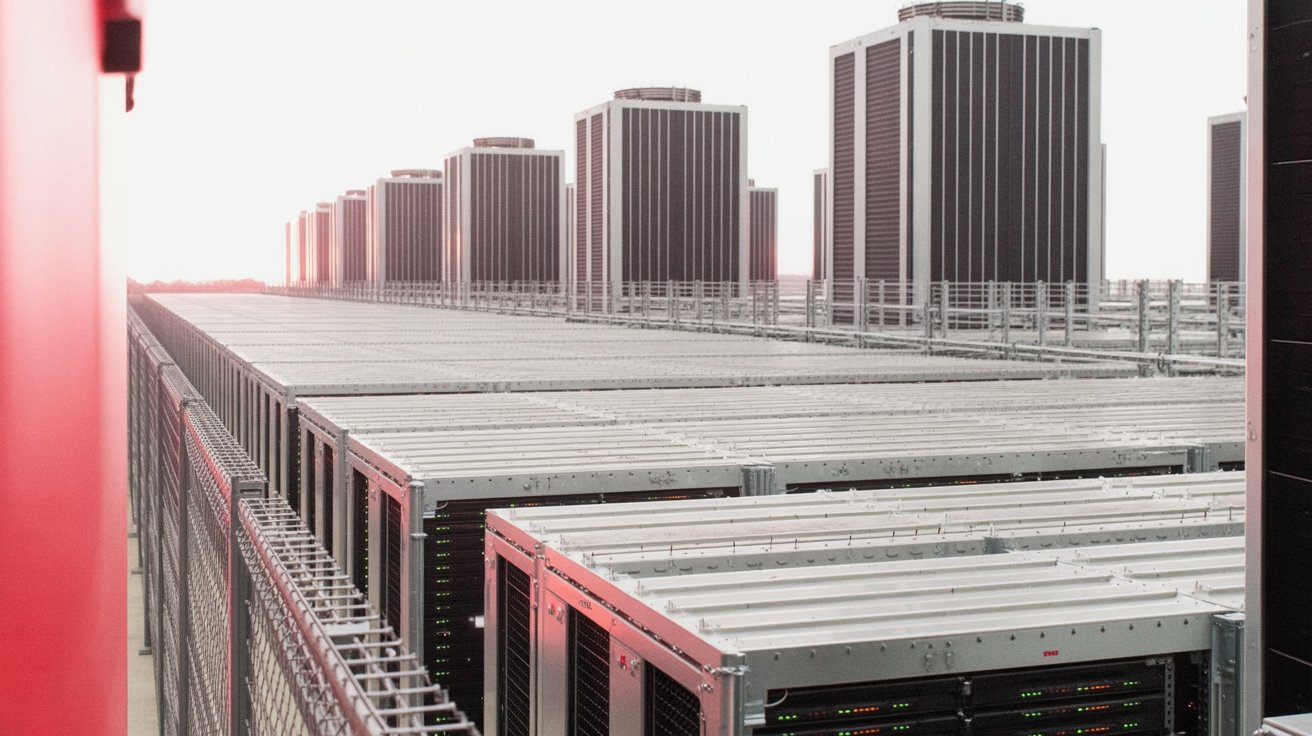
A transparency system is only useful if someone can see through it. The EU built one for the opposite of datacenter emissions secrecy: operators of larger facilities were supposed to report energy, water, efficiency, and performance data so the public could understand what these sites were consuming. Then the most important part got hidden.
That is the actual story here. Not simply that big tech companies dislike scrutiny. Of course they do. The sharper point, confirmed by reporting from Investigate Europe and partners including The Guardian, Le Monde, and El País, is that the EU created a datacentre reporting regime and then accepted industry-written confidentiality language that blunted it at the exact moment AI infrastructure is expanding fast.
National totals still come out. Site-level data does not. And that difference is the whole game.
Why datacenter emissions secrecy matters now
The timing is terrible.
AI demand is driving a rush to build more datacentres across Europe, with the EU aiming to triple datacentre capacity over the next five to seven years, according to The Guardian‘s report on the Commission rules. That matters because power demand is local before it is continental. A community does not live next to “Europe’s aggregate electricity load.” It lives next to one facility, on one grid connection, drawing one very large amount of power and water.
This is why site-level disclosure matters more than national summaries.
A national number can tell you that datacentres in a country used a lot of electricity. It cannot tell you whether one facility in one town is unusually inefficient, unusually water-intensive, or unusually dependent on a dirtier slice of the grid. It cannot tell researchers which operators are improving and which are just disappearing into the average.
That weakness gets sharper as AI datacenter pollution rises. We already know the buildout is hitting hard physical constraints, power gear, grid capacity, and local opposition, as we wrote in our piece on AI datacenter spending and the growing data center backlash. If the public can only see national averages, the places bearing the cost lose the ability to prove it.
Confirmed: the current rule leaves researchers with national-level summaries instead of individual-datacentre environmental metrics, according to the Investigate Europe reporting cited by The Guardian and Le Monde.
How the EU transparency rule got narrowed
The original mechanism was straightforward.
Under the EU energy-efficiency framework, operators of datacentres with an electrical connection above 500 kilowatts must report key indicators. Confirmed by Le Monde: those include energy consumption, water usage, energy efficiency, and technical performance data. The point was to support an EU-wide transparency and sustainability scheme.
Then came the narrowing.
According to The Guardian and Le Monde, during public consultations in January 2024, Microsoft and trade groups including DigitalEurope pushed for all individual datacentre information to be treated as confidential. The final text, The Guardian reports, differed by only a couple of words from industry demands. That is the kind of detail that turns a vague suspicion into a concrete policy story.
Here is the basic shift:
| What the EU system collected | What the public gets |
|---|---|
| Site-level energy consumption | National aggregates |
| Site-level water usage | National aggregates |
| Site-level efficiency indicators | National aggregates |
| Site-level technical performance data | National aggregates |
That table is the whole argument.
The EU did not decide not to measure. It decided to measure and then not show.
There is one caveat. The claim that the Commission adopted industry wording “almost word for word” is strong investigative reporting, corroborated across partner outlets, but the Commission has reportedly disputed the “copy-paste” framing. So the safe version is: confirmed that industry requested blanket confidentiality and that the final rule closely matched it; disputed how literally the text was transferred.
What the confidentiality clause hides in practice
The obvious thing it hides is individual pollution and resource use.
The less obvious thing it hides is comparison.
Suppose two facilities in the same country both contribute to the same national total. One may be unusually efficient, using cleaner power and less water per compute unit. The other may be the opposite. Once you publish only the aggregate, both disappear into the mean. The better operator gets no credit. The worse one gets cover.
That matters for three groups.
Researchers lose the ability to study patterns across operators and locations. Confirmed: The Guardian says requests for access to individual data have already been refused, and cites an email from a senior Commission official reminding national authorities to “keep confidential all information and key performance indicators for individual datacentres.”
Regulators lose a practical accountability tool. You cannot easily target enforcement, incentives, or local planning if the public-facing evidence is blurred by design.
Communities lose the easiest way to challenge claims made in planning fights. When a company says a facility is efficient or environmentally manageable, site-level reporting would let residents check. Aggregates do not.
This also creates a familiar pattern in tech policy. We saw a smaller version of it in consumer software with ChatGPT extension privacy: collect sensitive information, promise governance, then make independent scrutiny harder than it looks from the outside. Transparency theater scales well.
The legal problem is more unsettled. Legal scholars told The Guardian the blanket confidentiality clause may conflict with EU transparency rules and the Aarhus Convention on public access to environmental information. Prof. Jerzy Jendrośka, a longtime member of the Aarhus Convention compliance body, said it “clearly seems not to be in line with the convention.”
That is not yet a court ruling. It is plausible expert analysis, not adjudicated fact.
Who gains, who loses, and what comes next
The winners are obvious.
Large operators gain room to manage local opposition, avoid unflattering comparisons, and keep site economics harder to reverse-engineer. “Commercial confidentiality” is the public reason. The private benefit is that nobody can point to Building A and say: there, that one, those numbers.
The losers are more interesting because they are not all anti-tech.
A better operator loses the chance to prove it is better.
A regulator loses a lever.
A local government loses evidence.
A community group loses specificity.
And the public loses the ability to tell the difference between a clean datacentre buildout and a dirty one hiding inside a good national average.
If the clause stays, expect three consequences.
First, more planning fights will be argued with estimates, leaks, and activist reconstructions instead of official numbers. That is bad for everyone.
Second, the politics around AI infrastructure will get nastier. When people think the data is being hidden, they assume the worst.
Third, the pressure will move from disclosure policy to legal challenge. The Aarhus question is not going away, because the contradiction is too plain: environmental reporting that the public cannot inspect is barely reporting at all.
The strange part is that Europe had the right instinct. Measure the infrastructure. Standardize the metrics. Publish them. Then it stopped halfway.
Key Takeaways
- The EU requires larger datacentres to report energy, water, efficiency, and technical performance data, but site-level figures are kept confidential.
- Confirmed reporting from Investigate Europe partners shows Microsoft and trade groups including DigitalEurope pushed for that confidentiality language during 2024 consultations.
- Datacenter emissions secrecy matters because national aggregates hide which specific facilities are driving local power, water, and pollution impacts.
- Potential conflict with EU transparency norms and the Aarhus Convention is a plausible legal challenge, supported by expert opinion but not yet settled in court.
- As AI infrastructure grows, datacenter emissions secrecy shifts power away from researchers, regulators, and communities and toward operators.
Further Reading
- US tech firms successfully lobbied EU to keep datacentre emissions secret, The main investigation on lobbying, the confidentiality clause, and access refusals.
- How the tech lobby made secrecy part of EU law on data centers, Useful detail on the 500 kW threshold and which datacentre indicators are reported.
- ¿Cuánto consume un centro de datos? Una ley europea a la medida de las grandes tecnológicas impide saberlo, Corroborating partner coverage on how the reporting regime was narrowed.
- Directive (EU) 2022/2464 on energy efficiency, The EU legal base behind the datacentre reporting regime.
Europe’s datacentre policy now has a simple test: if the numbers are too sensitive to show facility by facility, they are exactly the numbers the public needs.