

The top story is the Red Hat npm incident, because it breaks the usual safety shortcut. Red Hat npm compromise reporting says attackers pushed credential-stealing malware through a trusted enterprise namespace, which is a worse lesson than another random package hijack.
Red Hat npm compromise hits trusted pipelines

Researchers reported on June 1 that attackers compromised packages in the @redhat-cloud-services npm scope and used malicious versions to steal developer and CI secrets during npm install. According to Ars Technica, the payload targeted GitHub Actions secrets, npm tokens, Kubernetes and Vault material, and credentials for other cloud services. StepSecurity separately said the malware went after AWS, GCP, Azure, Kubernetes, HashiCorp Vault, npm, and CircleCI tokens, and described it as a self-propagating worm that could republish malicious versions using stolen npm credentials.
The uncomfortable part is the publisher name. This was not a throwaway package in a junk namespace; reporting says the attacker took over a legitimate channel reserved for official Red Hat packages. Red Hat’s own customer-portal guidance says its products are not known to be built or shipped with compromised npm versions, but the vendor pages cited in the research notes do not directly confirm this specific June 1 incident. That gap matters. So does the operational fix emerging from recent attacks: practitioners argue that simple package cooldowns of 1 to 3 days would have blocked many npm compromises that were removed within hours. Fresh packages now deserve suspicion by default, especially in CI and cloud-connected environments.
WindBorne pairs AI forecasts with proprietary data

WindBorne released WeatherMesh-6 on June 1 and says the model now outperforms forecasts from the European Centre for Medium-Range Weather Forecasts on key variables. TechCrunch reports the system produces forecasts every hour rather than every six hours, and reaches 3 km resolution in Europe and the continental U.S. WindBorne chief product officer Kai Marshland said WeatherMesh-6 is “as accurate five days out as a traditional forecast is the day before,” especially on surface temperature.
The more durable point is structural, not rhetorical. WindBorne has about 400 balloons in flight at any given time, launched from 15 sites globally, and says recent gains came from improving how those sensor readings feed directly into the model. CEO John Dean told TechCrunch, “I don’t understand, personally, the business model of being [an] AI based weather company without a dataset advantage.” That is the part other infrastructure markets will notice first.
Idle GPUs become a software revenue play
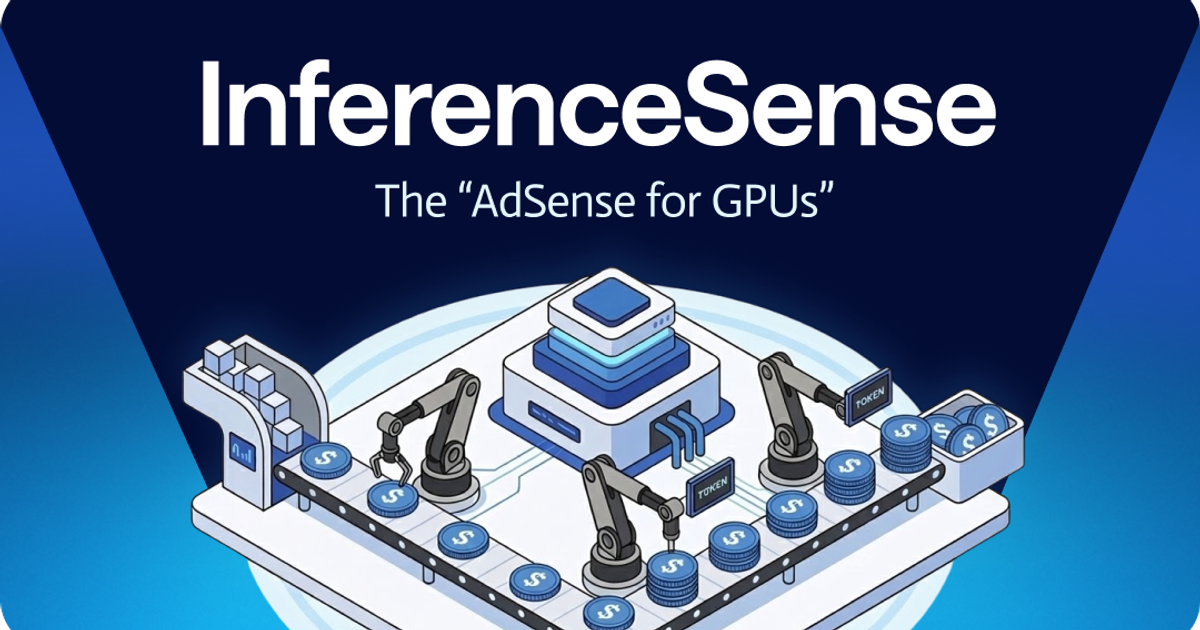
FriendliAI launched InferenceSense on March 12 as a way to detect idle GPU capacity and fill it with paid inference workloads. Per the company’s blog post, operators keep control of the hardware, can preempt the inference jobs when they need the GPUs back, and pay no upfront fees or minimum commitments. FriendliAI says the model demand side includes open-weight models such as DeepSeek, Qwen, Kimi, GLM, and MiniMax, with revenue shared on token generation.
The pitch is simple enough to survive the marketing. VentureBeat’s coverage frames the same move as an answer to the industry’s chronic downtime problem: clusters bought for peak demand spend part of their lives waiting around. If this works in practice, it is one of the cheaper ways to create new compute, because no one had to pour another slab and order more accelerators.
Flavor physics hints persist below five sigma

CERN-hosted materials in May pointed to renewed tension in flavor-physics measurements, but not to a discovery. On a May 19 CERN Indico seminar page, lepton-flavor-universality ratios are described as a major search area for physics beyond the Standard Model, with longstanding anomalies in R(D(*)) sitting at 3.8 standard deviations above the Standard Model value. The seminar notes the measurement uses 5.4 fb⁻¹ of Run-2 data collected in 2016 through 2018 at 13 TeV.
That is interesting, not decisive. CERN’s own March 4 news post on a rare kaon decay frames the work as a precision stress test of the Standard Model, not proof that the model has broken. The same research notes also point to CERN proceedings showing some related measurements are consistent with the Standard Model, which is a reminder that anomaly stories in particle physics often get less linear as the data improves.
Abiotic chemistry complicates the search for life
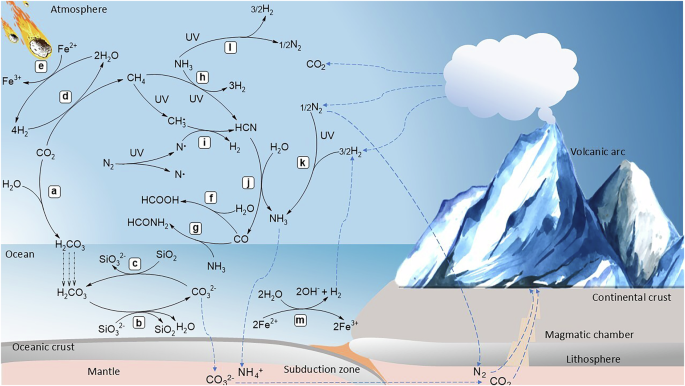
Recent origin-of-life research keeps landing on the same awkward point: nonliving geochemical systems can produce reaction networks that look metabolism-like. A 2020 paper in Nature Ecology & Evolution described a hydrogen-dependent geochemical analogue of primordial carbon and energy metabolism, and a 2024 Scientific Reports paper said non-enzymatic metabolism-like reactions might have occurred on the prebiotic Earth. A 2026 review in Communications Chemistry adds that the field is still debating whether these networks could be sustained without genetic instruction.
That raises the bar for biosignatures. If geology can mimic not just fossil-like shapes but life-like chemistry, then one appealing signal is no longer enough, especially for early-Earth claims and ocean-world missions. ScienceNews made the same point from the fossil side in 2020: false positives are common enough that researchers need multiple independent lines of evidence before declaring life.
A trusted namespace, a proprietary data moat, and a still-not-yet discovery. Monday was mostly about where confidence does, and does not, belong.
Sources
- Red Hat npm packages stole cloud and CI secrets, arstechnica.com
- A balloon-fed AI weather model beats public forecasts, techcrunch.com
- A startup wants to turn idle cluster gaps into usable GPU time, friendli.ai
- CERN sees a high-significance crack in the Standard Model, indico.cern.ch
- Geology may mimic metabolism without life, nature.com
Related reading
- DeepSeek Tests Open Model Economics; Foreign Coauthors (2026-05-23)
- Daraxonrasib Resets Pancreatic Cancer Math; SoftBank Bets Big on French Compute; Palo Alto Bug Hits Live Networks (2026-06-01)
- Mistral Pushes On-Prem AI; MCP Settles Into Default Status; Zig Speeds The Edit Loop; AI Speeds Game Decompilation (2026-05-31)