

Nvidia has reportedly told some of its biggest customers that AI-chip systems using Vera Rubin and Grace Blackwell will cost more than 15% extra from early 2027. Bloomberg reported the change on August 22, 2026, citing unnamed people familiar with the discussions.
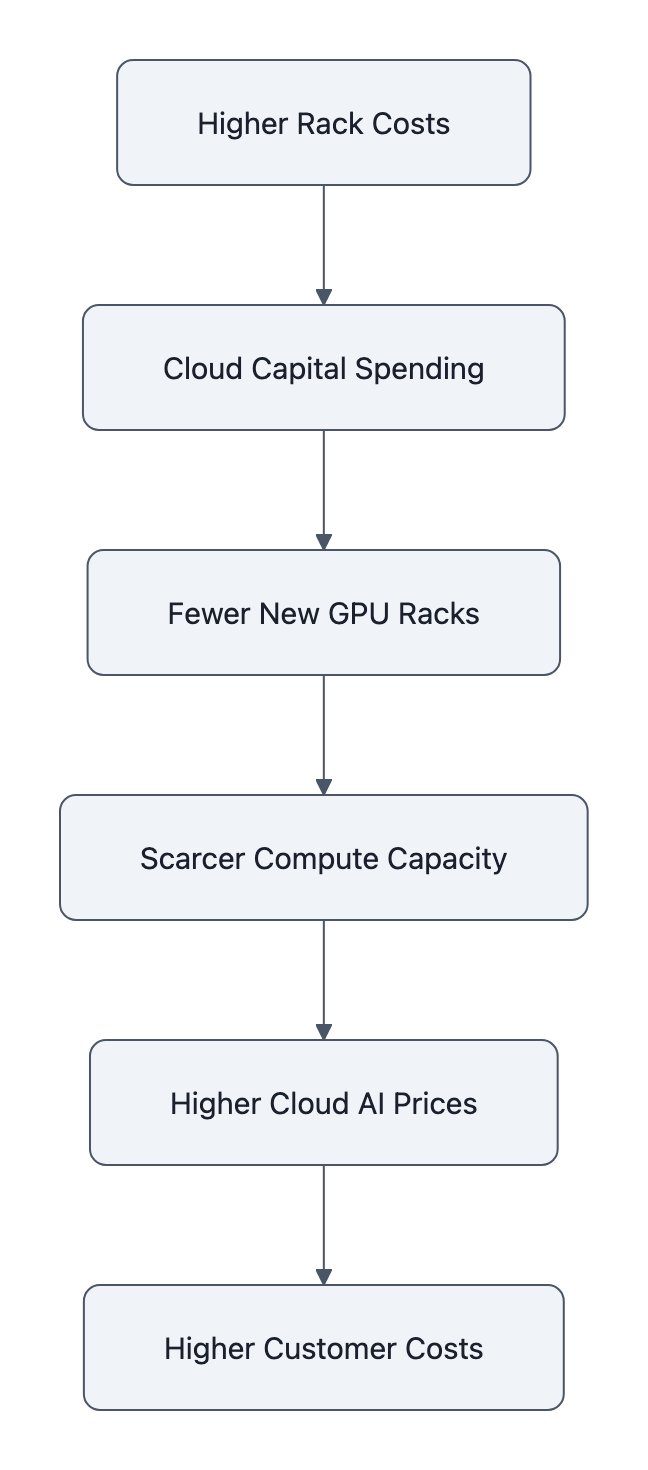
Cloud providers buy GPU racks, then rent the resulting computing capacity to AI labs and developers by the hour. A higher rack quote therefore raises the cost of building training and inference fleets, and makes the price of cloud AI capacity more likely to move with hardware scarcity.
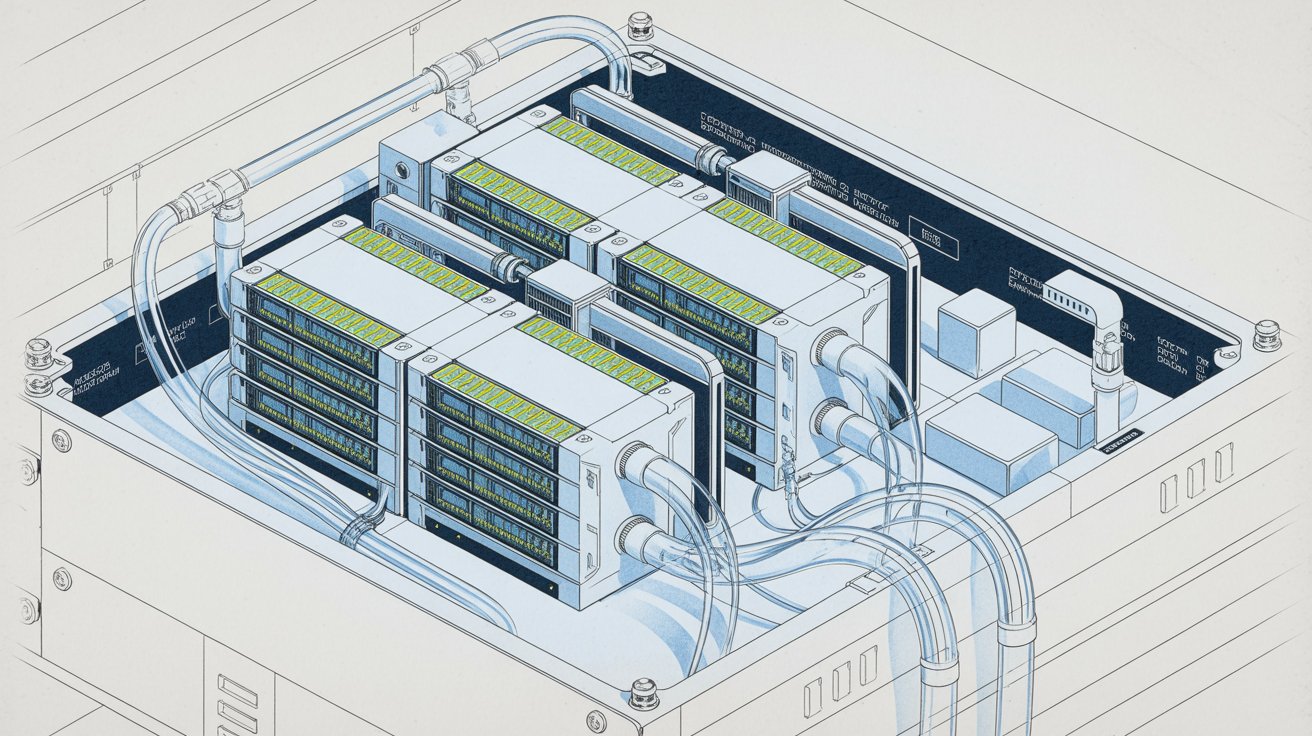
The report does not establish a public, universal Nvidia price increase. No Nvidia list price, standard system configuration, customer contract, or breakdown showing how much of the reported increase comes from Nvidia chips has been published. The figure applies to systems: a much larger bundle than a GPU, including memory, storage, networking, power delivery, cooling, and the server maker’s integration work.
That distinction matters. Nvidia’s Rubin performance claims have focused on what its next platform can deliver, but a system buyer has to finance the whole rack around those accelerators. A 15% jump in a completed system is a real budget shock without being proof that Nvidia raised every GPU’s list price by 15%.
The reported 15% system-price increase for early 2027
The available evidence points to a supply-chain pricing problem intertwined with Nvidia’s market power, rather than a clean manufacturer-only markup. The Information reported that GPU-server rack quotes are already volatile, and cited a GPU-cloud executive who identified NVMe storage, the fast solid-state storage used in GB300 racks, as a major recent source of movement.
Nvidia itself has said that system pricing is not simply a mechanical response to component costs. In its April 2026 quarterly filing, the company reported a 74.9% gross margin and said its product and solution pricing generally does not fluctuate with short-term changes in its costs.
“Our product and solution pricing generally does not fluctuate with short-term changes in our costs.”
That language does not disprove Bloomberg’s report. It does show why “input costs went up” is an incomplete explanation for any future system increase. Nvidia’s margin gives it room to decide when, and how much, it passes component volatility along to customers. The public record cannot apportion the reported increase between Nvidia’s own pricing, high-bandwidth memory, storage, networking, or the server provider assembling the rack.
Nvidia has also forecast that its margin would remain at 74.9% for the second quarter of fiscal 2027, after reporting $81.615 billion in first-quarter revenue. That does not reveal the price of a Vera Rubin system, but it weakens the idea that a rack-level increase must be treated as an unavoidable cost pass-through.
For the clouds buying this equipment, the immediate issue is capital planning. Nebius, one of the companies expanding GPU-cloud capacity, said it spent $5.7 billion on capital expenditures in the second quarter of 2026 and planned $20 billion to $25 billion for the full year. A 15% increase applied across a $20 billion buildout would equal $3 billion, though no evidence says Nebius’s entire program faces Bloomberg’s reported terms.
The likely near-term payer is the customer renting compute. The Information said that fluctuating rack pricing has already pushed many cloud providers to raise prices for AI developers. Nebius said its first midterm capacity auction cleared at 15% above its previous highest rate and 20% above its current Blackwell pipeline, an example of scarce capacity commanding more before the reported 2027 increase arrives.
That does not create a universal 2027 cloud-compute price schedule. Providers have different supply contracts, fleet configurations, utilization rates, and long-term customer commitments. But it makes fixed-price AI infrastructure harder to promise: hardware buyers may face changing system quotes, while renters may see capacity prices set more like a constrained auction than a stable utility bill.
Nvidia’s AI-infrastructure financing strategy depends on customers continuing to fund enormous buildouts. The Bloomberg report suggests that, in early 2027, those buildouts may require materially more cash before a single model is trained.
Key Takeaways
- Bloomberg reported that Nvidia told some major customers to expect system-price increases above 15% from early 2027.
- The reported increase concerns Vera Rubin and Grace Blackwell systems, not a published universal GPU list price.
- Complete GPU racks include memory, storage, networking, power, cooling, and server-provider integration alongside Nvidia hardware.
- Nvidia said its pricing generally does not fluctuate with short-term changes in its costs.
- Cloud providers and AI-compute renters are likely to face more variable pricing if higher system costs are passed through.
Further Reading
- Nvidia Customers Notified About AI-Related Price Hikes Above 15%, Bloomberg’s report on the planned system-price increases.
- Why GPU Server Prices Are Unpredictable, The Information’s examination of volatile GPU-rack pricing and component costs.
- NVIDIA Form 10-Q for the quarter ended April 26, 2026, Nvidia’s filing on margins, costs, and product pricing.
- NVIDIA Q1 Fiscal 2027 Financial Results, Nvidia’s first-quarter fiscal 2027 revenue and margin outlook.
- Nebius Q2 2026 Earnings Call Transcript, Nebius’s capital-spending plans and capacity-auction pricing.