
California lawmakers passed amendments to AB 1856 on August 27, 2026, but the bill’s much-discussed open-source exemption is not actually written as a Linux-only carve-out. It excludes an entity that distributes any qualifying open-source operating system or application, language broad enough that Microsoft and Google could try to use it.
That does not mean Windows or Android are definitely exempt. No California court or Attorney General interpretation has settled the question. And, despite reports that the measure had reached Governor Gavin Newsom, the official legislative record still showed AB 1856 in Engrossing and Enrolling as of August 31, 2026, not presented to, signed, or vetoed by the governor.
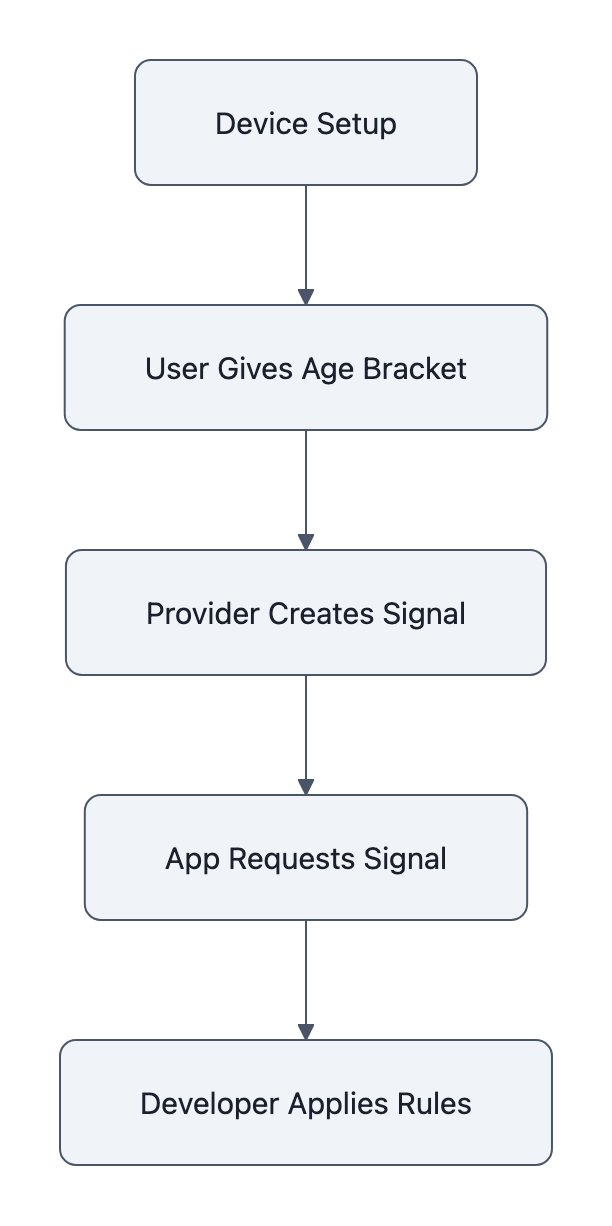
The bill amends California’s Digital Age Assurance Act. Under that system, device-account providers would ask the primary device user, or their parent, to provide an age bracket during setup, then send apps a minimal signal such as under 13, 13 to 16, 16 to 18, or 18 and over. Developers would have to request that signal when an app is downloaded and launched. The point is to let an app know which age rules apply without receiving a person’s birth date. The Assembly committee described the framework as a “privacy-first pathway to online age assurance.”
The entity-level open-source exclusion
The amended bill defines an operating-system provider, then says that term does not include a person or entity distributing an operating system or application under license terms that let recipients copy, redistribute, and modify the software. That is the statutory language California adopted in its August 21 amendment.
“Operating system provider” does not include a person or entity that distributes an operating system or application under license terms that permit a recipient to copy, redistribute, and modify the software., AB 1856’s amended text
That wording is the problem for the simple “Linux is exempt, proprietary platforms are covered” reading. The exemption does not say that a particular Linux distribution, BSD release, or open-source app is exempt. It says a person or entity distributing qualifying software is not an operating-system provider.
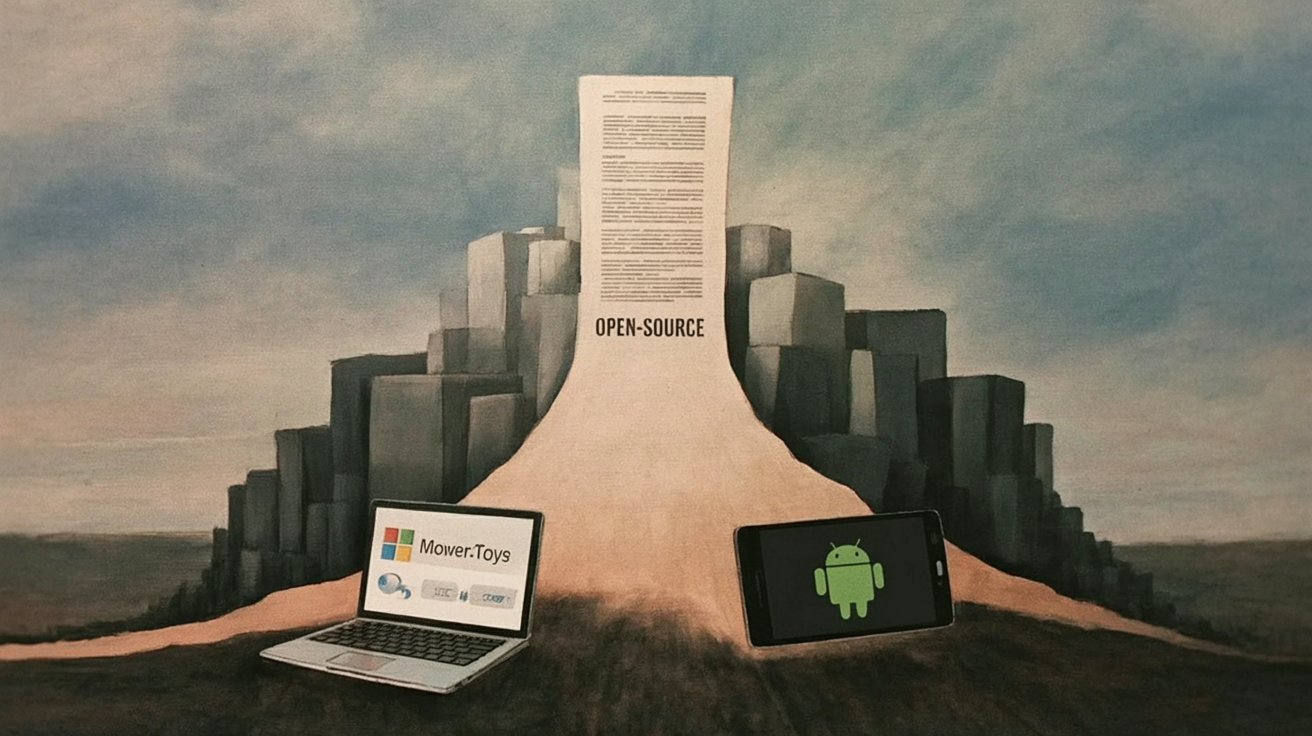
Microsoft is one plausible test case. It distributes PowerToys, a Windows utility collection, under the MIT license. Google is another: Google oversees the Android Open Source Project, where most source code uses Apache License 2.0. Both MIT and Apache licenses permit copying, redistribution, and modification.
So Microsoft or Google could argue that distributing PowerToys or AOSP puts the company itself outside the definition. That would be a remarkable result: an exemption seemingly aimed at volunteer-maintained operating systems could become an escape hatch for two of the largest platform companies on Earth.
The counterargument is equally obvious. A regulator could read the clause as excluding only the provider of the specific open-source product, not every proprietary operating-system business owned by a company that also publishes open-source software. But that narrower interpretation is not what the sentence cleanly says. The bill’s text leaves the scope unresolved.
There is no evidence in the available committee materials that Microsoft or Google requested or drafted the language. The April 2026 Assembly analysis, which predates the final August amendment, identifies Children Now and Elevate California as supporters, while Chamber of Progress, TechNet, and the Motion Picture Association opposed the measure or opposed it unless amended.
AB 1856 remains in Engrossing and Enrolling
The Legislature did clear the bill. The Senate passed AB 1856 39-0 on August 26, and the Assembly concurred in the Senate amendments 69-0 on August 27.
But legislative approval is not enactment. The official status page’s latest listed action is the Assembly’s concurrence and transfer to Engrossing and Enrolling, the stage where the Legislature prepares the final enrolled copy. It does not list gubernatorial presentment.
If Newsom receives and signs it, the amended framework retains two implementation dates. Newly configured devices and apps would face requirements beginning January 1, 2027; previously configured devices and existing apps would have until July 1, 2027.
The age-signal system may still arrive on schedule. But California first needs to decide whether an open-source utility can turn Microsoft into something other than an operating-system provider.
Key Takeaways
- California’s Legislature concurred in AB 1856’s Senate amendments on August 27, 2026.
- The bill’s open-source exclusion is written around a person or entity, not only a particular Linux distribution or open-source operating system.
- Microsoft and Google each distribute software under licenses that may fit the exemption’s wording.
- No court or California Attorney General interpretation has resolved whether the exclusion extends to proprietary operating-system businesses.
- As of August 31, 2026, AB 1856 was still in Engrossing and Enrolling rather than before the governor.
Further Reading
- Bill Text – AB-1856 Age verification signals: software applications., The amended statutory text, including definitions and exemptions.
- Bill Status – AB-1856 Age verification signals: software applications., Official legislative actions, votes, and current bill status.
- GitHub – microsoft/PowerToys: Microsoft PowerToys is a collection of utilities that supercharge productivity and customization on Windows · GitHub, Microsoft’s MIT-licensed PowerToys repository.
- AOSP frequently asked questions (FAQ) | Android Open Source Project, Google’s documentation on AOSP governance and licensing.
- Assembly Bill Policy Committee Analysis, Assembly analysis of the Digital Age Assurance Act framework and AB 1856’s earlier version.