
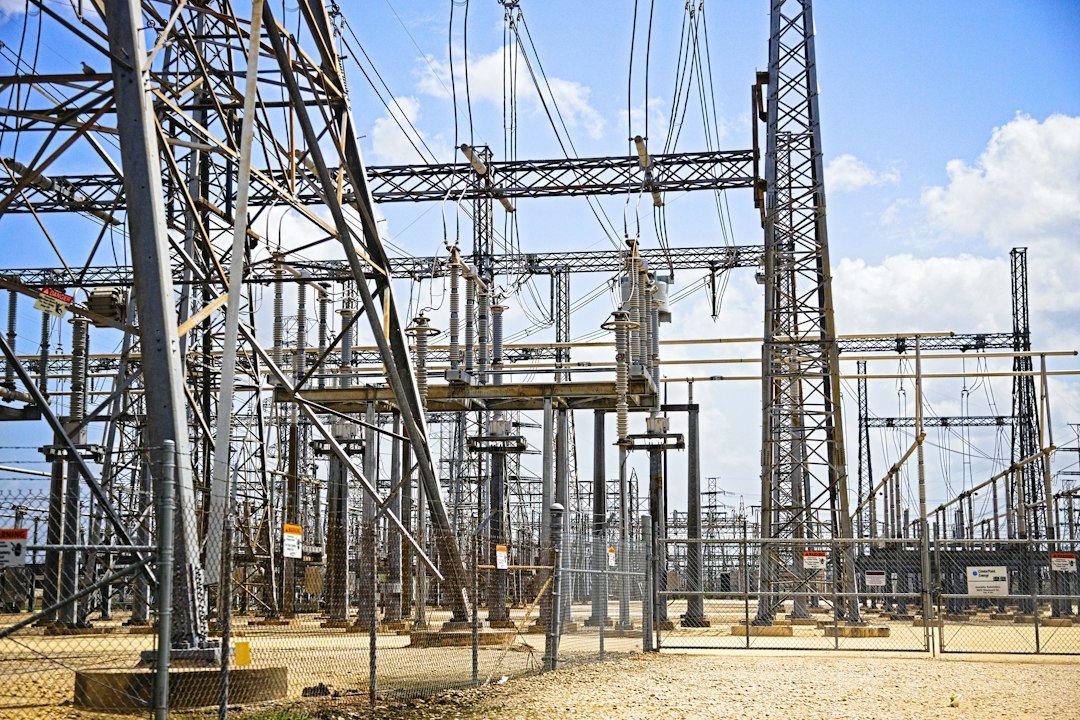
Texas has adopted softer terms for companies seeking data-center-scale grid connections: the state removed a proposed $50,000-per-megawatt nonrefundable fee, set a flat $100,000 charge to begin an interconnection study, and allows customers up to 24 months behind their energization schedule before their utility must report unused capacity to ERCOT, the state grid operator. The Public Utility Commission of Texas adopted the rule on September 18, 2026.
A customer can now reserve substantial power capacity while it builds its facility, and its utility does not have to flag that capacity as unused until the project’s energization schedule has been missed for two years. Once ERCOT receives that notice, the utility must settle outstanding bills from the customer’s financial security and return the remainder.
Texas made the change while pausing new data-center grid connections to audit an interconnection queue that ERCOT said totaled 474 GW, about 90% of it tied to data centers. For scale, ERCOT’s all-time hourly demand record was 91.1 GW on July 22, 2026. The queue is not a forecast of actual consumption, but it is a very large pile of requests competing for studies, transmission planning, and physical connection work.

The $50,000-per-MW fee was removed and study fees became $100,000
The March proposal would have charged large-load customers, mainly the category used for giant industrial facilities and data centers, a nonrefundable $50,000 for every MW of contracted peak demand. A 100-MW campus would therefore have faced a $5 million fee before counting its actual connection costs. The final rule removed that charge altogether.
Instead, every large-load applicant now pays a flat $100,000 initial study fee, regardless of how much power it wants. That study is the grid operator’s early technical screen: can the local wires and substations handle the proposed demand, and what upgrades would be needed?
The figure was not a fresh concession invented in September. Texas Senate Bill 6, effective June 20, 2025, already required an initial transmission-screening fee of at least $100,000 and required large-load customers to contribute to recovering their interconnection costs. The PUCT’s final rule chose that statutory floor rather than the proposal’s size-tiered study fees and separate per-MW charge.
“As more data becomes available relating to study costs, the commission may amend the rule to update the study fee amount that is required,” the PUCT wrote in the adopted rule, as reported by Utility Dive.
The other major change is time. The proposed rule would have required a utility to notify ERCOT at least 30 days after a customer had missed an energization milestone by six months. The adopted rule gives the customer 24 months before that unused-capacity notification is required.
That clock applies to the project’s energization schedule as a whole, not separately to every interim milestone. A delayed phase of construction does not reset a new two-year window for every missed date.
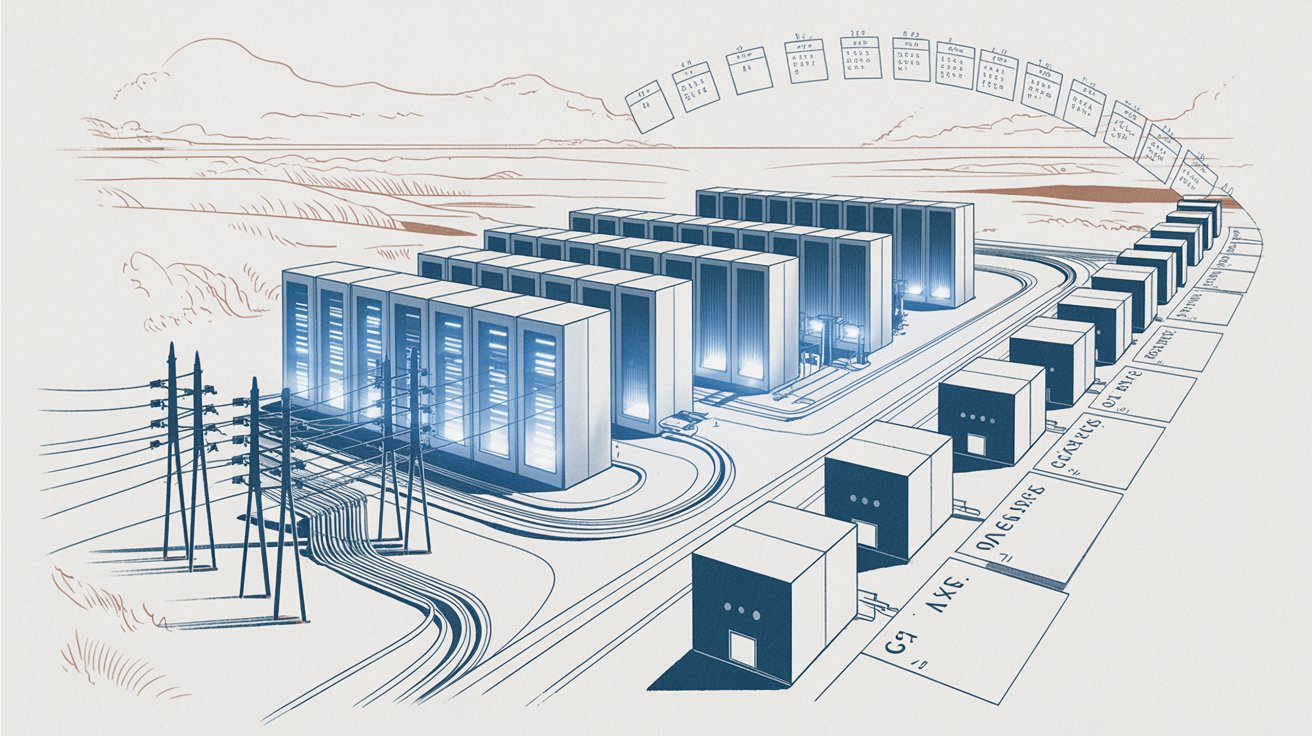
After a utility reports unused capacity to ERCOT, it has 60 days to apply the customer’s financial security to unpaid amounts and return the balance. The draft rule was harsher: it would have returned only 20% to the customer, applied 80% to outstanding amounts, and used any remainder to offset the transmission utility’s rate base.
The new rule therefore changes two kinds of exposure at once. It eliminates a large upfront payment tied directly to requested capacity, and it gives companies longer to keep reserved capacity before the grid is formally told it is not being used. That does not establish a specific future cost or reliability effect for residential customers; the final rule does not calculate one.
Governor Greg Abbott had directed regulators in June to require data centers to pay all electric-infrastructure costs and pursue reductions in residential transmission costs by July 31, 2026. Those are policy directives, not evidence that this rule will lower household bills. They sit awkwardly beside a final framework that removed the proposal’s biggest capacity-linked fee.
ERCOT officials told the PUCT in August that the audit would examine roughly 250 to 300 mostly data-center projects representing about 200 GW of prospective demand, with verification occurring before interconnection studies begin. The state is checking whether projects in the queue are real while making the price of entering that queue simpler and the deadline for surrendering unused capacity much longer.
Key Takeaways
- Texas removed its proposed nonrefundable $50,000-per-MW fee for large-load interconnection customers.
- Large-load customers now pay a flat $100,000 to start a transmission-screening study.
- Utilities have up to 24 months of missed energization scheduling before reporting unused customer capacity to ERCOT.
- After that report, utilities apply financial security to unpaid amounts and return the remaining balance to the customer.
- The rules arrived during Texas’ audit of an interconnection queue dominated by data-center proposals.
Further Reading
- Texas PUC adopts softened rules on data center interconnection, Reports the final PUCT rule on fees, milestones, and unused-capacity notices.
- 89(R) SB 6 – Enrolled version, The Texas statute establishing baseline large-load interconnection requirements.
- Letter from Governor Greg Abbott to PUCT Chairman Thomas Gleeson and ERCOT CEO, Abbott’s June 2026 policy directive on data-center infrastructure costs.
- Governor Abbott Directs Comprehensive Data Center Audit, The state order pausing project advancement during the audit.
- Texas will audit up to 300 projects, mostly data center proposals, Independent reporting on the projects and prospective demand under review.