
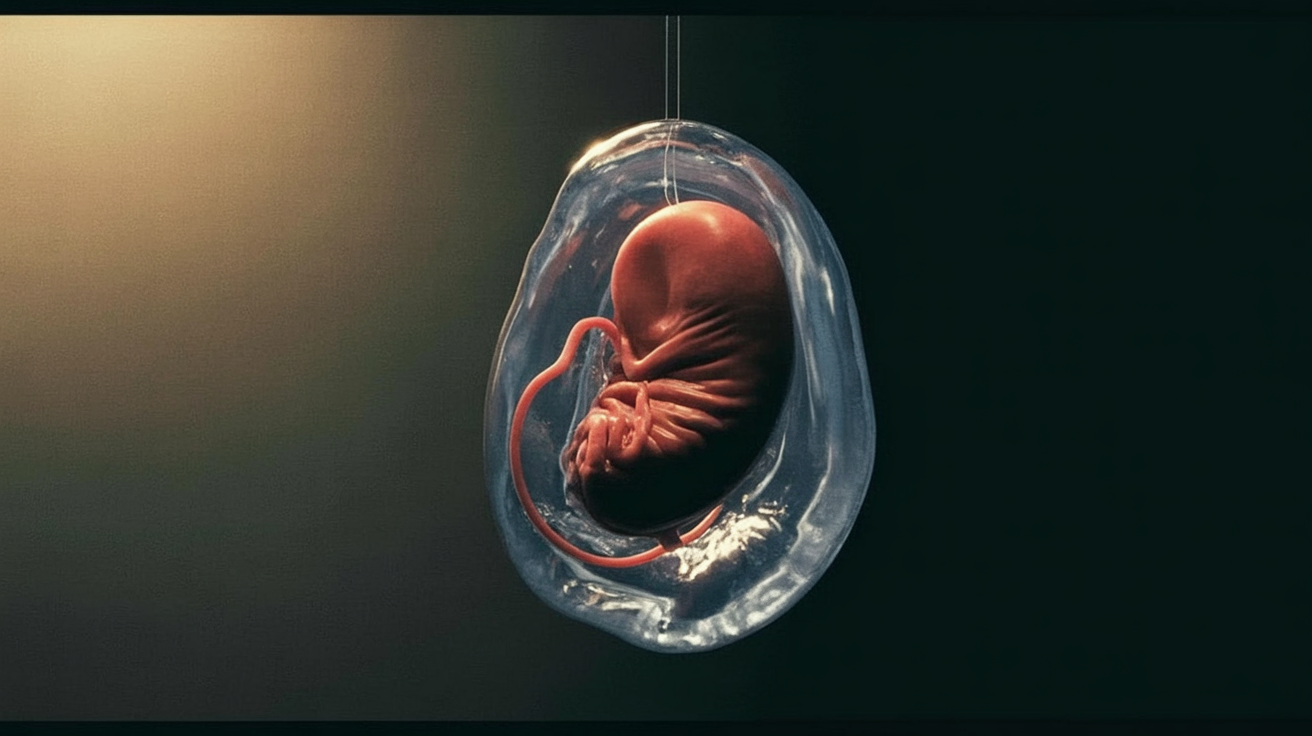
Fetal microchimerism is the long-term presence of a small number of fetal cells or fetal DNA in a mother after pregnancy, and the best-supported view is that it is a real, often detectable biological phenomenon with mixed but still unproven health effects.Fetal microchimerism and implications for maternal healthNaturally acquired microchimerism
Researchers have found fetal cells in maternal blood and tissues during pregnancy and, in some cases, decades later, which rules out the idea that this is just a fleeting pregnancy artifact.Immunological implications of pregnancy-induced microchimerismFetal microchimerism as an explanation of disease
What fetal microchimerism means
Microchimerism means one individual carries a tiny population of genetically distinct cells from another individual.Naturally acquired microchimerism In pregnancy, that exchange runs both ways: fetal cells can enter the mother, and maternal cells can enter the fetus.Immunological implications of pregnancy-induced microchimerism When the long-lived cells in the mother come from the fetus, that is fetal microchimerism.Fetal microchimerism and implications for maternal health
This is not rare in the sense of being a medical oddity. Cell trafficking across the placenta appears to be a normal feature of pregnancy, though detection rates vary a lot depending on which tissue is tested, how long after pregnancy samples are taken, and which lab method is used.Naturally acquired microchimerismFrequency of fetal-maternal microchimerism: an analysis of the HLA-DRB1 gene in cord blood and maternal sample pairs
One study analyzing HLA-DRB1 in 36 cord-blood and maternal sample pairs detected fetal-maternal microchimerism in 33.3% of maternal samples, with the authors noting that the real frequency is likely higher because assay sensitivity sets the floor.Frequency of fetal-maternal microchimerism: an analysis of the HLA-DRB1 gene in cord blood and maternal sample pairs That is the recurring pattern in this literature: if you look carefully enough, you usually find some traffic.
How fetal cells cross the placenta and persist
The placenta is not a brick wall. It is a highly regulated interface that allows nutrients, gases, signaling molecules, and occasionally whole cells to move between fetus and mother.Immunological implications of pregnancy-induced microchimerism During pregnancy, fetal cells shed from the placenta or fetus can enter maternal circulation; some are cleared, while some appear to lodge in maternal tissues and persist.Fetal microchimerism and implications for maternal healthNaturally acquired microchimerism
The cell types reported include trophoblasts, leukocytes, and progenitor-like cells with broader differentiation potential.Fetal microchimerism as an explanation of diseaseFetal microchimerism as an explanation of disease Some studies have found these cells in maternal skin, thyroid, liver, kidney, brain, and sites of injury.Fetal microchimerism as an explanation of diseaseFetal microchimerism as an explanation of disease
Persistence is the striking part. Reviews cite reports of fetal cells remaining in maternal blood or tissues for years to decades after delivery.Fetal microchimerism and implications for maternal healthImmunological implications of pregnancy-induced microchimerism That makes fetal microchimerism less like transient debris and more like a tiny, long-term cellular transplant the body did not exactly ask for but often seems to tolerate.
Detection usually relies on finding genetic material that should not otherwise be present in the mother, such as Y-chromosome sequences after a male pregnancy or fetal-specific HLA alleles.Naturally acquired microchimerismFrequency of fetal-maternal microchimerism: an analysis of the HLA-DRB1 gene in cord blood and maternal sample pairs This is where one common confusion shows up: paternal DNA in the mother is not a separate phenomenon if it arrives inside fetal cells or fetal-derived DNA from pregnancy; that is part of fetal microchimerism.Fetal microchimerism and implications for maternal healthNaturally acquired microchimerism
A simple way to think about it:
- The fetus carries DNA from both parents.Naturally acquired microchimerism
- Fetal cells can cross into the mother during pregnancy.Immunological implications of pregnancy-induced microchimerism
- Those cells therefore carry partly paternal DNA.Fetal microchimerism and implications for maternal health
- If they persist, that persistence is fetal microchimerism.Naturally acquired microchimerism
What researchers think it may do
Fetal microchimerism is not an established disease in itself, and there is no clear evidence that it reliably causes symptoms on its own.Fetal microchimerism and implications for maternal healthDeciphering the Role of Maternal Microchimerism in Offspring Autoimmunity: A Narrative Review The research instead points to associations in several directions: autoimmune disease, tissue repair, cancer biology, and immune tolerance.Fetal microchimerism as an explanation of diseaseImmunological implications of pregnancy-induced microchimerism
The autoimmune hypothesis is the oldest and most controversial. Because fetal cells are genetically distinct, they could, in principle, act like a low-level graft and contribute to immune activation in susceptible people.Fetal microchimerism as an explanation of diseaseFetal microchimerism as an explanation of disease Researchers have reported fetal microchimerism in conditions including systemic sclerosis and autoimmune thyroid disease, but reviews also note inconsistent findings and no proof of direct causation.Fetal microchimerism and implications for maternal healthFetal microchimerism as an explanation of disease
The repair hypothesis is almost the mirror image. Fetal cells have been found at maternal injury sites and in diseased tissues, which has led to the idea that they may participate in wound healing or regeneration.Fetal microchimerism as an explanation of diseaseFetal microchimerism as an explanation of disease That remains a hypothesis, but it is biologically plausible enough that the field keeps returning to it. Tiny populations of circulating progenitor-like cells showing up where tissue is damaged are, at least, suggestive, in the same broad way that researchers study stroke stem cells as potential repair agents.
There is also an immune-training angle. Pregnancy requires the maternal immune system to tolerate a fetus that is genetically half foreign without simply switching immunity off.Immunological implications of pregnancy-induced microchimerism Long-term fetal microchimerism may be one part of that immunological détente, influencing later T-cell responses and inflammatory balance.Immunological implications of pregnancy-induced microchimerism If that sounds like a very complicated signaling problem, it is. Immunology has a talent for turning one biological fact into four competing models before lunch; this field is no exception. Related work on immune modulation, including things like mRNA adjuvant, shows how context-dependent T-cell behavior can be.
One useful derived number: in that 36-pair HLA-DRB1 study, 33.3% detection means fetal-maternal microchimerism was found in about 12 of the 36 maternal samples tested.Frequency of fetal-maternal microchimerism: an analysis of the HLA-DRB1 gene in cord blood and maternal sample pairs Even that modest-looking count likely underestimates the true prevalence because negative results can simply mean the cells were below the assay’s detection limit, not absent.Frequency of fetal-maternal microchimerism: an analysis of the HLA-DRB1 gene in cord blood and maternal sample pairs
The bottom line is plain: fetal microchimerism is real, usually asymptomatic as far as current evidence can show, and not yet proven to be either broadly harmful or broadly beneficial.Fetal microchimerism and implications for maternal healthNaturally acquired microchimerism The strongest claims in either direction are ahead of the evidence.
Key Takeaways
- Fetal microchimerism is the persistence of fetal cells or fetal DNA in a mother after pregnancy.Fetal microchimerism and implications for maternal health
- Maternal-fetal cell exchange across the placenta is a normal part of pregnancy, not a fringe observation.Immunological implications of pregnancy-induced microchimerism
- Fetal cells can persist in maternal tissues for years to decades after delivery.Fetal microchimerism as an explanation of disease
- Current evidence links fetal microchimerism to both tissue-repair and autoimmune hypotheses, but does not prove either as a general rule.Fetal microchimerism and implications for maternal health
- Paternal DNA detected in the mother after pregnancy is usually part of fetal microchimerism because fetal cells contain paternal as well as maternal genetic material.Naturally acquired microchimerism
Further Reading
- Fetal microchimerism as an explanation of disease, Review defining fetal cell microchimerism and summarizing autoimmune, cancer, and tissue-repair hypotheses.
- Fetal microchimerism and implications for maternal health, Review of definition, pathophysiology, and maternal health consequences of fetal microchimerism.
- Naturally acquired microchimerism, Open-access review describing microchimerism, detection methods, and pregnancy-related cell trafficking.
- Immunological implications of pregnancy-induced microchimerism, Review on immune tolerance and maternal-fetal cell exchange.
- Frequency of fetal-maternal microchimerism: an analysis of the HLA-DRB1 gene in cord blood and maternal sample pairs, Study with sample sizes, frequencies, and detection sensitivity.
Frequently Asked Questions
What is fetal microchimerism in simple terms?
It is the presence of a small number of fetal cells or fetal DNA in a mother’s body after pregnancy.Fetal microchimerism and implications for maternal health The key point is persistence: these cells can remain long after delivery, sometimes for years or decades.Immunological implications of pregnancy-induced microchimerism
How does fetal microchimerism happen?
It happens when fetal cells cross the placenta during pregnancy and enter maternal blood or tissues.Immunological implications of pregnancy-induced microchimerism Most are probably cleared, but some appear to engraft or persist at very low levels.Naturally acquired microchimerism
Can fetal microchimerism cause symptoms?
There is no established set of symptoms that defines fetal microchimerism by itself.Fetal microchimerism and implications for maternal health Researchers have reported associations with some diseases, especially autoimmune conditions, but current reviews do not show clear proof that the cells directly cause symptoms in most people.Fetal microchimerism as an explanation of disease
Does fetal microchimerism have benefits?
Possibly, but that is not proven. Researchers have proposed that fetal cells may help with tissue repair or immune regulation because they have been found in injured maternal tissues.Fetal microchimerism as an explanation of disease The evidence is suggestive, not conclusive.
Is paternal DNA in the mother the same thing as fetal microchimerism?
Usually, yes, in practice after pregnancy, because fetal cells contain DNA inherited from the father.Naturally acquired microchimerism So, if paternal genetic material is detected in the mother as part of fetal-derived cells or DNA, that falls under fetal microchimerism.Fetal microchimerism and implications for maternal health
References
- Khosrotehrani and Bianchi, 2005, Naturally acquired microchimerism
- Kinder, Jiang and Erlebacher, 2017, Immunological implications of pregnancy-induced microchimerism
- Nelson, 2010, Fetal microchimerism as an explanation of disease
- Johnson et al., 2020, Fetal microchimerism and implications for maternal health
- Saxer et al., 2016, Frequency of fetal-maternal microchimerism: an analysis of the HLA-DRB1 gene in cord blood and maternal sample pairs
- Bergallo et al., 2024, Deciphering the Role of Maternal Microchimerism in Offspring Autoimmunity: A Narrative Review
- Nelson, 2010, Fetal microchimerism as an explanation of disease
Last reviewed: 2026-06