
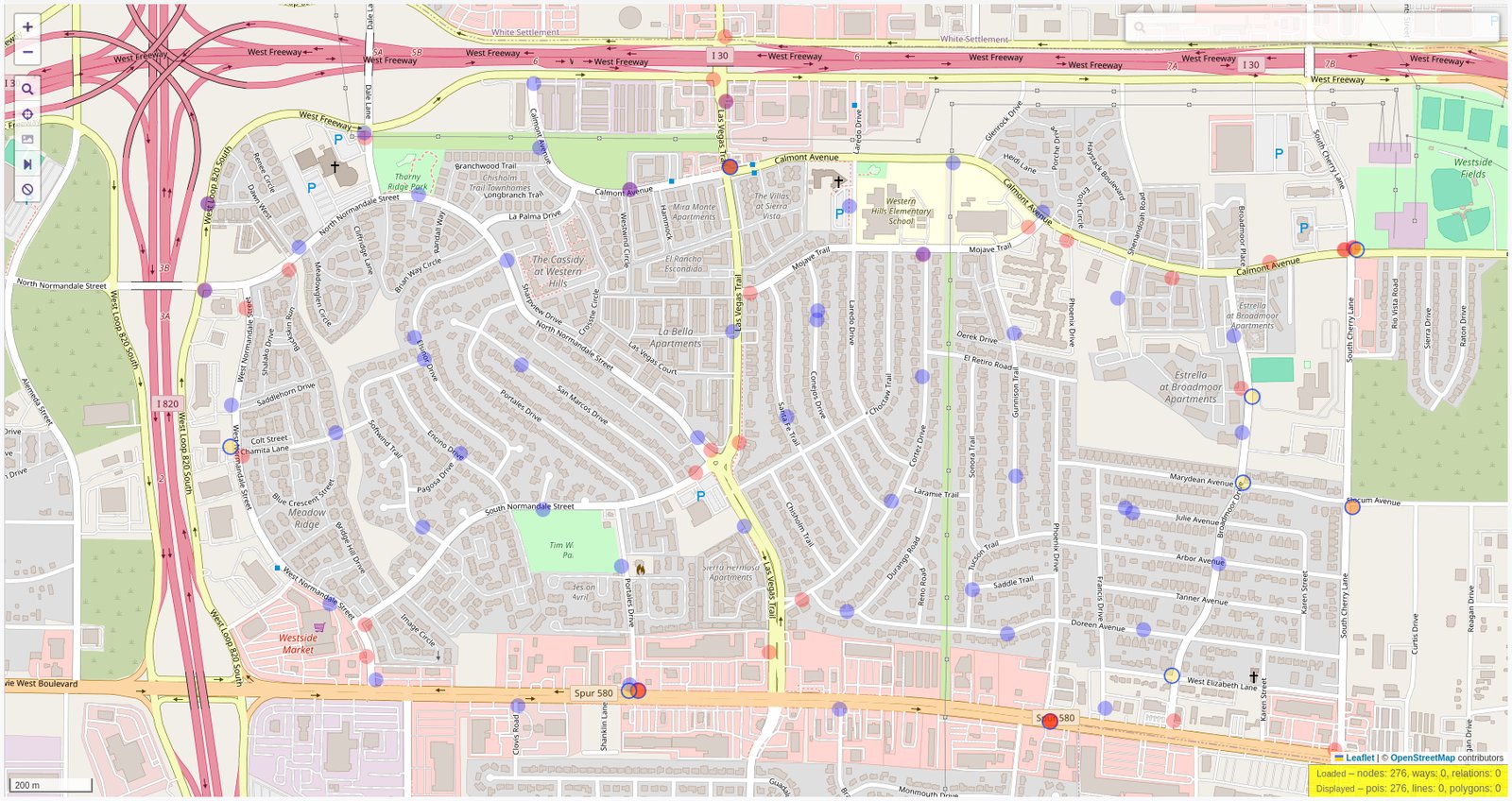
Gov. Greg Abbott directed Texas state agencies to stop funding Flock Safety cameras going forward on August 27, 2026, after reporting showed at least $30 million had already helped build a network of at least 3,200 cameras across the state. The pause did not cancel the cameras, terminate signed contracts, or shut off existing data sharing.
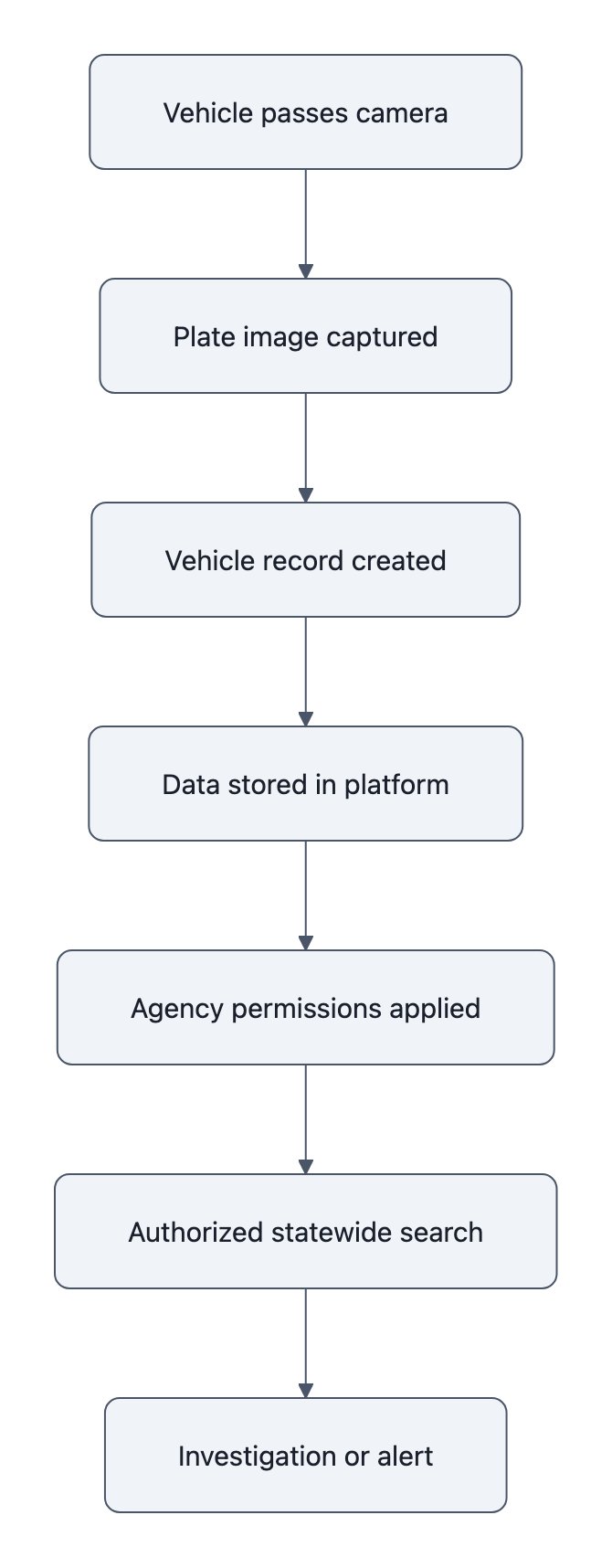
Flock’s license-plate readers photograph passing vehicles, log their plates and visible characteristics, and let police search those records across participating agencies. Texas had already financed a major statewide version of that system: a three-year, $15.9 million Department of Public Safety project intended to add 1,183 readers and share information with local law enforcement statewide, according to the Motor Vehicle Crime Prevention Authority’s January 2025 meeting transcript.
Abbott’s office conveyed the directive through spokesperson Andrew Mahaleris on August 28, rather than through a published executive order. Mahaleris told The Texas Tribune that Texas agencies were clarifying that their funds “cannot be used for Flock cameras.”
“To the extent any funding comes from Texas agencies, those agencies are clarifying that those funds cannot be used for Flock cameras.”, Andrew Mahaleris, spokesperson for Gov. Greg Abbott
That is a prospective funding restriction, not a dismantling order. The public record cited by the Tribune does not establish that Texas rescinded existing procurement, removed installed equipment, or ended the cross-agency access that made the network consequential in the first place.
The $30 Million Flock Buildout Funded by an Insurance Fee
The money came from an unusually small charge with a very large cumulative effect. In 2023, the Texas Legislature unanimously approved a $1 annual increase in auto-insurance costs to combat catalytic-converter theft.
By August 2026, that fee had raised an estimated $81 million. The Motor Vehicle Crime Prevention Authority, a state body whose board is mostly appointed by Abbott, had distributed $50.8 million through 234 grants for personnel, prosecutors, drones, and surveillance equipment. At least $30 million of that pool went toward Flock-related projects, The Texas Tribune found.
That documented spending produced at least 3,200 cameras:
| Texas-funded Flock deployment | Documented scale |
|---|---|
| Local-law-enforcement grants | About 2,000 cameras |
| DPS interagency project | 1,183 cameras |
| Total documented network | At least 3,200 cameras |
The Tribune found at least 95 grants supporting roughly 2,000 local Flock cameras, from a $7,000 Bellmead grant for two cameras to nearly $1.7 million for 201 cameras in Dallas. Laredo’s 165-camera network and El Paso’s 150-camera network were entirely subsidized through these grants.
The $30 million estimate is conservative, not comprehensive. The authority did not itemize how much each grant spent specifically on Flock equipment, and 124 grants lacked clear public documentation of what was purchased. The network may therefore be larger than the documented count.
MVCPA Chair Mike Rodriguez, who is also Laredo’s police chief, described the goal in an August 2023 board meeting as using the fee revenue to “cover the entire state” with cameras, the Tribune reported.
“That kind of capability directly disrupts the operational advantage these transnational criminal organizations rely on.”, Miguel Rodriguez, chair of the Motor Vehicle Crime Prevention Authority
State officials describe the cameras as crime-prevention infrastructure, used to find stolen cars, missing people, and suspects. But a searchable record of where vehicles travel also creates a surveillance system that can be queried long after the car has passed the pole. Privacy advocates and lawmakers have objected to warrantless searches, the volume of collected data, and documented misuse; Flock has faced broader national backlash over law-enforcement data sharing.
DPS Contracts, Tollway Expansion and Statewide Data Access
The biggest state project was already underway before Abbott’s announcement. The MVCPA’s January 2025 record shows the board approved DPS funding of up to $6 million for expanded statewide license-plate-reader coverage. The eventual DPS project grew into a three-year, $15.9 million plan for 1,183 Flock readers.
Its design went beyond a set of cameras owned only by DPS. The January 2025 transcript states that information from the system would be shared with local law-enforcement agencies statewide. DPS told the board that a person with a Flock login could see data they were authorized to access; Flock said each participating agency’s administrator controls permissions and whether to share its cameras’ data with other agencies.
In practical terms, that means a local department can decide who sees its camera records, while state-funded infrastructure expands the pool of records available to search. The useful question is not merely where a camera stands. It is which agencies can query the result.
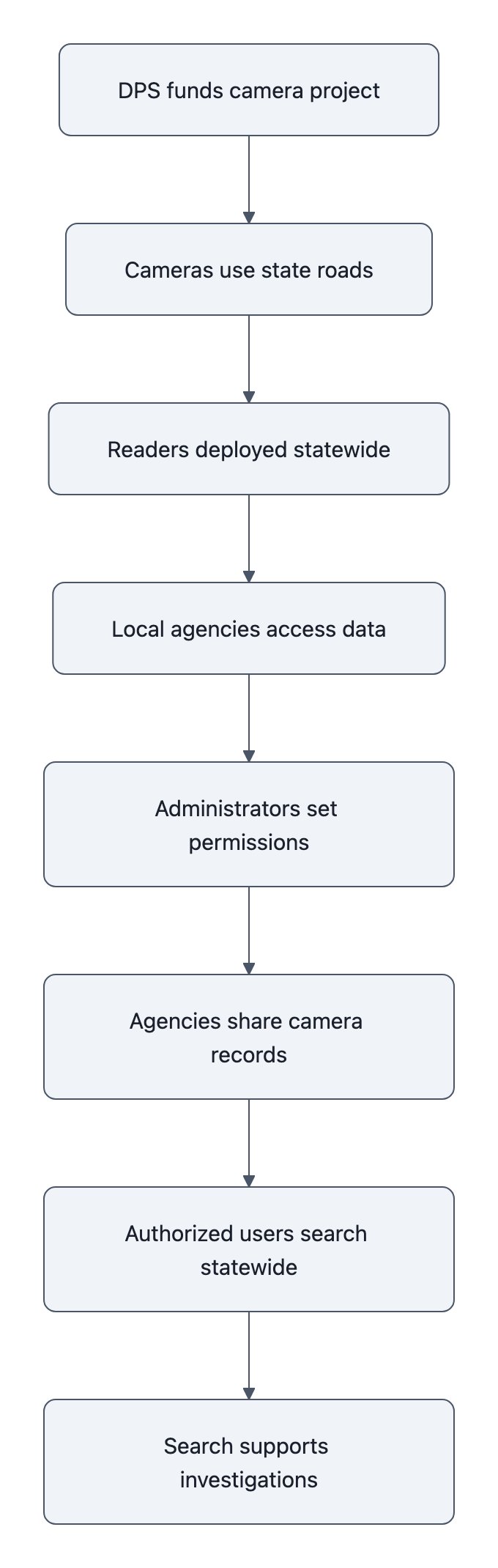
The project was also structured to use Texas Department of Transportation rights-of-way for installations. The MVCPA transcript recorded discussion of placing DPS cameras on state-controlled roads, including within municipalities that had declined to install Flock systems locally. A city vote against buying the technology, in other words, did not necessarily prevent the state from placing cameras on nearby state rights-of-way.
The expansion had not stopped at the original DPS contract. An April 2026 MVCPA board book listed an active update on statewide Flock installations and a DPS tollway-reader proposal. The authority considered $3,047,524 for fiscal years 2026-27 to install 583 additional cameras along tollways. That was a proposed expansion, not proof that every one of those cameras had been bought or installed by August.
Flock said it supported “thoughtful legislation” with privacy guardrails while preserving law enforcement’s use of its products. But the company’s statement, like Abbott’s pause, addressed what happens next. It did not account for the hardware, contracts, or data access Texas had already financed.
Abbott can fairly claim to have halted a future stream of state money. He cannot, on the available record, claim to have turned off the surveillance network that the money already built.
Key Takeaways
- Gov. Greg Abbott directed Texas agencies to pause future Flock camera funding on August 27, 2026.
- The action did not itself cancel existing Flock contracts, remove cameras, or end data-sharing arrangements.
- At least $30 million in Texas funding helped support at least 3,200 Flock cameras since 2023.
- A $1 annual auto-insurance fee raised an estimated $81 million by August 2026.
- DPS had a $15.9 million project to add 1,183 license-plate readers with statewide law-enforcement data sharing.
Further Reading
- Gov. Abbott blocks state agencies from spending money on Flock cameras, Texas Tribune report on Abbott’s funding directive and Texas’s existing Flock network.
- How a $1 Texas insurance fee funded thousands of Flock cameras, Texas Tribune investigation into MVCPA grants, insurance-fee revenue, and camera deployment.
- Microsoft Word – MVCPA BD 012225.doc, January 2025 MVCPA transcript covering the DPS request and statewide access plans.
- _Cover Page.pdf, April 2026 MVCPA board materials covering the DPS project and proposed tollway expansion.
- Surveillance tech company Flock announces platform changes amid public backlash, Associated Press reporting on Flock’s broader surveillance-network controversy and policy changes.