
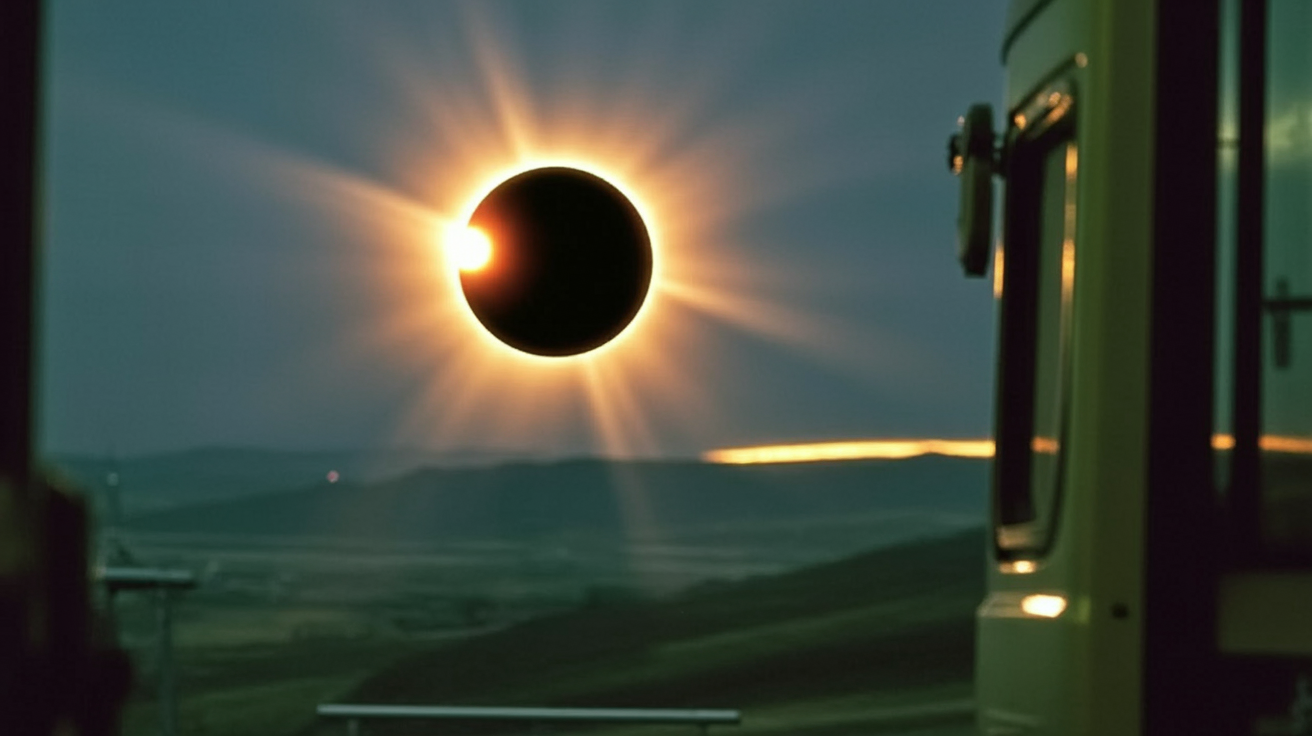
The best place to watch the August 12, 2026 total solar eclipse is anywhere inside the narrow path of totality, with northern Spain the most practical choice for many travelers because it is one of the few easily accessible land areas where the Sun will be completely covered. According to NASA and ESA, the totality track crosses eastern Greenland, western Iceland, northern Spain, and a small part of Portugal; everyone outside that corridor gets only a partial eclipse.
The key distinction is simple: only totality gives you the brief full blackout of the Sun, the visible corona, and the moment when eclipse glasses can come off for a minute or two, as NASA’s safety guidance makes clear. Outside the path, filters stay on the whole time.
The August 12, 2026 path of totality across Spain, Iceland, Greenland, and Portugal
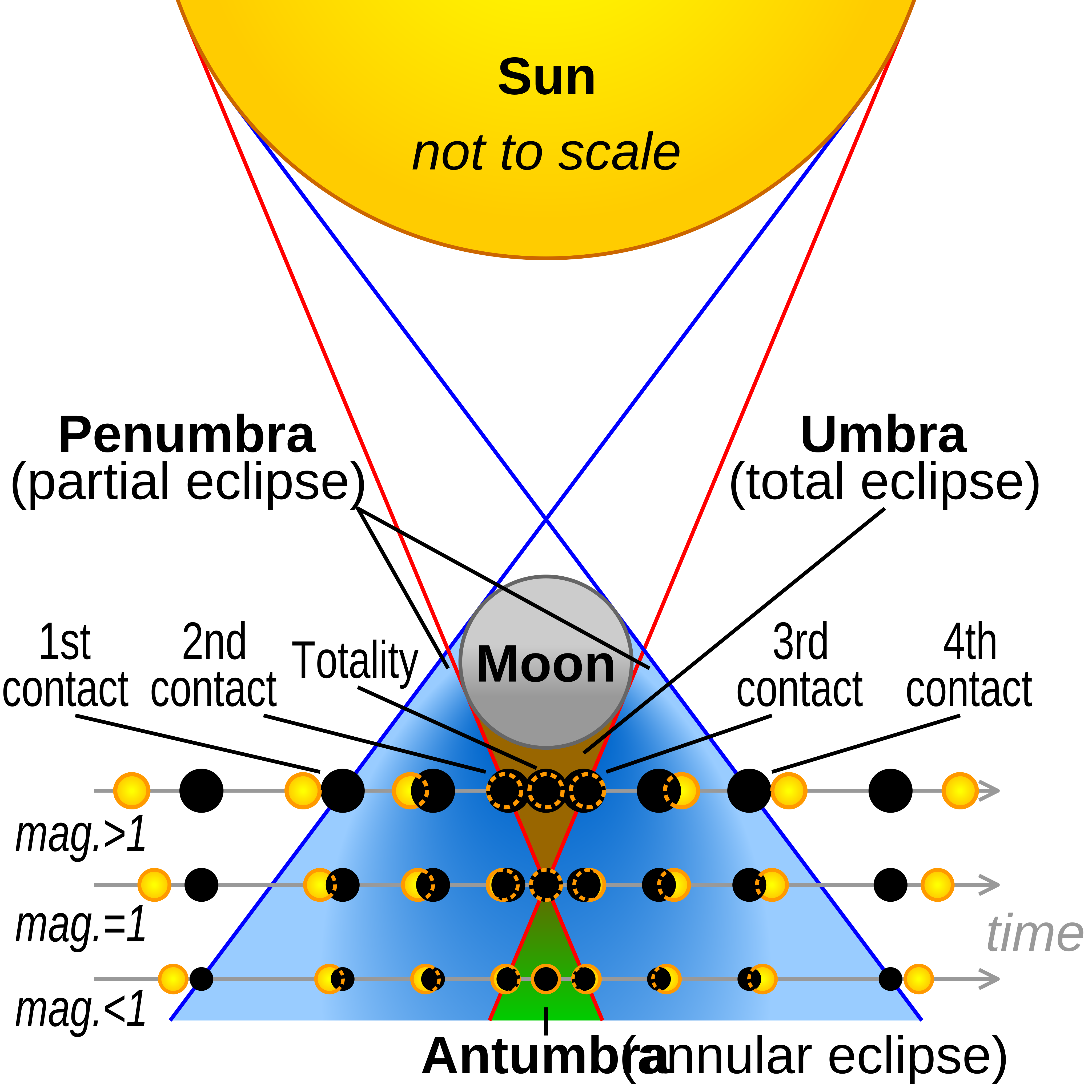
The 2026 eclipse happens on Wednesday, August 12, 2026. The Moon’s umbra first reaches eastern Greenland, then crosses Iceland, then Spain, and finally clips a small corner of Portugal before ending over the Atlantic.
For most readers asking where to go, Spain is the clearest practical answer. The ESA map of totality in Spain shows the path cutting across the north of the country, and Spain’s Instituto Geográfico Nacional has published local viewing guidance for the event.
A quick comparison looks like this:
| Location | What you get |
|---|---|
| Northern Spain | Most practical land-based totality for many travelers |
| Western Iceland | Totality, but with more volatile weather and fewer route options |
| Eastern Greenland | Totality in a remote region with difficult logistics |
| Small corner of Portugal | Totality, but only in a very limited area |
| Anywhere outside the path | Partial eclipse only |
The longest totality, about 2 minutes 18 seconds, occurs near the point of greatest eclipse over the ocean west of Iceland, not on land. That matters if you are optimizing for maximum duration, but not much if you are choosing a realistic place to stand.
In Spain, local timing and duration vary by city. timeanddate’s Spain eclipse page lets you check exact local circumstances, while NASA’s path table gives the center line and duration data along the track. The practical rule is old but unforgiving: if you are outside the path by even a modest distance, totality is gone. A total eclipse is not a “mostly there” event. It is on or off.
Where in Spain should you aim? The safest general advice is to pick a location inside the mapped totality band, then choose a viewing spot with a clean view toward the western sky, because the eclipse happens late in the day there, as IGN notes. A hill, coastline, open plain, or viewpoint without buildings or mountains low on that horizon beats a picturesque old town square if the Sun disappears behind a ridge 10 minutes too early.
Best viewing conditions depend on staying inside totality and away from cloud-prone horizons
The best viewing conditions come from two things at once: being inside the path of totality and having an unobstructed view of the Sun. The first is non-negotiable. The second is where practical planning matters.
Spain is attractive because it combines accessible transport with a broad stretch of land under totality. But the Sun will be low there late in the day, so horizon obstructions matter more than they would for a high-noon eclipse. That means checking not just the map, but the terrain.
Iceland offers a different trade-off. It is also on the path of totality, and for some travelers it may be the more appealing trip. But weather in Iceland is famously changeable, and eclipse chasing under cloud is a little like booking front-row seats to a concert and then putting a sheet over the stage. You are still in the right place. You just cannot see the thing.
Greenland is even more constrained. Yes, eastern Greenland lies under the umbra. No, it is not the default recommendation for most travelers. Remoteness, infrastructure, and transport flexibility all work against it.
Portugal is part of the answer, but only barely in geographic terms. ESA’s global map shows only a small part of the country inside totality. If you are planning around Portugal, the map matters a lot; nearby is not good enough.
Cloud risk and travel congestion can still change the practical best choice within the path. The smart approach is to choose a base inside totality, then keep enough mobility to move on eclipse day if local forecasts shift.
Safe viewing requires eclipse glasses except during the brief total phase
Safe viewing requires eclipse glasses that meet the ISO 12312-2 international safety standard for every partial phase of the eclipse. That applies before totality begins and after it ends, and it applies for the entire event if you are outside the path of totality.
NASA’s safety page is blunt on this point: you can look directly at the Sun without eye protection only during the brief total phase, when the Sun’s bright face is completely blocked. The moment any bright part of the Sun reappears, filters go back on.
The National Eye Institute gives the same advice and adds an easy fallback: if you do not have certified eclipse viewers, use an indirect method such as a pinhole projector. Looking through regular sunglasses is not safe. Looking through cameras, binoculars, or telescopes without the correct front-mounted solar filters is also not safe, because the concentrated light can damage eyes quickly.
A short safety checklist:
- Use ISO 12312-2 compliant eclipse glasses or a handheld solar viewer.
- Remove them only during totality, and only if the Sun is fully covered.
- Put them back on as soon as bright sunlight returns.
- Keep them on for the entire eclipse outside the totality path.
- Use indirect viewing if you are unsure, as recommended by the National Eye Institute.
If you remember one thing, make it this: a 99% partial eclipse is still a partial eclipse. That last 1% is the difference between a dimmer Sun you must not stare at and a true total eclipse you crossed countries to see.
The timeanddate global eclipse page and NASA’s eclipse page both provide maps and visibility details, and IGN’s Spanish guide is the practical local reference if you are planning to watch from Spain.
Key Takeaways
- The best place to watch the 2026 solar eclipse is anywhere inside the path of totality, most practically northern Spain for many travelers.
- The total eclipse occurs on Wednesday, August 12, 2026, with totality crossing eastern Greenland, western Iceland, northern Spain, and a small part of Portugal.
- The longest totality is about 2 minutes 18 seconds near greatest eclipse over the ocean west of Iceland, not on land.
- Outside the narrow totality track, viewers will see only a partial eclipse and must keep solar filters on the entire time.
- Eclipse glasses should come off only during the brief total phase, when the Sun is completely covered.
Frequently Asked Questions
Where to watch the solar eclipse 2026 in Spain?
The best place in Spain is any location inside the official totality band with a clear western horizon. Because the eclipse happens late in the day there, IGN advises paying close attention to terrain and local obstructions. Being in the right city is not enough if a ridge or building blocks the low Sun.
When is the 2026 solar eclipse?
The 2026 total solar eclipse happens on Wednesday, August 12, 2026. Exact local times depend on where you are along the path, and timeanddate provides searchable local timing data.
Which countries get totality in the August 12, 2026 eclipse?
The path of totality crosses Greenland, Iceland, Spain, and a small part of Portugal. Other nearby regions, including much of Europe, North Africa, and the North Atlantic surroundings, will see only a partial eclipse, as shown on NASA’s overview map.
Can you take eclipse glasses off during a total solar eclipse?
Yes, but only during totality, when the Sun’s bright disk is completely covered. Before and after that brief window, and for the entire event outside the totality path, NASA says you must use proper solar filters.
References
- NASA, 2026, Total Solar Eclipse on August 12, 2026
- NASA GSFC, 2026, Path of Total Solar Eclipse of 2026 Aug 12
- ESA, 2026, Total solar eclipse 12 August 2026-Global map
- ESA, 2026, Total solar eclipse 12 August 2026-Map of totality in Spain
- National Eye Institute, 2024, How to watch an eclipse, safely
- Instituto Geográfico Nacional, 2026, Eclipse total de 12 de agosto de 2026
Further Reading
- Total Solar Eclipse on August 12, 2026 – NASA Science, NASA overview of where the eclipse will be total and where it will be partial.
- Path of Total Solar Eclipse of 2026 Aug 12 – NASA GSFC, NASA path table with the precise track of the Moon’s umbra.
- Total solar eclipse 12 August 2026-Map of totality in Spain – ESA, ESA’s Spain-focused map for planning a viewing spot.
- Aug 12, 2026-Total Solar Eclipse-Spain – timeanddate, Spain-specific timing and duration details by location.
- Eclipse Viewing Safety – NASA Science, NASA’s rules for safe direct viewing.
Last reviewed: 2026-06