
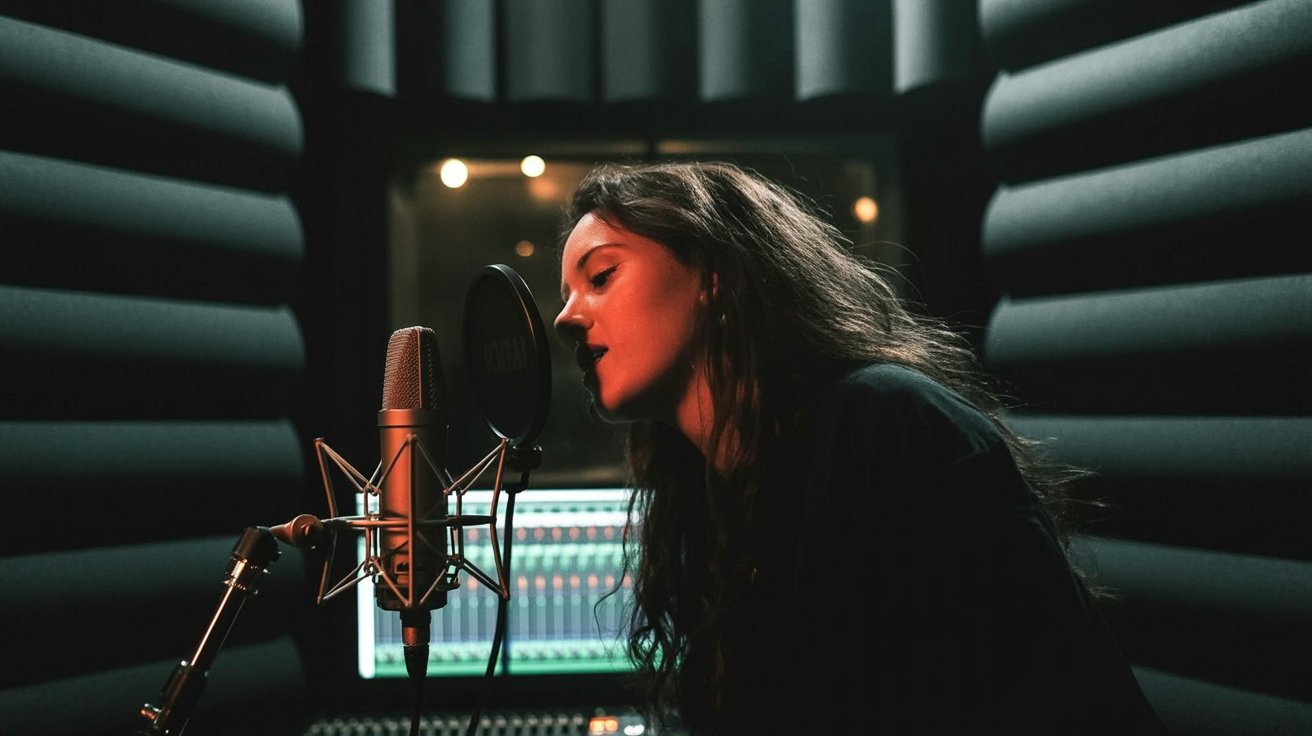
Artists’ strongest AI-era legal wins are coming from impersonation law, not copyright. The key reason is that right-of-publicity doctrine can protect a distinctive, widely known voice as part of a person’s identity, even when no copyrighted recording was copied.
That pattern has old roots and new confirmation. In a July 10, 2025, ruling in the Lovo voice-cloning suit, reported by Bloomberg Law, a federal judge let right-of-publicity and contract claims proceed while dismissing several copyright claims. That was only a partial motion-to-dismiss win, not a final judgment, but it sharpened the same point the Ninth Circuit made decades ago: cloning a person is often legally different from copying a work.
The strongest artist wins have come from voice-and-likeness claims
The modern backbone here is Midler v. Ford Motor Co. in 1988. In that case, Ford’s ad agency hired one of Bette Midler’s former backup singers to imitate Midler’s voice in a car commercial after Midler declined to participate. The Ninth Circuit held that “a voice is as distinctive and personal as a face” and that deliberately imitating a distinctive, widely known voice to sell a product could violate California’s right of publicity.
“A voice is as distinctive and personal as a face.”, Midler v. Ford Motor Co.
That mattered because copyright did not do the job there. Ford’s team had licensed the song itself, but the court said Midler’s identity interest in her recognizable voice was a separate thing. In plain English: you can clear the composition and still get in trouble for making listeners think the singer is there when she is not.
The Ninth Circuit doubled down in Waits v. Frito-Lay in 1992. Tom Waits, who was publicly known for refusing commercials, sued after Frito-Lay used a soundalike singer in a radio ad. The court reaffirmed Midler and said voice-misappropriation claims are different in kind from copyright claims, then upheld a substantial verdict for Waits.
Those cases still map surprisingly well onto AI voice cloning. A synthetic model output may avoid copying any one recording in a way copyright can neatly target, while still trying to evoke that person closely enough to cash in on recognition. That is why AI impersonation claims have become such a live lane.
A short comparison makes the split clearer:
| Legal theory | What it targets |
|---|---|
| Copyright | Unauthorized copying of protected works such as recordings or compositions |
| Right of publicity | Unauthorized commercial use of a person’s identity, including voice or likeness in some jurisdictions |
The new AI-era example is the Lovo suit, where voice actors accused the company of using cloned versions of their voices. On July 10, 2025, a federal judge let publicity-right and contract claims move forward while dismissing several copyright claims. That is not a final merits win, but it is a real procedural signal about which claims fit AI impersonation disputes more naturally.
The Scarlett Johansson clash with OpenAI in May 2024 points the same way, even without a court ruling. Johansson objected to the Sky voice after saying it sounded too much like her; OpenAI said it did not copy Johansson’s voice and had cast a different actor, then paused the voice after the backlash. A Georgetown University legal explainer said Johansson’s strongest theory would be right of publicity, not copyright.
The key reason is that right-of-publicity doctrine can protect a distinctive, widely known voice as part of a person’s identity, even when no copyrighted recording was copied.
Federal and state lawmakers are building AI impersonation rights
Courts are not the only place this logic is hardening. In its July 2024 report Copyright and Artificial Intelligence, Part 1: Digital Replicas, the U.S. Copyright Office said existing federal and state laws are inadequate to address unauthorized digital replicas and recommended a new federal law.
The report’s basic conclusion is blunt: copyright is not built to protect personal identity as such. It handles works of authorship. A digital replica dispute often centers on whether a system reproduced you, your face, your voice, your performance persona, rather than whether it copied a specific protected file.
At the state level, Tennessee announced the ELVIS Act in January 2024, updating state law to cover AI misuse of a person’s voice as well as name, photograph, or likeness. That is a practical expansion for a music-heavy state: the law treats voice as a protectable part of identity, not just a performance artifact.
Congress is now trying to federalize that idea. The NO FAKES Act of 2025, introduced on April 9, 2025, as S.1367, would create a federal right against unauthorized digital replicas of a person’s voice or visual likeness. That would move impersonation law from a patchwork toward a national rule, though right-of-publicity law today still varies heavily by state.
Copyright still targets training and recordings, not identity imitation
None of this means copyright has become irrelevant. It means copyright and impersonation law are aimed at different targets.
When record labels sued Suno and Udio on June 24, 2024, the core claim was unauthorized copying of sound recordings on a massive scale. That is classic copyright terrain: training inputs, output similarity, and the use of protected recordings. Those suits show copyright remains central in separate AI music cases, especially where the dispute is about works in catalogs rather than the commercial appropriation of a person’s identity.
The cleaner rule is this: if the complaint is “you copied my recording,” copyright is the obvious weapon. If the complaint is “you made the market think I sang or said this,” right of publicity is often the stronger fit.
That is why the old Midler and Waits cases matter so much in the AI era. They established that a recognizable voice can function legally like a face: not a work you authored, but a marker of who you are.
The next milestone is legislative, not doctrinal. The NO FAKES Act of 2025 remains pending in Congress, while the Copyright Office has already recommended a federal digital replica law.
Key Takeaways
- Artists’ clearest AI-era wins on voice cloning are coming from right-of-publicity law, not from copyright alone.
- Midler v. Ford in 1988 and Waits v. Frito-Lay in 1992 established that a distinctive, widely known voice can be protected as identity.
- In the July 10, 2025, Lovo ruling, a federal judge let publicity-right and contract claims proceed while dismissing several copyright claims.
- The Scarlett Johansson-OpenAI dispute produced no court ruling, but it showed the legal and reputational risk of AI voice likeness disputes.
- The U.S. Copyright Office’s 2024 digital replicas report, Tennessee’s ELVIS Act, and the NO FAKES Act of 2025 all push toward stronger anti-impersonation protections.
Further Reading
- [Midler v. Ford Motor Co., 849 F.2d 460 (9th Cir. 1988)(https://law.justia.com/cases/federal/appellate-courts/F2/849/460/37485/), Ninth Circuit held that deliberate imitation of a distinctive, widely known singer’s voice can violate publicity rights.
- [Waits v. Frito-Lay, Inc., 978 F.2d 1093 (9th Cir. 1992)(https://law.justia.com/cases/federal/appellate-courts/F2/978/1093/183202/), Ninth Circuit reaffirmed Midler and upheld a substantial verdict for Tom Waits.
- Voice Actors Advance Some Claims in AI Clone, Copyright Suit, Bloomberg Law’s report on the July 10, 2025, Lovo motion-to-dismiss ruling.
- Copyright and Artificial Intelligence, Part 1: Digital Replicas, U.S. Copyright Office report recommending a federal digital replica law.
- [NO FAKES Act of 2025 (S.1367)(https://www.congress.gov/bill/119th-congress/senate-bill/1367/text/is?format=txt), Bill text for the proposed federal digital replica right.
- Tennessee First in the Nation to Address AI Impact on Music Industry, State announcement on the ELVIS Act’s coverage of AI voice misuse.
- OpenAI didn’t copy Scarlett Johansson’s voice for ChatGPT, records show, Reporting on Johansson’s complaint and OpenAI’s response.
- OpenAI v. Scarlett Johansson? Law Professor Answers Legal Questions on AI-Generated Content, Why right of publicity is the cleaner theory than copyright in that dispute.
- Record Companies Bring Landmark Cases for Responsible AI Against Suno and Udio, Contrast case for where copyright still dominates.
Frequently Asked Questions
What is the right of publicity?
The right of publicity is the legal doctrine that lets people challenge unauthorized commercial use of their identity, typically including name and likeness and, in some jurisdictions, voice. It is mostly a matter of state law rather than one uniform federal rule, which is the gap proposed federal digital-replica legislation would close.
Can copyright protect a singer’s voice?
Copyright protects recordings and compositions, not a person’s identity by itself. The Midler and Waits cases are important precisely because they let artists challenge voice imitation even when copyright was not the right fit.
Did Scarlett Johansson win a case against OpenAI?
No. The May 2024 dispute over the Sky voice did not produce a court ruling; OpenAI paused the voice after public pressure. It is best read as evidence of legal exposure and reputational risk, not as a decided precedent.
What did the Lovo ruling actually decide?
The July 10, 2025, ruling in the Lovo case reportedly allowed right-of-publicity and contract claims to proceed while dismissing several copyright claims. That was a motion-to-dismiss ruling, so it did not decide the final merits.
What would the NO FAKES Act do?
The NO FAKES Act of 2025 would create a federal cause of action against unauthorized digital replicas of a person’s voice or visual likeness. If enacted, it would reduce dependence on today’s patchwork of state publicity laws.
References
- Ninth Circuit, 1988, Midler v. Ford Motor Co.
- Ninth Circuit, 1992, Waits v. Frito-Lay, Inc.
- U.S. Copyright Office, 2024, Copyright and Artificial Intelligence, Part 1: Digital Replicas
- [U.S. Senate, 2025, NO FAKES Act of 2025 (S.1367)(https://www.congress.gov/bill/119th-congress/senate-bill/1367/text/is?format=txt)
Last reviewed: 2026-08